

Warning To China! US, Philippines To SINK Chinese-Origin Naval Vessel In South China Sea Military Drills

Balikatan 2024, the Philippines-US joint military drills and the first exercise outside the Southeast Asian nation’s territorial waters, is likely to get more interesting as it will feature the sinking of a decommissioned Chinese-origin ship.
As part of these much-awaited drills, the forces will sink a target ship, reclaim an island, and sail in waters confronting the South China Sea. However, more interestingly, the ship that has been singled out as a mock target to be sunk by the Allies is a decommissioned Chinese naval tanker.
The Philippines, however, clarified on April 17 that the vessel’s sinking was not intended to send a message to any specific nation, Hong Kong-based South China Morning Post reported.
Army Colonel Michael Logico, the executive agent and spokesman for Balikatan 2024, stated that the choice to deploy the BRP Lake Caliraya, the Philippine Navy’s sole Chinese-made naval asset, as the target for a sinking exercise was “not intentional” and that warships from several participating nations would carry out the sinking drill in the northern Philippines.
Logico stated, at a meeting with the Foreign Correspondents Association of the Philippines, that this year’s Balikatan (Tagalog for “shoulder to shoulder”) will include several firsts.
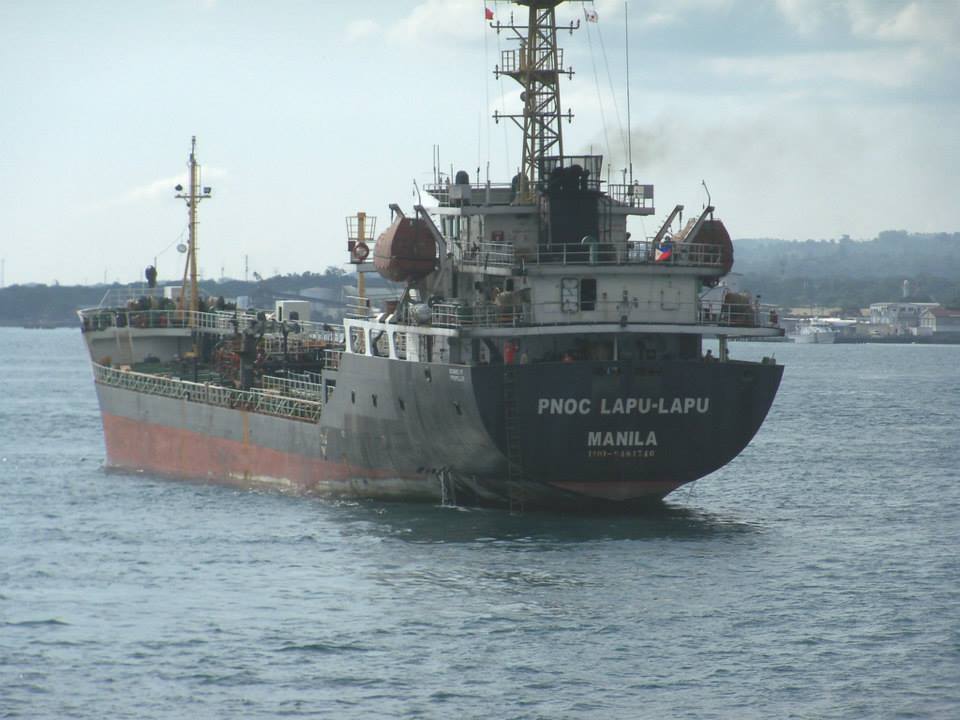
Last year in July, local Filipino media reports suggested that the vessel was supposed to be sunk by US and Philippines Marines as part of their “maritime strike” drills last year. The ship, actually a tanker, reportedly in the Bataan province while being towed to Subic, Zambales. The now-defunct Philippine National Oil Company (PNOC) Shipping and Transport Corporation gave the tanker to the Philippine Navy in 2014.
The sinking of a vessel by the two allies together is not a first. A decommissioned Philippine Navy corvette, BRP Pangasinan, was sunk by a joint Filipino and American military force during a littoral live-fire training in the waters off Zambales, Central Luzon. That sinking was the first of the two countries and was the last event in last year’s Balikatan drills.
A lot has changed since. The Balikatan 2024 drills are being staged with tension running high between China and the Philippines in the disputed South China Sea, which often erupts in a confrontation between the coast guards of the two sides.
Military analysts have noted that China’s increasingly aggressive maneuvers in disputed territories have made Manila further pivot towards the United States. The US recently reiterated its ironclad commitment to the Philippines and even suggested that an attack on it would trigger the Mutual Defense Treaty.
This year’s joint drills, scheduled from April 22 to May 8, evidently come at a precarious time. At least 16,000 people will train together, comprising 5,000 members of the Armed Forces of the Philippines (AFP) and 11,000 US soldiers. The remaining participants will come from the Australian Defence Force and the French Navy.
According to Logico, 14 other nations — including those from ASEAN, the European Union, and Japan — would dispatch “observers.” There were additional invitations for participation from other Filipino government departments, including the Department of Foreign Affairs and the Department of Information and Communications Technology.
According to Logico, this year’s exercise will assess how well the AFP’s service commands communicate with foreign troops and provide them an opportunity to “showcase the comprehensive archipelagic defense concept,” which was recently announced by Defense Secretary Gilbert Teodoro, for the first time.
The idea is aimed at shifting the AFP’s focus from fighting a domestic insurgency to fighting an adversary abroad.
Additionally, Logico mentioned the US Typhon missile system’s arrival in the Philippines, as previously reported by EurAsian Times. “We are testing the feasibility of bringing this weapon system by air and offloading [it] into a secure and established space,” he noted.
Logico also mentioned that the AFP would “secure our exercise areas, particularly during the maritime strike exercise” to ensure “there will be no interlopers … who are entering the training area, for their safety…”
China is certainly not pleased with the military exercises next door.
China Unhappy
The Philippines should be “sober enough to realize,” China’s foreign ministry cautioned in a reaction to the scheduled drills, that inviting foreign nations to demonstrate their force in the South China Sea and spark conflict will only heighten tensions and jeopardize regional security.
At a scheduled press conference, Chinese ministry spokesperson Lin Jian urged both countries to quit provocation, saying that “attempts to bring in external forces to safeguard its so-called security will only lead to greater insecurity for itself.”
The reports about the Philippines Coast Guard (PCG) may have particularly upset China.PCG spokesperson Rear Admiral Armand Balilo announced four 44-meter multi-role response vessels (MRRVs) and two larger patrol vessels will be deployed in the exercise, marking the first time the service is taking part in the Balikatan drills.

The PCG is responsible for guarding the ships carrying out replenishment of the Sierra Madre, a vessel that was run aground by Manila in the disputed Second Thomas Shoal and functions as a Filipino military outpost in the region.
With China’s expanding aggression in the region, the PCG ships are regularly confronted by the Chinese Coast Guard (CCG).
China claims almost the entire South China Sea and opposes Filipino military activity in what it claims as its sovereign territory. The upcoming drills have also drawn criticism from Chinese official media, claiming they would have a “destructive impact on regional security.”
Despite Chinese criticism and warnings, the Philippines remains unfazed. The foreign ministry of the Philippines called China to “reflect upon its actions” in the South China Sea on April 18, calling the country’s move to fortify ties with the US and Japan a “sovereign choice.
“The source of tension in our region is well known to all,” the ministry said in a statement. “It is China’s excessive maritime claims and aggressive behavior, including its militarization of reclaimed features, that are undermining regional peace and stability and raising tensions.”
- Questions and Answers
- Opinion
- Motivational and Inspiring Story
- Technology
- Live and Let live
- Focus
- Geopolitics
- Military-Arms/Equipment
- Sécurité
- Economy
- Beasts of Nations
- Machine Tools-The “Mother Industry”
- Art
- Causes
- Crafts
- Dance
- Drinks
- Film/Movie
- Fitness
- Food
- Jeux
- Gardening
- Health
- Domicile
- Literature
- Music
- Networking
- Autre
- Party
- Religion
- Shopping
- Sports
- Theater
- Health and Wellness
- News
- Culture

 Chinese
 English
 Arabic
 Spanish
 Portuguese
 Deutsch
 Turkish
 Dutch
Dutch
 Italiano
 Russian
 Romaian
 Portuguese (Brazil)
 Greek
Greek