

How Africa Can Build Its Rare Earth Advantage — A Strategic Roadmap for 2030–2040
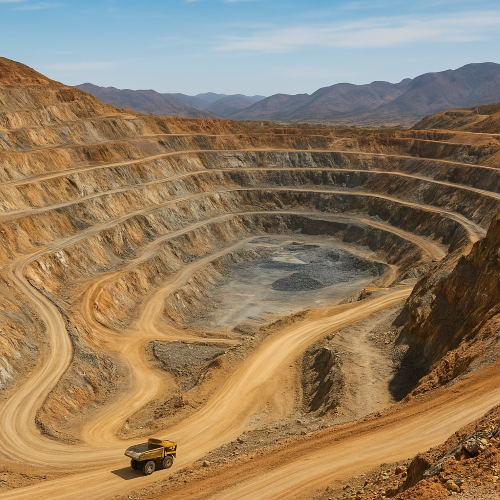
The Continent Standing on a Hidden Treasure
Africa holds some of the richest untapped deposits of rare earth elements (REEs) in the world — yet it remains a minor player in the global value chain. From Burundi’s Gakara deposit and Malawi’s Kanyika and Songwe Hills, to Tanzania’s Ngualla project and South Africa’s Steenkampskraal mine, the continent’s mineral wealth could power the next generation of electric vehicles, wind turbines, and advanced electronics.
But raw minerals alone are not enough. If Africa merely exports ore, it risks repeating the old colonial pattern — resources leave, wealth stays abroad. To truly benefit, Africa must move beyond extraction toward refining, manufacturing, and technological integration.
This roadmap outlines how African nations can transform rare earths from hidden deposits into strategic industrial leverage by 2030–2040.
2. Step One: Mapping and Securing the Resource Base
The first challenge is knowledge and control. Many African countries lack comprehensive geological surveys of rare earth resources. Foreign mining firms often control data, licenses, and export channels — creating an information asymmetry that limits national policy planning.
Action Plan (2025–2030):
-
Establish African Rare Earth Geological Consortium (AREGC) to pool geological data across nations.
-
Develop transparent digital registries of REE deposits, ownership, and production statistics.
-
Create sovereign resource audit laws, ensuring that exploration results from foreign firms are shared with host governments.
-
Use satellite mapping and AI-based exploration to identify additional deposits.
By controlling data, Africa can negotiate from a position of knowledge and strength, setting fair royalties and long-term strategies.
3. Step Two: Building Refining and Separation Capacity
Mining is the easy part — refining is where value multiplies. Currently, nearly all African rare earth ores are shipped abroad for processing, mainly to China. The goal should be to establish at least five regional refining hubs across the continent by 2035.
Strategic Refining Hubs (Proposed):
-
East Africa Hub: Tanzania or Kenya (serving Great Lakes region)
-
Southern Africa Hub: South Africa or Namibia
-
Central Africa Hub: DRC or Burundi
-
West Africa Hub: Nigeria or Ghana
-
North Africa Hub: Morocco or Egypt (for Mediterranean access)
Each hub can specialize:
-
Light rare earths (LREEs): Neodymium, praseodymium, cerium
-
Heavy rare earths (HREEs): Dysprosium, terbium, yttrium
Policy Mechanisms:
-
Offer tax incentives and infrastructure support for investors in refining.
-
Enforce “no raw export” laws — similar to Indonesia’s nickel policy.
-
Partner with foreign technology providers (Japan, South Korea, EU) under joint ownership and knowledge transfer agreements.
By localizing refining, Africa could capture up to 60–70% of total value that currently leaves the continent.
4. Step Three: Establishing Magnet and Materials Industries
To move up the value chain, Africa must not stop at refining. The goal is to manufacture neodymium-iron-boron (NdFeB) magnets, alloys, and electronic components domestically.
Key Industrial Initiatives:
-
African Magnet Materials Program (AMMP): A continental R&D and production framework modeled after China’s magnet clusters.
-
Create pilot magnet manufacturing plants in countries with metallurgical infrastructure (South Africa, Egypt, Nigeria).
-
Encourage local automotive and energy companies (e.g., Innoson Motors, Ethiopian Airlines, Eskom) to source magnets regionally.
-
Establish technology transfer partnerships with Japan’s Hitachi Metals or European firms like Vacuumschmelze under co-production deals.
This step would generate thousands of skilled jobs, spur innovation in engineering and metallurgy, and anchor Africa’s position in the global green economy.
5. Step Four: Building Human Capital and Research Infrastructure
No industrial revolution happens without people. Africa must cultivate a generation of materials scientists, chemists, and engineers who understand the entire rare earth lifecycle — from geology to magnetics.
Recommended Programs:
-
Pan-African Rare Earth University Network (PAREUN): linking universities in South Africa, Kenya, Nigeria, Egypt, and Ghana for joint research.
-
Scholarships and technical training through African Development Bank (AfDB) and UNESCO partnerships.
-
Incorporate rare earth chemistry and clean refining modules into engineering curricula.
-
Encourage public–private research labs co-funded by mining companies.
A skilled workforce transforms resource endowment into technological independence.
6. Step Five: Regional Integration and Policy Harmonization
Rare earth development must be continental, not isolated. Fragmented national policies lead to competition and undercutting — a problem China avoided through central coordination.
Action Steps:
-
Create an African Rare Earth Commission (AREC) under the African Union.
-
Align taxation, export duties, and environmental standards across countries.
-
Build cross-border industrial corridors (e.g., Tanzania–Zambia–South Africa supply route).
-
Develop African strategic reserves of refined REEs to stabilize markets and buffer against external shocks.
Such integration will help Africa negotiate collectively with major buyers (U.S., EU, China) rather than individually.
7. Step Six: Environmental Responsibility and Green Refining
Refining rare earths involves toxic waste, radiation, and heavy acid use. Africa must avoid becoming a pollution zone in pursuit of industrialization.
Solutions for Green Refining:
-
Adopt closed-loop hydrometallurgy systems to recycle reagents and water.
-
Require waste treatment and tailings reprocessing as part of every refinery license.
-
Partner with European environmental tech firms for best-practice compliance.
-
Encourage renewable-powered refining plants, reducing carbon footprints.
By promoting eco-friendly refining, Africa could become the world’s first “green rare earth” supplier, earning premium prices and international trust.
8. Step Seven: Strategic Partnerships and Diplomacy
Africa’s rare earth future depends on smart partnerships, not dependency.
The continent must balance relationships between East and West — leveraging competition to its advantage.
Strategic Partnership Framework:
-
With China: Technology transfer, joint refining projects, and processing plants in Africa instead of raw exports.
-
With the West (U.S./EU/Japan): Co-investment in refining and magnet manufacturing, ensuring diversified supply away from China.
-
Within Africa: Knowledge sharing through AU-led industrial programs.
The aim is to turn Africa into a neutral but indispensable player — much like OPEC in the oil era, but for rare earths.
9. Step Eight: Financing and Industrial Investment
Rare earth projects require patient capital and infrastructure funding. African nations can pool resources and attract ethical investors.
Funding Mechanisms:
-
Establish an African Rare Earth Development Fund (ARED-Fund) through Afreximbank, AfDB, and sovereign wealth funds.
-
Issue “Green Industrial Bonds” tied to sustainable refining and EV supply chains.
-
Invite public–private partnerships (PPPs) for refinery construction and magnet plants.
-
Negotiate resource-backed infrastructure deals, ensuring fair valuation and local processing clauses.
Such mechanisms would enable long-term financing independent of volatile foreign aid cycles.
10. Vision 2040: Africa as a Global Rare Earth Powerhouse
If Africa follows this roadmap, by 2040 it could evolve from a raw material exporter into a major global supplier of refined rare earths and magnet materials.
Expected Outcomes:
-
Industrial Transformation: Dozens of refineries, magnet plants, and clean-tech factories across the continent.
-
Economic Empowerment: Hundreds of thousands of high-skilled jobs in metallurgy, engineering, and manufacturing.
-
Strategic Leverage: Ability to influence global clean energy supply chains.
-
Technological Uplift: African participation in global EV, robotics, and aerospace industries.
Africa could position itself as the sustainable rare earth hub of the 21st century, balancing global demand between East and West — while uplifting its own economies.
11. From Extraction to Empowerment
Africa stands at a historic crossroads. Rare earth elements — the metals that power the modern world — offer a once-in-a-century opportunity to rewrite the continent’s economic story.
If Africa builds refining capacity, fosters human capital, enforces environmental standards, and integrates policy under a united strategy, it can transform its mineral wealth into industrial strength and geopolitical influence.
The next era of global industry will not be defined by who has the most mines — but by who controls the cleanest refineries, smartest scientists, and most strategic alliances.
Africa has the resources, the youth, and the time. What it needs now is vision, coordination, and courage to turn rare earths into real independence.
By John Ikeji-Uju
- Questions and Answers
- Opinion
- Motivational and Inspiring Story
- Technology
- Live and Let live
- Focus
- Geopolitics
- Military-Arms/Equipment
- Security
- Economy
- Beasts of Nations
- Machine Tools-The “Mother Industry”
- Art
- Causes
- Crafts
- Dance
- Drinks
- Film/Movie
- Fitness
- Food
- Games
- Gardening
- Health
- Home
- Literature
- Music
- Networking
- Other
- Party
- Religion
- Shopping
- Sports
- Theater
- Health and Wellness
- News
- Culture

 Chinese
 Arabic
 French
 Spanish
 Portuguese
 Deutsch
 Turkish
 Dutch
Dutch
 Italiano
 Russian
 Romaian
 Portuguese (Brazil)
 Greek
Greek