

Environmental, Social, and Governance (ESG) Pathways for a Responsible African Rare Earth Industry
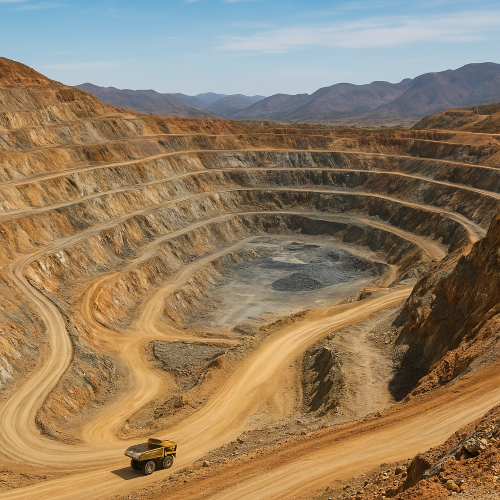
Building a Responsible Rare Earth Revolution
The rise of rare earth element (REE) demand presents both a promise and a warning for Africa. On one hand, it offers a chance to industrialize and integrate into the global green economy; on the other, it carries the potential for pollution, corruption, and social exploitation — pitfalls that have historically accompanied resource booms.
To avoid repeating the “resource curse” pattern, Africa must make ESG — Environmental, Social, and Governance — the central pillar of its rare earth industrialization strategy. ESG compliance is no longer a Western luxury or donor-imposed condition; it is now the currency of credibility in global supply chains. Companies and countries that can prove their materials are “clean, ethical, and traceable” will capture the most lucrative and stable markets.
A responsible African rare earth ecosystem can thus serve two missions at once:
-
Protect people and planet, and
-
Secure Africa’s reputation as the world’s trusted green supplier.
1. Environmental Responsibility: Turning a Dirty Process Clean
The refining of rare earths is infamously difficult and polluting — especially when done with outdated methods that rely on acid leaching, solvent extraction, and radioactive waste discharge. China’s early dominance came at enormous ecological cost: poisoned rivers, contaminated soil, and entire communities suffering from toxic exposure.
Africa must take a different path from the very beginning, building a clean refining model that combines innovation with environmental accountability.
Key Strategies for Green Refining:
-
Closed-Loop Processing Systems:
Refineries should employ closed-loop water and chemical systems that recycle over 90% of process fluids. Technologies like ion-exchange resins, membrane filtration, and solvent recovery units can drastically reduce waste discharge. -
Radioactive Waste Management:
Some rare earth ores (like monazite and bastnäsite) contain thorium or uranium byproducts. Establishing national radioactive waste management protocols — including secure tailings storage and long-term containment facilities — is critical to prevent contamination. -
Renewable-Powered Operations:
Mining and refining require large amounts of electricity. By powering industrial zones with solar, wind, or hydro energy, African nations can reduce emissions and market their materials as “low-carbon REEs.” -
Lifecycle Emissions Tracking:
Implement digital systems (such as blockchain-based traceability) to record carbon footprints and environmental data at each stage of production. These verified sustainability reports increase access to green finance and premium buyers. -
Biodiversity Protection Zones:
Mines and industrial areas must include buffer zones to protect surrounding ecosystems and water bodies. Governments can make environmental restoration a license condition — requiring mining firms to replant and rehabilitate land after use.
The message is clear: Africa can win the market not by being the cheapest, but by being the cleanest and most transparent supplier of critical minerals.
2. Social Responsibility: Empowering Communities, Not Exploiting Them
A just rare earth industry must serve people as much as profits. Too often, mining regions across the Global South have suffered displacement, poor working conditions, and corruption while seeing little benefit from the wealth beneath their soil.
Community Empowerment Principles:
-
Local Employment and Skills Development:
Every project should include a Local Content Plan requiring companies to train and hire African technicians, engineers, and administrators. Partnerships with universities and technical colleges can create Rare Earth Training Centers that provide scholarships and apprenticeships to youth. -
Community Revenue Sharing:
At least 5–10% of mining royalties should go directly into community development funds — managed transparently — for schools, clinics, water projects, and local enterprises. This ensures tangible benefits for residents living near operations. -
Respect for Indigenous Rights and Land Use:
Mining licenses must follow Free, Prior, and Informed Consent (FPIC) protocols. Local communities should have a real voice in whether and how mining proceeds on their land. -
Health and Safety Standards:
Refining and mining facilities should adhere to international health standards, ensuring protective gear, air monitoring, and medical access for all workers. Governments should conduct random inspections to prevent unsafe practices. -
Gender and Inclusion:
Women’s participation in mining and metallurgy is often limited to informal roles. An inclusive rare earth industry must promote gender-balanced employment, equal pay, and women-led small business partnerships in supply chains.
Social responsibility is not a cost — it is a foundation for long-term stability, preventing unrest, building local trust, and ensuring that communities become partners in progress, not victims of extraction.
3. Governance: Transparency, Accountability, and Institutional Strength
Strong governance is the backbone of sustainability. Without transparency and institutional capacity, even the best ESG policies collapse under corruption and elite capture.
Building Transparent and Accountable Institutions:
-
Open Contracting and Licensing Systems:
Governments should publish all mining and refining contracts in online registries, allowing citizens to track royalties, ownership structures, and project obligations. -
Anti-Corruption Monitoring:
Establish independent oversight bodies — or integrate with the Extractive Industries Transparency Initiative (EITI) — to audit payments, environmental compliance, and community compensation. -
Digital Traceability from Mine to Magnet:
Implement blockchain or digital ledger systems that record every transfer of ore, refined material, and finished product. This prevents smuggling and builds consumer trust in “ethical origin” certification. -
Public-Private ESG Councils:
Each country could form a Critical Minerals ESG Council, bringing together government, private sector, and civil society to monitor sustainability progress and advise on reforms. -
Regional Harmonization under AfCFTA:
To attract global investors, African nations should standardize ESG regulations across borders. A unified “African Green Minerals Standard” could define environmental limits, labor rights, and reporting benchmarks continent-wide.
Governance reform is the multiplier effect — once trust and predictability exist, investment flows multiply, and the industry becomes self-sustaining.
4. Global Alignment: Meeting International ESG Expectations
Today, global buyers — from Tesla to Siemens to Apple — require traceable and responsibly sourced materials. The European Union’s Critical Raw Materials Act (CRMA) and the U.S. Inflation Reduction Act (IRA) both include strict sustainability criteria for imports.
Africa’s producers must therefore align with international frameworks like:
-
OECD Due Diligence Guidance for Responsible Mineral Supply Chains
-
UN Sustainable Development Goals (SDGs)
-
ISO 14001 Environmental Management Standards
-
Global Battery Alliance’s Green Minerals Framework
By doing so, Africa can access premium markets and avoid being locked out of future supply contracts due to non-compliance. Compliance itself becomes a competitive advantage.
5. The Long-Term Payoff: Reputation as Africa’s Green Advantage
An Africa that builds a transparent, environmentally safe, socially inclusive, and well-governed rare earth industry will possess not just resources, but a brand of trust.
This ESG-led approach will yield five strategic dividends:
-
Access to high-value Western and Asian buyers that prefer verified ethical supply chains.
-
Lower financing costs through green bonds and sustainability-linked loans.
-
Political stability as communities share in benefits and conflicts decline.
-
Environmental resilience that protects future generations.
-
Global respect for Africa as a model of clean industrialization — not a pollution zone.
Africa’s ESG framework can become its soft power, turning “mineral wealth” into “moral wealth.”
From Extraction to Stewardship
Africa’s rare earth revolution cannot merely copy the past — it must define the future of responsible mining. The continent has a once-in-a-century opportunity to show that economic growth and ecological care can coexist.
By embedding ESG principles into every stage — from exploration to magnet manufacturing — Africa can lead the world in a new model of ethical industrialization.
The true test of leadership in the green economy will not be who digs the fastest, but who builds the cleanest, most just, and most transparent supply chains.
If Africa rises to this challenge, its rare earths will not just power the world’s wind turbines and electric cars — they will symbolize a moral shift toward fairer, cleaner, and more human-centered industrial progress.
- Questions and Answers
- Opinion
- Motivational and Inspiring Story
- Technology
- Live and Let live
- Focus
- Geopolitics
- Military-Arms/Equipment
- Seguridad
- Economy
- Beasts of Nations
- Machine Tools-The “Mother Industry”
- Art
- Causes
- Crafts
- Dance
- Drinks
- Film/Movie
- Fitness
- Food
- Juegos
- Gardening
- Health
- Home
- Literature
- Music
- Networking
- Other
- Party
- Religion
- Shopping
- Sports
- Theater
- Health and Wellness
- News
- Culture

 Chinese
 English
 Arabic
 French
 Portuguese
 Deutsch
 Turkish
 Dutch
Dutch
 Italiano
 Russian
 Romaian
 Portuguese (Brazil)
 Greek
Greek