

How Technology and AI Will Reshape African Jobs in the Next 10 Years
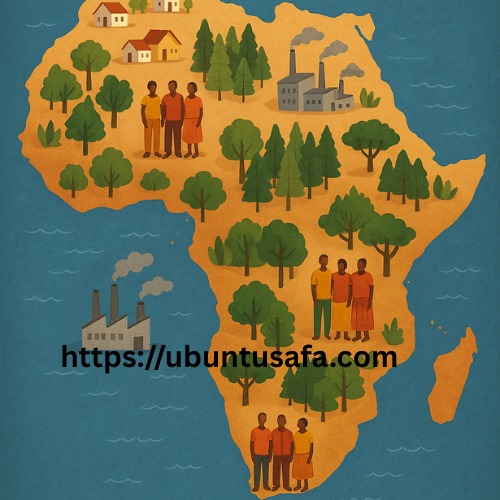
Africa is undergoing a digital transformation. From mobile money in Kenya to fintech hubs in Nigeria and smart agriculture in Ghana, technology is already reshaping how Africans live, work, and do business.
In the next decade, artificial intelligence (AI) and advanced digital technologies are poised to have a profound impact on the continent’s labor market.
While the opportunities are immense, the transition also presents significant challenges.
Preparing for this shift is critical for African nations to harness technology for inclusive economic growth rather than risk exacerbating unemployment and inequality.
1. Africa’s Current Employment Landscape
Africa’s labor market is characterized by:
-
A rapidly growing population, with over 60% under 25 years old.
-
A predominance of informal employment, particularly in agriculture, retail, and small-scale services.
-
Persistent skills gaps in technology, engineering, and management.
-
Rising urbanization and demand for service-based and industrial jobs.
Technology and AI will touch all of these areas, reshaping both formal and informal work sectors.
2. How Technology Will Transform Jobs
A. Automation and AI in industry
-
Manufacturing and assembly: AI-powered robotics and smart machinery can increase productivity and reduce costs.
-
Mining and resource extraction: Sensors, predictive maintenance, and autonomous vehicles improve efficiency and safety.
-
Impact: Some routine jobs may disappear, but new roles will emerge in AI supervision, maintenance, and industrial engineering.
B. Agriculture
-
Smart farming using drones, AI-powered analytics, and precision irrigation will increase yields, reduce waste, and optimize labor usage.
-
Example: AI can predict optimal planting and harvesting schedules, reducing reliance on manual labor.
-
Impact: While some traditional farming jobs may decline, new tech-driven roles in agritech, data analysis, and logistics will grow.
C. Services and the gig economy
-
Platforms like Uber, Bolt, and Flutterwave demonstrate the potential of digital services.
-
AI chatbots, virtual assistants, and automated customer service can handle repetitive tasks.
-
Impact: Routine service jobs may shrink, but digital entrepreneurship, app development, and AI management roles will expand.
D. Finance and fintech
-
AI-driven credit scoring, fraud detection, and investment analytics are transforming banking and insurance.
-
Impact: Traditional clerical roles may decline, but demand for data analysts, cybersecurity specialists, and AI-driven financial advisors will rise.
E. Health and education
-
Telemedicine, AI diagnostics, and adaptive learning platforms will extend access while improving efficiency.
-
Impact: Health workers may shift focus from routine diagnostics to higher-level decision-making and patient care management. Teachers may leverage AI tools to personalize learning, reducing administrative workload.
3. New Job Opportunities AI Will Create
-
AI development and software engineering
-
Programming AI models, developing machine learning systems, and designing data pipelines.
-
African tech hubs in Nairobi, Lagos, and Cape Town are already producing skilled programmers and innovators.
-
-
Data analytics and AI management
-
Businesses will require experts to interpret AI outputs, manage predictive models, and ensure data ethics compliance.
-
-
Cybersecurity
-
Increased reliance on AI and digital systems will drive demand for cybersecurity specialists to protect critical infrastructure, personal data, and corporate networks.
-
-
Digital entrepreneurship
-
AI can enable small businesses to automate operations, reach new markets, and scale efficiently, creating a wave of micro and medium-scale enterprises.
-
-
AI-assisted creative industries
-
AI-generated content, design tools, and media production will open opportunities in marketing, entertainment, and content creation.
-
4. Challenges and Risks
A. Job displacement
-
Routine, low-skill jobs are most vulnerable to automation.
-
Workers in informal sectors may struggle to transition without targeted retraining programs.
B. Skills mismatch
-
Africa faces a technology skills gap, particularly in AI, software engineering, and data analysis.
-
Without investment in education and vocational training, new jobs will remain inaccessible to the majority.
C. Inequality
-
Wealth and skills may concentrate among urban, educated populations, leaving rural and low-skilled workers behind.
-
This could exacerbate economic inequality and social tension.
D. Regulatory and ethical challenges
-
AI adoption raises concerns around data privacy, bias in decision-making, and transparency.
-
African governments need regulatory frameworks to protect workers and citizens while encouraging innovation.
5. Strategies to Harness AI for Inclusive Growth
A. Education and skills development
-
Introduce AI literacy, coding, and data analysis in secondary and tertiary education.
-
Expand vocational training in tech-driven sectors like robotics, machine maintenance, and digital marketing.
-
Encourage partnerships between universities and tech companies for practical AI training programs.
B. Digital infrastructure
-
Expand internet access, cloud computing, and affordable devices to ensure broad participation in AI-driven economies.
-
Support tech hubs, incubators, and coworking spaces to nurture local innovation.
C. Public-private collaboration
-
Governments can collaborate with tech companies to develop job transition programs for workers displaced by automation.
-
Incentivize companies to invest in local AI research, training, and entrepreneurship programs.
D. Policy and regulatory frameworks
-
Implement AI ethics, data protection, and labor laws to guide responsible adoption.
-
Ensure that AI-driven automation complements human labor rather than replacing it entirely.
E. Encourage local AI innovation
-
Invest in homegrown AI solutions tailored to African challenges, such as agriculture, healthcare, and education.
-
Local innovation ensures relevance, job creation, and retention of value within the continent.
6. The Role of Governments
African governments must play a proactive role to maximize AI benefits:
-
National AI strategies: Define sectoral priorities, investment plans, and workforce development initiatives.
-
Incentivize innovation: Provide tax breaks, grants, and support for startups working in AI and automation.
-
Protect workers: Implement retraining programs, social safety nets, and job transition support.
-
Foster partnerships: Collaborate regionally to share best practices and pool resources for AI research and infrastructure.
7. Opportunities for African Youth
Africa’s young population is an advantage:
-
Over 60% of Africans are under 25, offering a dynamic workforce adaptable to technology.
-
Youth-led startups in fintech, agritech, healthtech, and e-commerce are already leveraging AI to create jobs.
-
With proper training, African youth can transition from manual labor to high-skill digital roles, driving economic growth and innovation.
8. Future Outlook
Over the next 10 years:
-
AI and automation will reshape job structures: Routine jobs decline, but tech-driven, knowledge-intensive roles increase.
-
Industrial transformation: Manufacturing, agriculture, and services will become more productive, but require skilled labor.
-
Entrepreneurial boom: AI will enable small businesses and startups to scale efficiently, creating new economic ecosystems.
-
Regional competitiveness: Countries investing in AI infrastructure and education will attract investment and talent, gaining global advantage.
The outcome depends on proactive policy, strategic investment, and inclusive education programs. Nations that fail to adapt risk job losses, inequality, and economic stagnation, while those that prepare can leapfrog traditional industrial stages to become global leaders in AI-driven industries.
+++++++++++++++++++++
AI and technology represent a transformative opportunity for Africa. Over the next decade, they will reshape employment, industrialization, and entrepreneurship across the continent. While challenges such as job displacement, skills gaps, and inequality exist, they are manageable through strategic planning, education, and governance.
Africa’s young population, if equipped with the right skills and opportunities, can drive an AI-powered economic revolution. Governments, private sector actors, and educational institutions must work together to ensure that technology creates inclusive growth, higher-quality jobs, and a competitive African economy.
The future of African jobs will not be about resisting AI—it will be about harnessing it to create more meaningful, productive, and inclusive work opportunities across the continent. Africa has the resources, talent, and ingenuity to lead in this transformation—but only if it acts decisively today.
- Questions and Answers
- Opinion
- Motivational and Inspiring Story
- Technology
- Live and Let live
- Focus
- Geopolitics
- Military-Arms/Equipment
- Ασφάλεια
- Economy
- Beasts of Nations
- Machine Tools-The “Mother Industry”
- Art
- Causes
- Crafts
- Dance
- Drinks
- Film/Movie
- Fitness
- Food
- Παιχνίδια
- Gardening
- Health
- Κεντρική Σελίδα
- Literature
- Music
- Networking
- άλλο
- Party
- Religion
- Shopping
- Sports
- Theater
- Health and Wellness
- News
- Culture

 Chinese
 English
 Arabic
 French
 Spanish
 Portuguese
 Deutsch
 Turkish
 Dutch
Dutch
 Italiano
 Russian
 Romaian
 Portuguese (Brazil)