

Can Asia Truly Prosper When China Constantly Forces Nations to Choose Between Submission and Confrontation?
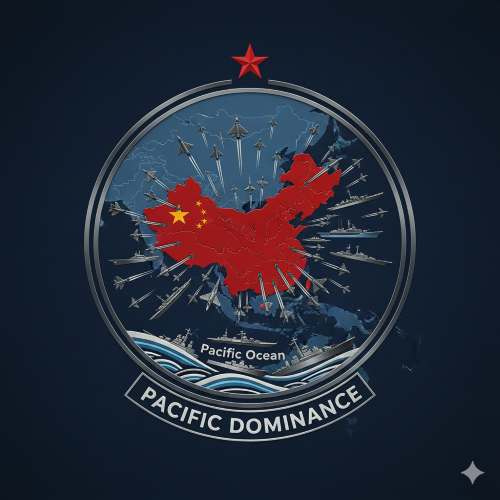
Asia is home to some of the world’s fastest-growing economies, most dynamic societies, and most promising futures.
From Japan’s high-tech innovation to India’s booming digital economy, from Southeast Asia’s rising middle class to South Korea’s cultural and technological power—the region holds immense potential.
But there is a growing obstacle to Asia’s stability and prosperity: China’s coercive strategy of forcing nations to choose between submission or confrontation.
This binary choice—either bow to Beijing’s demands or risk economic, political, and military retaliation—is fundamentally incompatible with a peaceful, prosperous, and cooperative Asia.
It traps countries in a cycle of fear, hesitation, and defensive posturing. It undermines trust, weakens regional institutions, and disrupts the partnerships needed for long-term stability.
The question is clear: Can Asia truly prosper under such pressure?
The honest answer: Not fully. Not genuinely. Not sustainably.
Not as long as China maintains a strategy that treats its neighbors as vassals or threats rather than equal partners.
Here is why.
1. Prosperity Requires Stability—But China’s Behavior Creates Uncertainty
Economic growth depends on stability. Investments, trade, tourism, supply chains—all require predictability. But China’s aggressive behavior creates the opposite:
-
Naval confrontations in the South China Sea
-
Military intimidation of Taiwan
-
Airspace violations over Japan and South Korea
-
Border standoffs with India
-
Interference in internal politics in Southeast Asia
-
Economic coercion against countries that oppose Beijing
When a major power uses threats instead of diplomacy, stability becomes impossible.
Countries must divert resources toward:
-
Military spending
-
Surveillance systems
-
Defense partnerships
-
Emergency planning
-
Crisis management
Money that should be invested in technology, healthcare, education, and infrastructure is instead redirected to counter China’s pressure.
An Asia living in fear cannot prosper.
2. Prosperity Requires Trust—But China’s Actions Destroy Trust
China says it wants peaceful coexistence and win-win cooperation. But in practice, it often behaves like a revisionist power seeking dominance rather than partnership.
Example: South China Sea
China promised not to militarize the Spratlys.
It militarized them anyway.
Example: Economic Engagement
China promised fair, win-win Belt and Road projects.
Many nations ended up with debt traps, inflated construction costs, and political strings attached.
Example: Diplomacy
China promised ASEAN a peaceful code of conduct.
It delayed negotiations for years while expanding its military footprint.
Example: Security
China promised India status quo at the border.
It unilaterally altered ground positions in Ladakh.
Trust cannot grow in a region where one major power repeatedly breaks promises.
Without trust, prosperity is shallow, temporary, and fragile.
3. Prosperity Requires Freedom of Choice—But China Punishes Independent Nations
Prosperity thrives when nations can pursue independent policies that serve their people. But China actively restricts that freedom.
When a country acts against Beijing’s wishes, it is punished:
-
Australia was hit with tariffs for questioning China’s handling of COVID-19.
-
South Korea faced economic revenge for allowing a U.S. defense system (THAAD).
-
The Philippines faced fruit import bans during maritime disputes.
-
India suffered cyberattacks and economic pressure after border tensions.
-
Japan has repeatedly faced rare-earth export restrictions.
-
Lithuania was nearly erased from Chinese trade systems for engaging Taiwan.
The message is clear:
Do what China wants, or pay the price.
This climate of fear suffocates sovereignty and undermines prosperity. Countries cannot build stable long-term strategies when their economic future can be weaponized by a powerful neighbor.
4. Prosperity Requires Cooperation—But China Forces Zero-Sum Choices
Asia’s prosperity depends on collaboration across borders. The region’s growth is interconnected—through trade, technology, energy, culture, and transportation.
But China’s approach divides the region:
-
It pressures ASEAN to split on South China Sea issues.
-
It seeks to weaken the U.S.-Japan-South Korea security partnership.
-
It divides South Asia by supporting Pakistan militarily while pressuring India.
-
It undermines unity in the Quad (India, Japan, Australia, U.S.) by punishing individual members.
-
It attempts to isolate Taiwan economically while threatening it militarily.
Instead of building a cooperative Asian framework, Beijing seeks to create a hierarchy with China at the top.
You cannot build a prosperous region by forcing neighbors to choose between loyalty and hostility.
5. Prosperity Requires Rule of Law—But China Undermines It
The international order that has helped Asia grow for decades is based on laws, not force. Maritime rights, airspace boundaries, arbitration courts, treaties, and diplomatic norms are essential.
China’s behavior erodes this foundation:
-
It rejected the 2016 Hague ruling on the South China Sea.
-
It unilaterally draws the “nine-dash line,” contradicting UNCLOS.
-
It builds artificial islands to claim territory illegally.
-
It sends civilian militias to enforce military goals.
-
It uses fishing fleets as political tools.
When one nation ignores international law, others may follow.
Order collapses. Chaos rises.
In such a climate, prosperity cannot flourish.
6. Prosperity Requires Peace—But China Creates the Constant Threat of Conflict
Asia’s biggest fear today is not poverty.
It is war.
And many of the region’s potential flashpoints stem from China’s actions:
-
Taiwan: Massive military drills simulate invasion.
-
South China Sea: Coast guard ships fire water cannons, ram vessels, and block resupply missions.
-
East China Sea: Chinese warplanes harass Japanese jets.
-
Himalayas: Troops clash with India in brutal hand-to-hand combat.
One miscalculation could ignite a regional war involving multiple nations.
Prosperity cannot survive under the shadow of conflict.
7. Prosperity Requires Mutual Respect—But China Demands Submission
Prosperous regions—like Europe after WWII—are built on equality between nations. But China’s foreign policy increasingly functions on an imperial logic:
-
China must be respected, but it needs not respect neighbors.
-
China’s territorial claims are sacred, but others’ claims are “illegitimate.”
-
China’s historical narrative must be accepted, but others’ histories are ignored.
-
China claims “peaceful intentions” while using force.
This creates a toxic environment where neighbors are treated as:
-
Subjects to be managed
-
Threats to be suppressed
-
Markets to be exploited
-
Buffers to be controlled
Not equal partners.
Prosperity cannot grow when one nation claims superiority over the rest.
Asia’s Prosperity Requires Freedom—Not Fear
Can Asia truly prosper when China forces nations to choose between submission and confrontation?
No. Not genuinely. Not sustainably.
Prosperity requires:
-
Stability
-
Trust
-
Rule of law
-
Peace
-
Cooperation
-
Equality
-
Freedom of choice
China’s current strategy undermines all of them.
Asia can prosper—but only if countries work together to ensure that the region is not dominated by a single power demanding obedience. Prosperity will come not from submission to Beijing, but from unity, partnerships, strong institutions, and a collective commitment to sovereignty and peace.
China can still choose a different path—a cooperative, respectful, truly peaceful rise.
But until it does, Asia’s prosperity will remain limited, fragile, and constantly under threat.
Only when fear is replaced by freedom can Asia reach its full potential.
- Questions and Answers
- Opinion
- Motivational and Inspiring Story
- Technology
- Live and Let live
- Focus
- Geopolitics
- Military-Arms/Equipment
- Seguridad
- Economy
- Beasts of Nations
- Machine Tools-The “Mother Industry”
- Art
- Causes
- Crafts
- Dance
- Drinks
- Film/Movie
- Fitness
- Food
- Juegos
- Gardening
- Health
- Home
- Literature
- Music
- Networking
- Other
- Party
- Religion
- Shopping
- Sports
- Theater
- Health and Wellness
- News
- Culture

 Chinese
 English
 Arabic
 French
 Portuguese
 Deutsch
 Turkish
 Dutch
Dutch
 Italiano
 Russian
 Romaian
 Portuguese (Brazil)
 Greek
Greek