

Is China’s Aggression Toward Japan, the Philippines, Taiwan, Vietnam, and India a Strategy of Fear Designed to Prevent Any United Asian Coalition Against It?
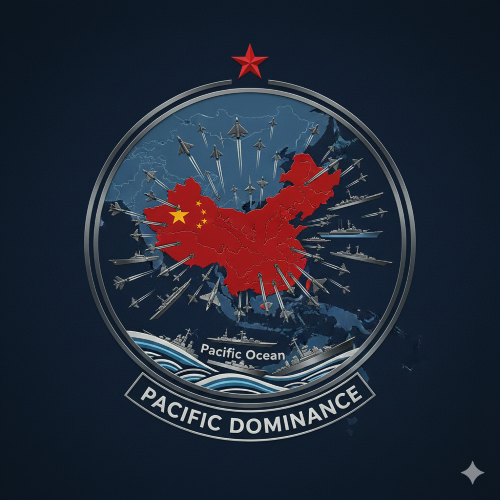
Across Asia, one pattern has become unmistakably clear: China is in conflict, tension, or confrontation with nearly every major regional power.
From Japan in the East China Sea, to the Philippines and Vietnam in the South China Sea, to Taiwan across the strait, and India along the Himalayan border—Beijing’s pressure is constant, deliberate, and strategically executed.
This raises a profound question:
Is China intentionally using aggression and intimidation to prevent Asian nations from forming any united coalition that could balance or challenge its rise?
The answer, supported by observable behavior, strategic writings, and geopolitical logic, is yes—China’s actions strongly suggest a deliberate strategy to create fear, fragmentation, and dependency, preventing Asia from forming a unified bloc that could contain its ambitions.
Below is a detailed examination of how and why this strategy works—and why Beijing believes it must use fear to stop a united Asian front.
1. China’s Greatest Geopolitical Fear: A Unified Asia
China’s military planners—including thinkers in the PLA (People’s Liberation Army)—consistently warn of one major threat:
a coalition of Asian nations aligned with each other and with external powers like the United States.
Such a coalition would possess:
-
larger population than China
-
bigger combined economy
-
superior military capabilities
-
vast technological resources
-
shared maritime chokepoints
-
multi-directional strategic pressure
A united Asia—from Japan to India, from Vietnam to South Korea—would make it nearly impossible for China to dominate the region or impose its territorial claims.
Beijing’s national strategy is built on the assumption that preventing such a coalition is essential for China’s rise.
And the most effective way to prevent unity is fear.
2. Why Fear Works Better Than Friendship for China’s Goals
Ideally, China would rise peacefully and win allies through trust.
But after decades of broken promises, aggression, and coercion, Beijing faces a credibility problem.
So instead of building alliances through goodwill, China increasingly uses:
-
military intimidation
-
economic coercion
-
territorial pressure
-
political manipulation
-
divide-and-rule diplomacy
Fear becomes a tool to ensure that countries remain too scared, too divided, or too busy defending themselves to unite against China.
Beijing understands a simple psychological equation:
A neighbor focused on defending its own territory has no time or confidence to form a coalition against you.
3. How China Uses Aggression to Keep Japan Isolated
Japan is the only Asian country capable of matching China’s technological and naval power.
Beijing knows that if Japan forms deeper ties with India, Vietnam, Taiwan, or the Philippines, China’s strategic advantage collapses.
To prevent unity, China:
-
floods Japanese airspace with fighter jets
-
deploys coast guard vessels around the Senkaku Islands
-
harasses Japanese ships
-
threatens to “punish” Japan if it defends Taiwan
-
conducts joint patrols with Russia around Japan
These actions force Japan to focus resources on self-defense and slow down broader coordination with Southeast Asia.
Fear weakens its ability to fully lead a regional balancing coalition.
4. Why China Bullies the Philippines and Vietnam: Divide ASEAN
China knows that ASEAN is influential only when united.
A divided Southeast Asia benefits Beijing.
Tactics China uses:
-
Water cannon attacks on Philippine vessels
-
Harassment of Vietnamese oil installations
-
Militarization of artificial islands
-
Fishing militia intimidation
-
Secret agreements to pressure individual leaders behind closed doors
By keeping the Philippines and Vietnam constantly under threat, China prevents:
-
unified ASEAN positions
-
collective maritime strategy
-
shared defense frameworks
-
joint resistance
-
coordination with Japan, India, or Taiwan
Fear splinters ASEAN—exactly as China intends.
5. Why China Targets India: Prevent a Pan-Asian Partnership
India is the only Asian country with comparable demographics and economic trajectory.
India could anchor a coalition stretching from the Indian Ocean to the Pacific.
China’s response has been consistent:
-
creeping aggression along the Himalayan border
-
building military infrastructure in disputed regions
-
weaponizing Pakistan as a counter to India
-
cyberattacks on Indian critical systems
-
blocking India’s entry into global institutions
The 2020 Galwan Valley clash, resulting in fatalities, was a message:
“Stay in your place.”
An India constantly managing border threats is less able to coordinate with Japan or support Southeast Asia.
Once again—fear replaces unity.
6. Taiwan: The Anchor of an Anti-China Democratic Coalition
Taiwan represents more than a territorial claim—it represents:
-
democratic governance
-
advanced technology
-
a strategic naval position
-
a symbol of resistance to authoritarian expansion
China knows Taiwan could unite Japan, the U.S., Australia, the Philippines, and even India into one response network.
So Beijing attempts to isolate Taiwan through:
-
near-daily air incursions
-
naval encirclement drills
-
economic pressure
-
disinformation
-
diplomatic isolation
The message to others:
“Help Taiwan, and you will be next.”
This fear discourages deeper Asian cooperation to protect the island.
7. China’s Strategy Follows an Imperial Logic, Not a Neighborly One
China’s actions are not random. They reflect a consistent geopolitical doctrine:
1. Prevent multilateral alliances in Asia
A united Asian bloc is China’s nightmare scenario.
2. Keep countries focused on bilateral disputes
If Vietnam fights alone, China wins.
If Japan fights alone, China wins.
If India fights alone, China wins.
3. Use intimidation to discourage coordination
The message:
“Cooperate with others against us, and we will punish you.”
4. Exploit differences between democracies and autocracies
Authoritarian regimes are easier to influence.
Democracies require durable coalitions.
5. Use economic incentives to weaken resistance
Countries become hesitant to unite if China controls their trade.
This is classic divide-and-rule—updated for the 21st century.
8. Why a Coalition Threatens China’s Ambitions
If the Philippines, Vietnam, Japan, India, Taiwan, and South Korea formed even a loose coalition:
-
China’s naval dominance disappears.
-
China must defend multiple fronts.
-
China loses coercive leverage.
-
China’s Belt and Road influence collapses.
-
China cannot isolate Taiwan.
-
China’s expansion into the South China Sea stalls.
-
China’s dream of a regional sphere of influence is dead.
China knows this.
This is why aggression is not simply a show of strength—it is a strategic tool to prevent unity.
9. Evidence: China Becomes Most Aggressive When Nations Try to Unite
Look at the recent pattern:
-
When Japan boosts defense ties with the Philippines → China increases provocations.
-
When India deepens Quad relations → China escalates border pressure.
-
When ASEAN nears consensus → China pressures Cambodia or Laos to block unity.
-
When Taiwan strengthens bonds with Japan → China intensifies military exercises.
China’s aggressive behavior spikes precisely when regional cooperation expands.
That is not coincidence—it is strategy.
10. Yes—China Uses Aggression to Prevent an Asian Coalition
Based on observable actions across two decades, we can conclude:
**China’s aggression is not isolated.
It is systematic.
It is strategic.
It is designed to maintain dominance by preventing unity.**
The strategy works by:
-
intimidating neighbors
-
discouraging collaboration
-
exploiting divisions
-
weaponizing economics
-
threatening war
-
creating fear-based paralysis
But the strategy also has a flaw.
Fear cannot replace trust.
Coercion cannot replace cooperation.
And intimidation cannot prevent unity forever.
In fact, China’s aggression may eventually create the very coalition it fears most.
Japan, India, Australia, the Philippines, Taiwan, Vietnam, and South Korea are now coordinating more than ever.
China’s attempt to divide Asia might—ironically—be what finally unites it.
- Questions and Answers
- Opinion
- Motivational and Inspiring Story
- Technology
- Live and Let live
- Focus
- Geopolitics
- Military-Arms/Equipment
- Security
- Economy
- Beasts of Nations
- Machine Tools-The “Mother Industry”
- Art
- Causes
- Crafts
- Dance
- Drinks
- Film/Movie
- Fitness
- Food
- Games
- Gardening
- Health
- Home
- Literature
- Music
- Networking
- Other
- Party
- Religion
- Shopping
- Sports
- Theater
- Health and Wellness
- News
- Culture

 Chinese
 Arabic
 French
 Spanish
 Portuguese
 Deutsch
 Turkish
 Dutch
Dutch
 Italiano
 Russian
 Romaian
 Portuguese (Brazil)
 Greek
Greek