

From S-400 To S-500 & R-37M: Why India Still Trusts Russian Missiles But Is Hesitating On Su-57 Stealth Jets?

Ahead of Russian President Vladimir Putin’s visit to India on December 4, Russia made a fresh offer for the Su-57E, including full licensed production in India and technology transfer covering a full fifth-generation ecosystem comprising avionics, engines, sensors, stealth materials, and other classified systems.
Additionally, Russia is ready to train India in advanced air weapons, low-signature technology, AESA radar, fifth-generation engines, optics, and artificial intelligence. Russian officials have also assured support for India’s AMCA (Advanced Medium Combat Aircraft) program if the Su-57 deal is signed.
Notably, the Indian Air Force (IAF) is now down to 29 fighter aircraft squadrons vis-à-vis the authorised 42—not enough to fight a potential two-front war.
Despite plummeting squadron strength and the IAF’s historical acquisition of Russian fighter jets (MiG-21 and Su-30MKI), New Delhi is cautiously moving forward with the potential acquisition of the Su-57.
The Indian defense community, as well as multiple experts quoted by the EurAsian Times over the last few years, have expressed skepticism over the Su-57 purchase, citing multiple reasons—from India’s exit from the Fifth Generation Fighter Aircraft, to suspicions over the jet’s claimed capability, and potential negative impact on the AMCA.
However, the case is literally opposite when it comes to Russian missiles.
Russian Missiles: Tried & Tested
India and Russia are reportedly negotiating to finalize an agreement to purchase five additional S-400 Triumf air defense systems, bringing the total number of these Russian-origin systems in India’s inventory to 10.
The S-400 Triumf performed admirably in the intense four-day conflict between India and Pakistan in May 2025, according to the Indian military. Interestingly, the S-400 was reported to have achieved its longest kill ever, destroying a High Value Air asset (HVAA) at nearly 300 kilometres.
In addition to the S-400, New Delhi has reportedly expressed interest in the S-500 air defense systems—the most advanced in Russia’s inventory.
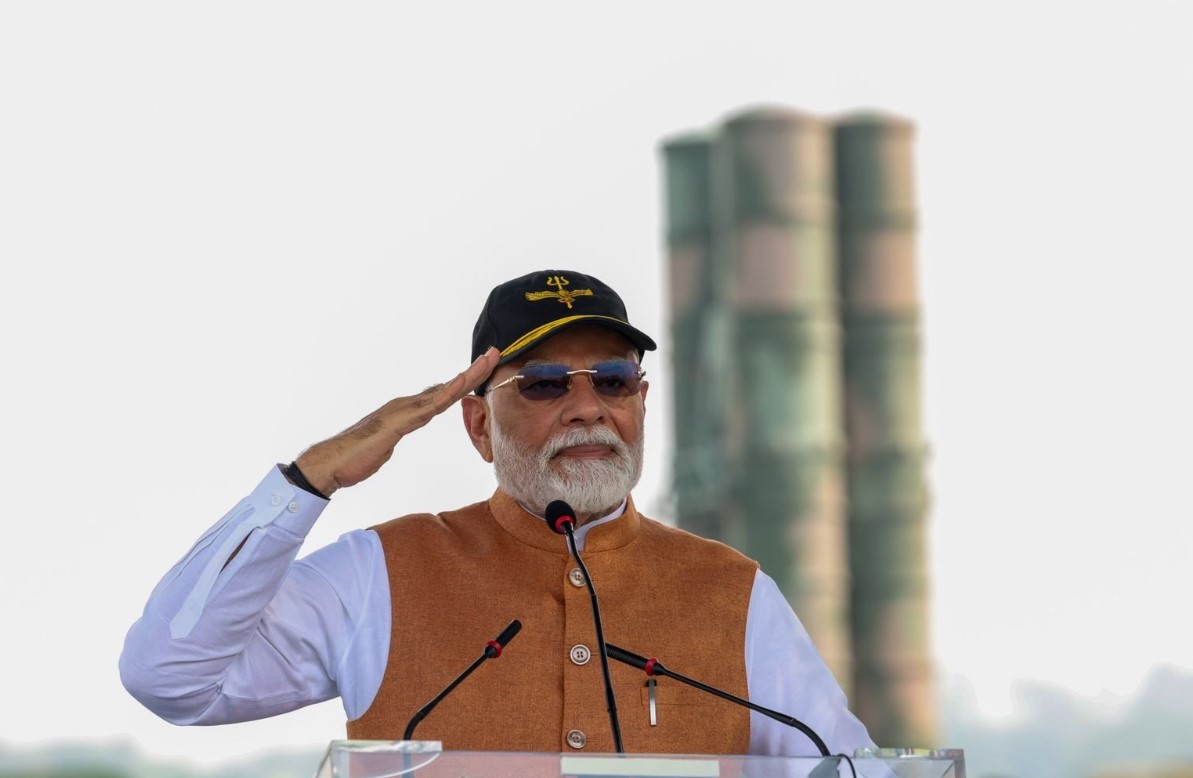
The S-500 can intercept targets up to 600 kilometres away and at altitudes up to 200 kilometres, making it effective against atmospheric and near-space threats. This essentially means the system would coerce the adversary into operating far from the frontline, thereby expanding the air defense envelope.
Additionally, India is also currently evaluating the Russian Pantsir missile system to bolster its air defense against drones amid a rapid proliferation in drone warfare.
The formidable BrahMos supersonic cruise missile, produced by the Indo-Russian joint venture BrahMos Aerospace, is based on the Russian P-800 Oniks and has been a game-changer during India’s Op Sindoor.
Large numbers of land-launched, ship-launched, and air-launched versions have been inducted and are in service with the Indian armed forces.
The missile was fired by the Su-30MKI at targets inside Pakistan during Operation Sindoor, and there were no interceptions. The BrahMos missiles were reportedly responsible for maximum damage to PAF’s airbases.
BrahMos Aerospace is currently developing more futuristic variants of the missile, including the BrahMos-NG and the BrahMos-II. While BrahMos-NG is a smaller variant that will be mounted on more types of aircraft, such as Tejas, BrahMos-II will be a hypersonic cruise missile, suggesting India’s commitment to the missile family.

Not just that, India is also currently receiving the Igla-S MANPAD (Man-Portable Air Defense System), under a contract signed in 2023.
For the maritime domain, India signed a contract with Russia for the procurement of anti-ship cruise missiles—believed to be a variant of the Kalibr that have wreaked havoc on Ukraine since the invasion was launched in February 2022.
This is a significant but incomplete list of Russian missiles that India has shown confidence in over the last few years.
Russian Missiles Still Make The World Jitter
Russian missile technology has long been a cornerstone of its military doctrine, with several systems earning notoriety for their destructive power, evasion capabilities, and strategic impact.
These “lethal” weapons, primarily hypersonic, ballistic, and nuclear-capable, have been battle-tested, and their performance has been closely followed by both allies and the adversaries of Russia.
Russia became the first country to use hypersonic weapons in combat when it started firing the Kinzhal hypersonic aero-ballistic missiles from its MiG-31K fighter jets. This was followed by the alleged use of the Tsirkon against Ukraine, followed by the Oreshnik that shocked Ukraine and created a furore across the world.

Meanwhile, the Oreshnik is classified as an Intermediate-Range Ballistic Missile (IRBM) and has been positioned by Russia as a weapon with no analogs.
The Russian missile was launched from the Astrakhan region, approximately 1,000 kilometers away. The missile reportedly carried six warheads, and the eyewitnesses described the strike as unusual, with explosions that lasted for several hours.
In October 2025, Moscow pulled off a big surprise by testing the Burevestnik, a nuclear-powered cruise missile with a range of up to 14,000 kilometers. Russian President Putin states that it is an “invincible” weapon, noting that its nuclear propulsion allows it to fly with an “almost unlimited range.” This allows the Burevestnik to alter its trajectory, making it “extremely difficult to intercept.” The Burevestnik, too, has no analogs.
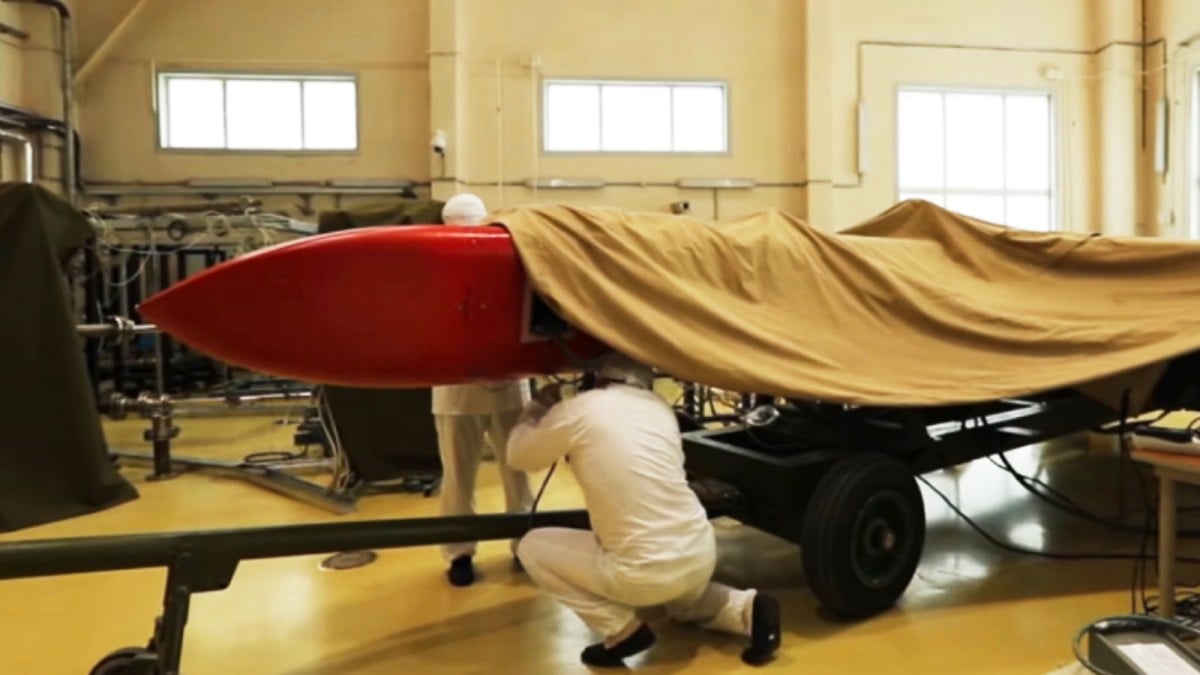
In addition to these, the Iskander-M ballistic missile, with a range of about 500 kilometers and a quasi-ballistic trajectory with terminal maneuvers, has been proven in combat. A recent RUSI (Royal United Service Institute) report suggests that the missile has been upgraded, making it significantly harder to intercept.
The other missile that has kept Ukraine and other Russian adversaries on tenterhooks is the Kalibr cruise missile. A mainstay of the Russian Navy, the Kalibr reportedly has a range of 1,496 kilometers to 2,414 kilometers, which could reach the southern continental US.

Russia’s air-launched Kh-101 has also caused mayhem in multiple aerial strikes conducted on Ukraine. A staple for deep-strikes, the Kh-101 is a low-observable Russian cruise missile with a reported operational range of 4,500 kilometers. Russia has reportedly modernized the missile, equipping it with dual warheads and doubling its potential threat level.
In addition to these, the Russians have kept the Ukrainian fighter jets far away from the frontline using their lethal Su-35 and R-37M combination.
In fact, the Russian state arms conglomerate recently disclosed that the Su-35S was keeping Ukrainian F-16 and Mirage 2000 away from the frontline and forcing them to fly at lower altitudes. The R-37M has a range of about 200 kilometres, enough to down Ukrainian jets from standoff distances.
Russia had formally proposed the sale of its long-range R-37M air-to-air missile, exported as the RVV-BD, to India at the Aero India 2025, along with an offer to undertake local production under the “Make in India” initiative. The export variant reportedly has a range of about 200 kilometers and is designed to target high-value assets such as Early Warning aircraft, tankers, and bombers.
Experts believe that the R-37M, with an over 200 kilometres range and hypersonic speed, would be a critical upgrade to address gaps in beyond-visual-range (BVR) capabilities against regional threats.
In a nutshell, even though the Su-57 is struggling to make a mark, Russian missiles continue to steal the spotlight.
- Questions and Answers
- Opinion
- Motivational and Inspiring Story
- Technology
- Live and Let live
- Focus
- Geopolitics
- Military-Arms/Equipment
- Security
- Economy
- Beasts of Nations
- Machine Tools-The “Mother Industry”
- Art
- Causes
- Crafts
- Dance
- Drinks
- Film/Movie
- Fitness
- Food
- Games
- Gardening
- Health
- Home
- Literature
- Music
- Networking
- Other
- Party
- Religion
- Shopping
- Sports
- Theater
- Health and Wellness
- News
- Culture

 Chinese
 Arabic
 French
 Spanish
 Portuguese
 Deutsch
 Turkish
 Dutch
Dutch
 Italiano
 Russian
 Romaian
 Portuguese (Brazil)
 Greek
Greek