

Canada’s $50B F-35 Stealth Fighter Deal In Danger As Ottawa Joins EU’s €150 Billion SAFE Initiative?

In a major geopolitical realignment that could have far-reaching consequences and further strain the already troubled US-Canada relationship, Ottawa has joined the European Union’s Security Action for Europe (SAFE) initiative.
Canada will be the first non-EU country to join the ambitious security plan, part of the EU’s broader “ReArm Europe” or “Readiness 2030” initiative.
Meanwhile, despite frantic negotiations stretching over weeks, the UK failed to join the initiative. Talks on the UK joining the SAFE fund ended without agreement last week.
The move will give Canada access to a €150 billion (US$170 billion – CAD 244 billion) low-interest loan scheme designed to fund joint defense procurements. The agreement allows Canadian firms to secure cheap, EU-backed loans to procure military equipment.
At the same time, SAFE will give Canadian defense companies expanded access to the European market, Prime Minister Mark Carney’s office said.
“Canada’s participation in SAFE will fill key capability gaps, expand markets for Canadian suppliers, and attract European defence investment into Canada,” Carney said in a statement.
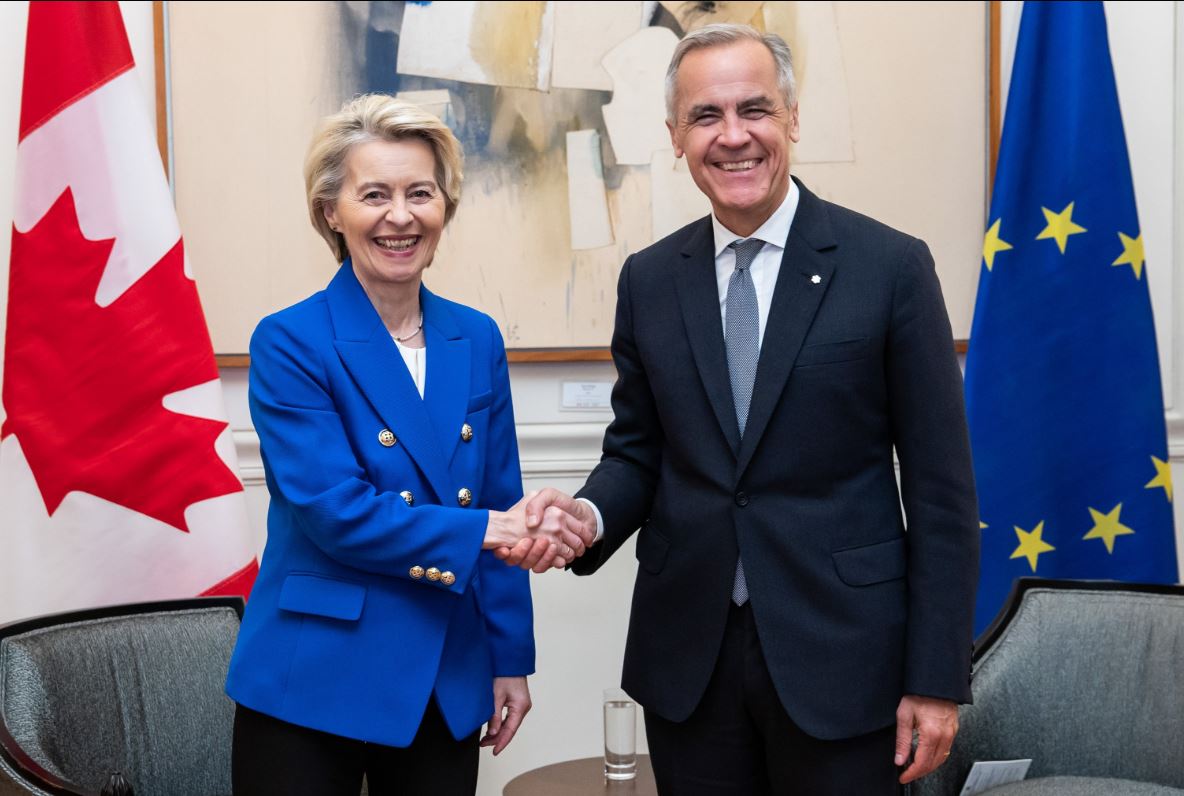
It will also help Canada diversify its military spending away from the United States.
While the agreement is significant and will have many far-reaching consequences, not just on the Canada-EU relationship but also on the Canada-US relationship, it has not come out of the blue.
Earlier in June, Canada and the EU signed the Security and Defense Partnership agreement, paving the way for Ottawa to join the SAFE initiative.
To better understand how Canada’s joining the EU’s SAFE initiative will impact the global geopolitical realignments, let us discuss its ramifications for the EU, Canada, and the US.
Canada & SAFE Initiative
SAFE provides up to CAD 244 billion in loans to EU Member States to support large-scale defense projects, including the acquisition of critical capabilities such as ammunition, missiles, drones, artillery systems, and infantry weapons.
Now, Canada has access to these cheap loans, which can be used to fund Canada’s military modernization and finance large-scale weapons acquisition.
Access to these funds will also help Canada meet its 2% of GDP defense spending target, fulfilling a key NATO requirement. Historically, Canada has been a laggard in meeting NATO defense spending targets.
At present, Canada spends 1.37 per cent of its GDP on the military. In July 2023, the Wall Street Journal editorial board called Canada’s military spending “pathetic.”
The agreement will also allow Canadian defense companies to bid for weapons acquisition programs under the SAFE initiative.
SAFE is meant to fund big joint projects, but there’s a catch. Only 35 percent of the funds dedicated to any project carried out under the program can be used to purchase weapons from countries that are not signed on to the plan.
Thus, the agreement opens new avenues for Canadian defense companies to bid on big-ticket defense acquisition plans under the SAFE initiative, thereby creating thousands of jobs.
Notably, since the US has not signed the SAFE initiative, the big US defense firms can only bid for a slice of the big-ticket defense acquisition plans initiated under SAFE.
“As EU countries strengthen their defence capabilities through SAFE, Canadian participation will give our defence industry expanded access to the European market, attract new reliable suppliers for the Canadian Armed Forces, and catalyse massive private investment in Canada – creating higher-paying careers, growing Canadian industries, and bolstering transatlantic defence readiness,” the Canadian Prime Minister’s office said in a statement.
However, most importantly, the agreement will help Canada diversify its defense supply chains and help reduce over-dependence on the US for its military modernization plans.
Carney has said he intends to diversify Canada’s weapons procurement. He has previously said that no more than 70 cents of every dollar of Canadian military capital spending should go to the U.S.
Also, the move will help Carney show US President Donald Trump that he has other options, rather than relying entirely on Washington for a defense partnership.
Trump has initiated a trade war with Canada and has repeatedly suggested that Canada should become the 51st state of the United States of America.
The move could also boost Carney’s image at home, as he came to the office earlier this year on the promise of confronting Trump and his trade war more aggressively.
Death Knell For Canada’s F-35 Deal?
The move could also become the death knell in the long-running saga of Canada’s F-35 deal. Carney’s government continues to review the purchase of US F-35 fighter jets to explore other options.
In 2023, the then Canadian Prime Minister Justin Trudeau approved a deal worth 70 billion Canadian dollars, or US$50 billion, to order 88 F-35 jets.
The review will assess if the new fleet remains compatible with Canada’s military needs and the protection of its sovereignty “in light of evolving geopolitics,” according to the defense department.
Meanwhile, sensing an opportunity, Sweden is doing everything it can to sell its Gripen fighter jets to Canada.
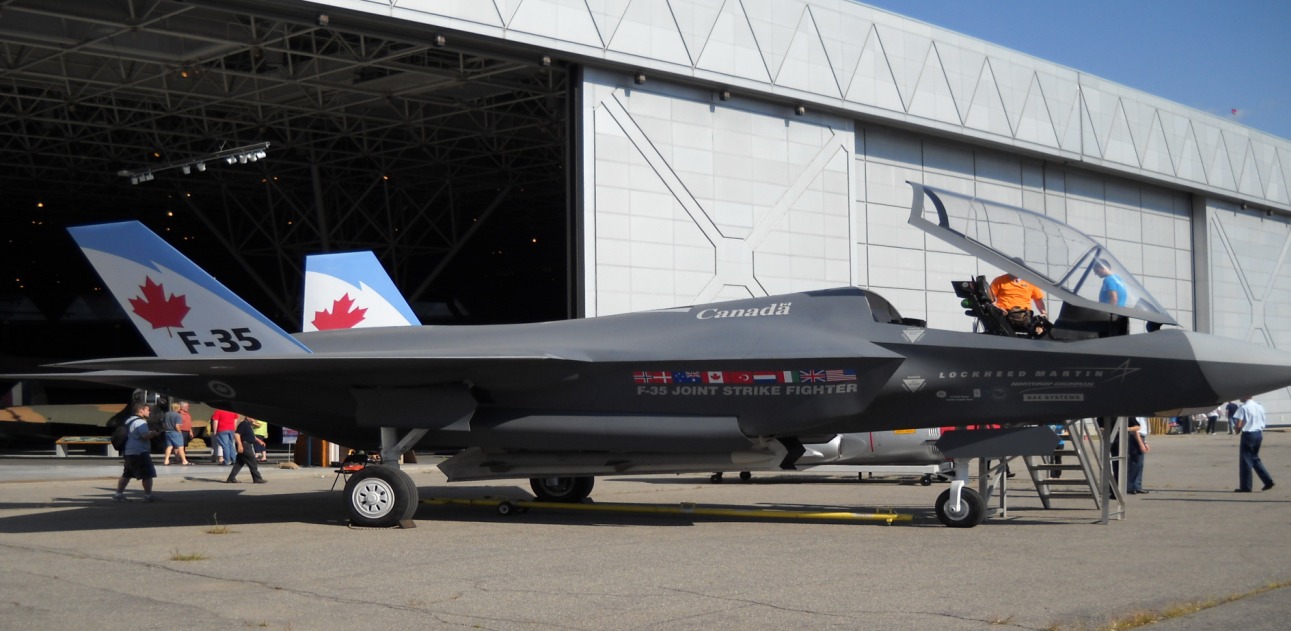
Notably, Saab was one of the two finalists for the fighter jet contract, which Canada ultimately awarded to Lockheed Martin.
Saab has promised that if Ottawa orders Gripens, then it will make Canada a production hub for Gripens.
Sweden has just signed an LoI with Ukraine for 100-150 Gripen fighter jets, and Canada can also produce Gripens for export.
According to Saab, this will create 10,000 jobs in Canada.
In fact, Sweden’s King Carl XVI Gustaf was on a state visit to Canada earlier this month, which defense analysts interpreted as a charm offensive aimed at selling the Gripens to Canada.
Furthermore, since Sweden is a member of the EU’s Security Action for Europe (SAFE) plan, with full eligibility to participate in its joint procurement projects and defense initiatives, Canada could access SAFE funds to finance Gripen acquisition.
Lockheed Martin’s F-35 might not qualify for this funding.
EU Shows SAFE’s Appeal Beyond Europe
For the EU, the agreement’s biggest success is that it establishes SAFE’s appeal beyond EU countries.
Especially after the UK failed to sign the agreement to join the EU’s SAFE program, Canada’s joining comes as a big boost to SAFE’s appeal beyond EU borders.
Canada’s entry is framed as a credibility boost for SAFE, as not only is Canada a member of the G-7 and NATO, it also shares a very close defense relationship with the US.
Canada’s joining will encourage other like-minded countries, such as Australia, to consider joining the initiative.
EU Commission President Ursula von der Leyen wrote on X: “Welcome to SAFE, Canada! When like-minded partners join forces on security and defence in a turbulent world, our countries grow stronger, our industries benefit and our citizens are safer.”
Ramifications include enhanced EU strategic autonomy, reduced US dominance in allied procurement, and potential for broader non-EU involvement.
Impact On US-Canada Relations
While the agreement with the EU on SAFE helps Carney show Trump that he has other options, the move could also backfire, further antagonizing Trump.
Canada and the US share an extremely close defense, security, economic, trade, and intelligence partnership, and decoupling with Washington is easier said than done.
Canada and the US are both part of NATO, G-7, G-20, Five Eyes, Organization for Economic Co-operation and Development (OECD), NORAD (North American Aerospace Defense Command), OAS (Organization of American States), APEC (Asia-Pacific Economic Cooperation), Arctic Council, and USMCA (United States–Mexico–Canada Agreement, formerly NAFTA).
Canada is also working towards joining Trump’s ambitious ‘Golden Dome’ missile shield program.
Besides, historically, the Canadian Armed Forces have relied on US weapons systems. The Royal Canadian Air Force (RCAF) is entirely reliant on US fighter jets, and it’s not easy to switch to a foreign fighter jet, as it involves updating a host of radar and ground systems, as well as weapons to the new aircraft.
The whole process could be expensive and highly time-consuming.
Overall, this is a pragmatic hedge for Ottawa in a “turbulent world,” where multi-alignment is the key, and not just for Canada, but for many other nations, including NATO partners, EU member states, and even Gulf countries, are looking to reduce their over-reliance on the US.
However, it remains to be seen how the US will respond to this.
- Questions and Answers
- Opinion
- Motivational and Inspiring Story
- Technology
- Live and Let live
- Focus
- Geopolitics
- Military-Arms/Equipment
- Security
- Economy
- Beasts of Nations
- Machine Tools-The “Mother Industry”
- Art
- Causes
- Crafts
- Dance
- Drinks
- Film/Movie
- Fitness
- Food
- Games
- Gardening
- Health
- Home
- Literature
- Music
- Networking
- Other
- Party
- Religion
- Shopping
- Sports
- Theater
- Health and Wellness
- News
- Culture

 Chinese
 Arabic
 French
 Spanish
 Portuguese
 Deutsch
 Turkish
 Dutch
Dutch
 Italiano
 Russian
 Romaian
 Portuguese (Brazil)
 Greek
Greek