

Air Force F-35 Jets Deploy to Alaska for Arctic War Training

The exercise was designed to test the 354th Fighter Wing’s ability to rapidly generate, deploy, and sustain its combat aircraft in a near-peer operational environment.
F-35 Lightning II stealth fighter jets have recently been deployed to Alaska to hone their arctic warfare capabilities.
The Air Force conducted the exercise to test and validate its Arctic warfare capabilities and prepare for potential combat operations in the High North.
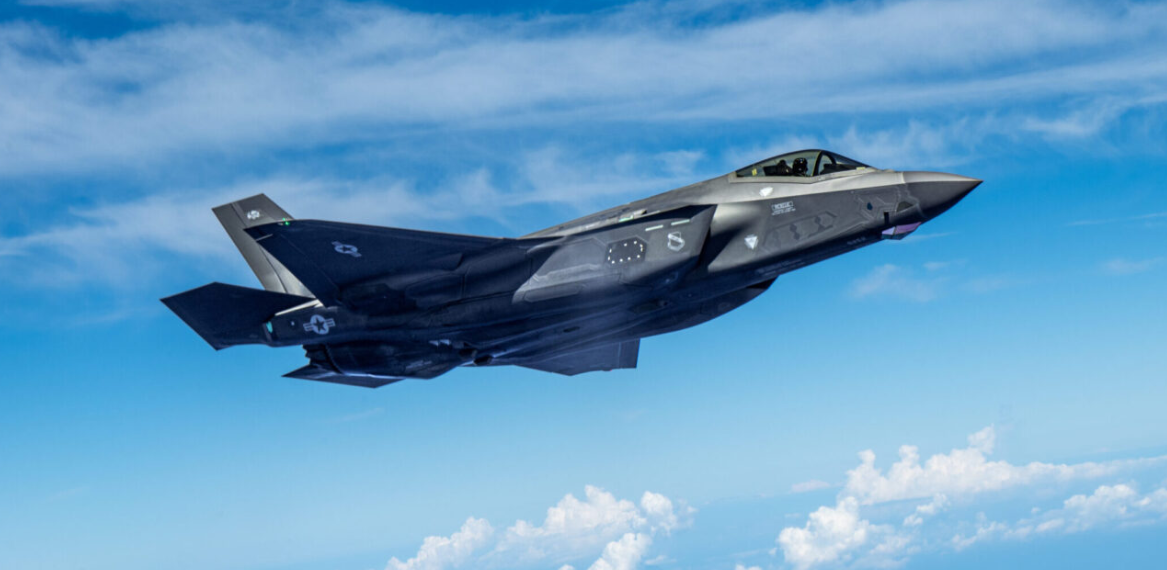
Stealth Fighter Jets in the North
In November, the Air Force conducted Exercise Arctic Gold 26-1. The exercise was designed to test the 354th Fighter Wing’s ability to rapidly generate, deploy, and sustain its combat aircraft in a near-peer operational environment.
As part of the exercise, F-35A Lightning II stealth fighter jets from the 355th Fighter Squadron and 356th Fighter Squadron joined with F-16 Fighting Falcons from the 18th Fighter Interceptor Squadron to test their mission capabilities and readiness.
“A lot of work and planning was put into getting this exercise to run efficiently and effectively, taking into account all of the separate factors that affect the way things play out and what we can accomplish towards the mission,” Air Force master sgt. Zachary Kugler, the 354th Fighter Wing’s Inspector General exercise program director, said in a service press release.
“We use key takeaways and lessons learned to shape the way we generate airpower in the future and how we can apply it to both exercises and real-world scenarios,” the Air Force senior non-commissioned officer added.
Operations in the Arctic require a lot of different skill sets and present a wholly different challenge to logistics. Machines and electronics, for example, tend to malfunction in the extreme temperatures found in the Arctic. Learning not only how to deal with these challenges but also to get an advantage over the adversary is key.
“Every exercise gives us data, but Arctic Gold gave us clarity; our priorities are centered on sharpening the logistics foundations of our wing that makes us a combat credible force, ensuring our squadron commanders continue to develop leaders who can think critically, operate independently and take initiative,” said Lt. Col. Peter Daigle, 354th Logistics Readiness Squadron commander.
The Arctic Is a Strategic Location
The Arctic Circle has long been a strategic location. However, a changing climate is making the region’s vast natural resources more accessible and, thus, highly sought after. According to the US Geological Survey, the Arctic holds approximately 1,670 trillion cubic feet of natural gas, 90 billion barrels of oil, and 44 billion barrels of liquid natural gas.
Moreover, the melting of ice has the potential to turn the Arctic into a commercial passage. For example, the Northern Sea Route stretches from Russia to Norway to the Northern Pacific Ocean and can connect Asia directly with Europe.
- Questions and Answers
- Opinion
- Motivational and Inspiring Story
- Technology
- Live and Let live
- Focus
- Geopolitics
- Military-Arms/Equipment
- Security
- Economy
- Beasts of Nations
- Machine Tools-The “Mother Industry”
- Art
- Causes
- Crafts
- Dance
- Drinks
- Film/Movie
- Fitness
- Food
- Games
- Gardening
- Health
- Home
- Literature
- Music
- Networking
- Other
- Party
- Religion
- Shopping
- Sports
- Theater
- Health and Wellness
- News
- Culture

 Chinese
 Arabic
 French
 Spanish
 Portuguese
 Deutsch
 Turkish
 Dutch
Dutch
 Italiano
 Russian
 Romaian
 Portuguese (Brazil)
 Greek
Greek