

What Does English Horn Transpose To? What You Need to Know
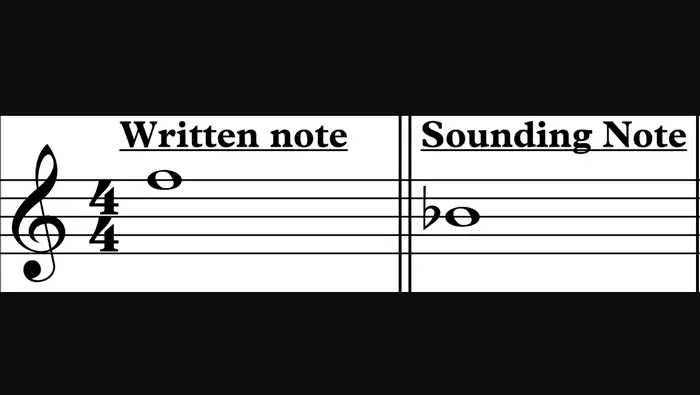
The English horn, also known as the cor anglais, is a double reed woodwind instrument that plays a vital role in orchestral and chamber music. Despite its name, it is neither English nor a true horn. One of the defining characteristics of the English horn is that it is a transposing instrument. Understanding what it transposes to, and why, is essential for composers, arrangers, students, and performers alike.
In this comprehensive guide, we will explore the transposition of the English horn, its musical implications, historical context, and practical tips for working with it. We’ll also explain how it fits within the larger family of woodwinds and how its unique voice contributes to the overall timbre of ensembles.
What Does the English Horn Transpose To?
The English horn is a transposing instrument pitched in F. This means that when a player reads and performs a written C, the actual pitch that sounds is a concert F below. In simpler terms, the English horn transposes a perfect fifth lower than written. For example, if you write a G on the staff, it will sound as a C when played.
This transposition is similar in concept to that of other transposing instruments like the B♭ clarinet (which sounds a major second lower than written) or the French horn (which is commonly pitched in F but uses a different notation method). The written part is adjusted so that players can use familiar fingerings, especially those coming from the oboe, which is in C and not transposing.
Why Does the English Horn Transpose?
The main reason behind the transposition of the English horn lies in its design and acoustics. Since it is longer than the oboe and has a larger bore, it naturally produces a lower pitch. To accommodate this while maintaining ease of play for oboists (who often double on English horn), the parts are written in a transposed form.
Transposing parts allow for consistency in fingerings. An oboist who switches to the English horn does not need to learn a new set of fingerings for each pitch. Instead, they play as if reading an oboe part, and the transposition takes care of the pitch difference.
Understanding the Interval: A Perfect Fifth
The perfect fifth interval is crucial to understanding how the English horn operates. If a note is written as C in the part, it will sound as F below. This is consistent throughout all keys, scales, and passages. Here’s a quick chart to illustrate the transposition:
Written C → Sounding F
Written D → Sounding G
Written E → Sounding A
Written F → Sounding B♭
Written G → Sounding C
This chart helps composers and arrangers ensure the intended concert pitch is achieved when writing for English horn.
Historical Development of English Horn Transposition
The English horn emerged in the 18th century as a deeper-voiced alternative to the oboe. Its transposition has been standard since its earliest orchestral appearances. Composers like Haydn, Beethoven, and Berlioz utilized the English horn’s lower, melancholic voice to great effect. The practice of writing parts a fifth higher has continued to this day, even as notational standards evolved for other instruments.
This practice made it easier for composers to incorporate the English horn without the need for specialized notation systems. It also encouraged oboists to learn and adopt the English horn more readily since the skills transferred easily between the two instruments.
Implications for Composers and Arrangers
For composers and arrangers, understanding the English horn’s transposition is essential for creating accurate and expressive music. Writing for the English horn means transposing up a perfect fifth from the desired concert pitch. This ensures that the sounding pitch aligns correctly within the ensemble.
Let’s consider a scenario: you want the English horn to harmonize with a flute playing a concert C. To do this, you would write a G for the English horn. When played, this G will sound as a concert C, blending perfectly with the flute’s pitch.
This understanding is especially critical in orchestration where multiple transposing instruments must be coordinated precisely to achieve a unified sound.
Transposition in Orchestral Scores
In full orchestral scores, parts for transposing instruments like the English horn are typically written in transposed notation. The conductor’s score will show the part in transposed form, and the performer reads and plays it accordingly. Some scores, especially modern or educational editions, may provide concert pitch versions for analysis, but performance editions almost always use transposed parts.
This practice allows players to perform with consistent fingerings and tone production, even when moving between instruments in different keys.
Comparison to Other Transposing Instruments
To better understand the English horn’s transposition, let’s compare it with a few other common woodwind instruments:
Clarinet in B♭: Transposes a major second lower (written C sounds as B♭).
Horn in F: Transposes a perfect fifth lower (same as English horn).
Bass clarinet in B♭: Transposes a major ninth lower (written C sounds as B♭ an octave and a second below).
Piccolo: Transposes an octave higher (written C sounds as high C).
This shows that the English horn’s transposition is not unique but fits within a broader system of instrument-specific notation designed for practical playability.
Tools for Transposing English Horn Music
Various digital tools and apps can assist in transposing music for the English horn. These include notation software like Finale, Sibelius, and MuseScore, which allow automatic transposition of written parts. There are also online transposition calculators and chart guides specifically for woodwind players.
Manual transposition is also a skill that advanced musicians should develop, especially when dealing with older scores or handwritten music. Understanding intervals, key signatures, and clefs is essential for accurate manual transposition.
Repertoire Highlight: Pieces Featuring English Horn
Many orchestral and solo works feature the English horn, often in emotionally expressive passages. Some notable examples include:
Antonín Dvořák – Symphony No. 9 (“New World”), Largo
Richard Wagner – Tristan und Isolde, Act III
Hector Berlioz – Romeo and Juliet
Jean Sibelius – The Swan of Tuonela
John Williams – Star Wars soundtracks
These works showcase the English horn’s haunting beauty, all notated with its transposition in mind.
Conclusion
Mastering the concept of English horn transposition is a key step for musicians, composers, and educators working with this remarkable instrument. Its transposition to F—a perfect fifth lower than written—has remained consistent for centuries and underpins its functional role in ensembles of all kinds.
From historical orchestral works to modern film scores, the English horn continues to captivate listeners with its unique voice. By understanding how it transposes and why, musicians are better equipped to write for, perform on, and appreciate this deeply expressive instrument.
- Questions and Answers
- Opinion
- Motivational and Inspiring Story
- Technology
- Live and Let live
- Focus
- Geopolitics
- Military-Arms/Equipment
- Security
- Economy
- Beasts of Nations
- Machine Tools-The “Mother Industry”
- Art
- Causes
- Crafts
- Dance
- Drinks
- Film/Movie
- Fitness
- Food
- Games
- Gardening
- Health
- Home
- Literature
- Music
- Networking
- Other
- Party
- Religion
- Shopping
- Sports
- Theater
- Health and Wellness
- News
- Culture

 Chinese
 Arabic
 French
 Spanish
 Portuguese
 Deutsch
 Turkish
 Dutch
Dutch
 Italiano
 Russian
 Romaian
 Portuguese (Brazil)
 Greek
Greek