

Has China Mastered the Use of Economic Blackmail—Tourism Bans, Trade Restrictions, Rare Earth Threats—to Control Its Neighbours Without Firing a Shot?
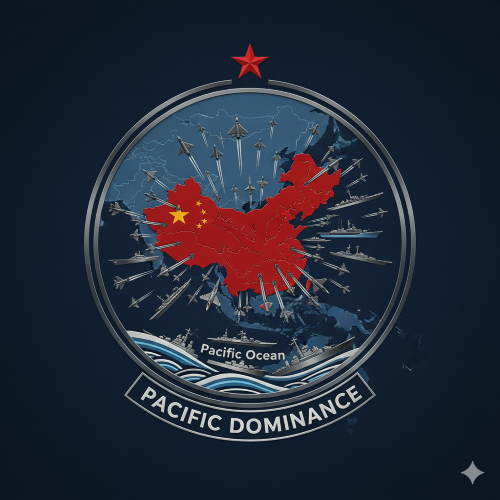
In Asia’s modern geopolitics, China has developed a powerful weapon far more subtle than missiles or warships—economic blackmail. Rather than launching military conflicts, Beijing often relies on tools such as tourism bans, import and export restrictions, punitive trade measures, rare earth threats, and boycotts orchestrated through state-controlled media and nationalistic consumer campaigns.
These tactics allow China to pressure neighbours while avoiding the diplomatic costs of open conflict.
Many observers now argue that Beijing has mastered a new form of coercion: a strategy of economic intimidation that achieves political goals without firing a single shot.
The question is no longer whether China is using economic power as a political weapon, but how deeply it has embedded these tactics into its foreign policy—and what this means for Asia’s future.
1. Economic Coercion Has Become Beijing’s Preferred Weapon
China’s government has long understood that military aggression triggers global condemnation, whereas economic pressure can be labelled as “domestic regulation,” “consumer sentiment,” or “market response.” This provides Beijing with plausible deniability while still signalling to targeted countries that political defiance will come at a painful economic cost.
Over the past 15 years, China has weaponized its market access in nearly every major geopolitical dispute. Its approach typically follows a pattern:
-
A neighbour takes a position Beijing dislikes.
-
Chinese ministries, state media, or party organs hint that economic consequences may follow.
-
Chinese tourists, importers, or firms suddenly “change behaviour” in ways that align with Beijing’s political goals.
-
Chinese officials deny responsibility, claiming market forces are at play.
-
The targeted country suffers economic losses—often in tourism, exports, or investment.
This method allows China to punish without provoking international legal responses.
Beijing’s strategy amounts to a type of geopolitical extortion:
“Cooperate—or lose access to the world’s second-largest economy.”
2. Tourism Bans as Political Punishment
Tourism bans are among China’s most effective coercive tools because Chinese travellers make up a massive share of tourism revenue in Asia. Beijing has repeatedly used this lever to pressure countries into obedience.
A. South Korea: Punished for THAAD Deployment (2017)
When South Korea agreed to host the U.S. THAAD missile defense system, China responded by:
-
banning group tours to South Korea,
-
targeting Korean businesses like Lotte with regulatory harassment, and
-
encouraging patriotic boycotts through state media.
The result: South Korea lost billions in tourism revenue, particularly affecting small businesses dependent on Chinese visitors.
B. Taiwan: A Routine Target
Whenever Taipei elects a leader who resists Beijing, China cuts group travel:
-
2016 after Tsai Ing-wen’s election,
-
2019 during anti-Beijing sentiments,
-
2023 after Taiwanese moves to strengthen ties with the U.S.
Each time, Taiwanese businesses reliant on tourism suffer immediately.
C. Japan and the Philippines
China has also slowed or restricted tourism flows to Japan and the Philippines during maritime disputes, signalling that cooperation results in economic rewards, while defiance brings economic pain.
Tourism bans cost China nothing politically—they can be reversed quietly—yet inflict enormous losses on targeted states.
3. Trade Restrictions: Punishment Disguised as “Quality Concerns”
China often imposes sudden trade barriers—not with official sanctions, but with justifications such as “safety inspections,” “customs processing delays,” or “quality concerns.” This strategy allows Beijing to target a country’s key exports while maintaining the façade of normal trade regulation.
A. Japan: Rare Earths Ban in 2010
After a territorial dispute over the Senkaku Islands, China cut off rare earth exports to Japan—vital for electronics and high-tech manufacturing. The world immediately saw China’s willingness to exploit its dominance in strategic minerals as a geopolitical weapon.
B. Norway: Punished for Nobel Prize (2010–2016)
When dissident Liu Xiaobo won the Nobel Peace Prize, China virtually halted Norwegian salmon imports for years. This was never officially labelled a sanction, but the message was clear.
C. Australia: Retaliation for Inquiry into COVID-19 Origins (2020)
Australia experienced a full-scale economic assault:
-
barley tariffs,
-
wine tariffs,
-
coal disruptions,
-
beef supply rejections,
-
lobster “inspection” delays.
Billions were lost—but Beijing denied any political motive.
D. The Philippines and Ecuador: Agriculture Targeted
China has occasionally blocked fruit shipments (bananas, pineapples, mangos) from countries that oppose its South China Sea claims.
E. Lithuania: Blocked from Chinese Market (2021)
After opening a Taiwan office, Lithuania faced:
-
removal from Chinese customs systems,
-
pressure on multinational companies to drop Lithuanian products.
This was one of China’s most explicit and coordinated coercive efforts.
4. Rare Earth Threats: China’s “Nuclear Option” in Economic Warfare
China controls around 60–70% of global rare earth processing, making it a near-monopoly in materials essential for:
-
fighter jets,
-
smartphones,
-
electric vehicles,
-
wind turbines,
-
missile guidance systems.
Whenever strategic tensions rise, Chinese officials or state media hint at rare earth export bans—often described as the “kill switch” China can use against rivals.
China has:
-
threatened the U.S. multiple times during Washington-Beijing trade disputes,
-
implied restrictions against Japan,
-
and used rare earth dominance as a deterrent against unified action by Southeast Asian nations.
Even the possibility of a rare earth ban sends shockwaves through global markets. This gives Beijing a powerful psychological weapon.
5. Why Economic Blackmail Works So Well
China’s coercion is effective because it targets vulnerabilities in neighbouring economies:
-
dependence on Chinese tourists,
-
reliance on Chinese investment,
-
export markets dominated by China,
-
foreign firms afraid of Chinese backlash,
-
rare earth dependencies that cannot be replaced quickly.
The threat is designed to force countries into political concessions without appearing overt:
-
No soldiers cross borders.
-
No shots are fired.
-
No formal sanctions are declared.
This allows Beijing to send a message while maintaining diplomatic cover.
6. Has China Truly Mastered the Strategy? Yes—But at a Cost
A. Mastery Through Predictable, Controlled Punishment
China’s actions show:
-
discipline (coercion is targeted, not chaotic),
-
plausible deniability (actions framed as economic or regulatory, not political),
-
reversibility (pressure can be lifted quickly when goals are achieved),
-
scalability (small punishments for small acts; major punishments for major defiance).
In the eyes of Beijing, this is efficient statecraft.
B. But the Strategy Has Backfired Over Time
While Beijing has achieved short-term gains, its coercive behaviour has caused long-term strategic consequences:
-
Countries diversify away from China (Japan, South Korea, Philippines, Australia).
-
Western alliances strengthen (Quad, AUKUS, EU-NATO cooperation).
-
Global rare earth production shifts elsewhere (U.S., Australia, Canada, Africa).
-
Public opinion turns sharply anti-China in Asia and Europe.
-
Nations build resilience measures to avoid future coercion.
China’s coercive power is still formidable, but its effectiveness is slowly eroding as countries adapt.
7. Economic Blackmail Is China’s 21st-Century Weapon—But It Cannot Intimidate Forever
China’s use of economic coercion is now a pillar of its geopolitical strategy. It has mastered the ability to punish neighbours without military conflict, using:
-
tourism bans,
-
trade restrictions,
-
rare earth threats,
-
investment freezes,
-
consumer boycotts,
-
regulatory harassment.
This allows Beijing to achieve political objectives with minimal diplomatic cost—at least in the short term.
But as more countries recognize the pattern, they are building new alliances, diversifying their economies, and developing strategies to reduce dependence on China. Economic blackmail may give Beijing temporary leverage, but it also fuels long-term resistance.
China may continue to use coercion, but each use undermines the very influence it seeks to maintain. In the end, the power of economic intimidation is fragile: it lasts only as long as countries remain dependent and disunited. Asia is slowly learning this lesson—and beginning to push back.
- Questions and Answers
- Opinion
- Motivational and Inspiring Story
- Technology
- Live and Let live
- Focus
- Geopolitics
- Military-Arms/Equipment
- Sicherheit
- Economy
- Beasts of Nations
- Machine Tools-The “Mother Industry”
- Art
- Causes
- Crafts
- Dance
- Drinks
- Film/Movie
- Fitness
- Food
- Spiele
- Gardening
- Health
- Startseite
- Literature
- Music
- Networking
- Andere
- Party
- Religion
- Shopping
- Sports
- Theater
- Health and Wellness
- News
- Culture

 Chinese
 English
 Arabic
 French
 Spanish
 Portuguese
 Turkish
 Dutch
Dutch
 Italiano
 Russian
 Romaian
 Portuguese (Brazil)
 Greek
Greek