
How long will the AU watch silently while Khartoum, Darfur, and Kordofan become killing fields?
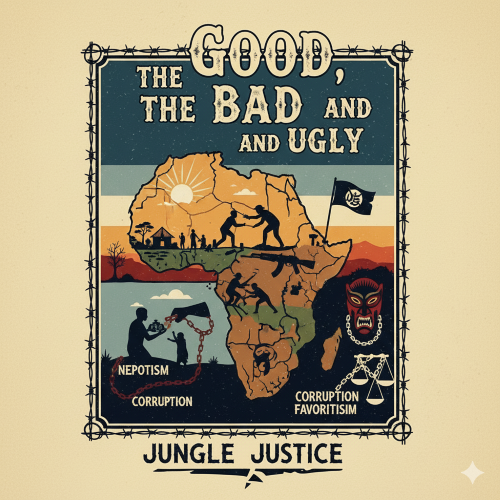
The question of how long the African Union (AU) will "watch silently" as Khartoum, Darfur, and Kordofan are devastated by mass atrocities is a stark expression of the continent's profound frustration with its premier security body.
While the AU is not literally silent—it has issued numerous communiqués, established mechanisms, and adopted roadmaps—its actions have been tragically ineffectual, leading to the justifiable perception of paralysis.
The situation suggests the AU is trapped in a systemic cycle, and the waiting period will continue until the underlying structural deficiencies, which prevent decisive action, are resolved.
1. The AU’s Diplomatic but Ineffective Response
It is crucial to first acknowledge that the AU has, on paper, responded consistently to the crisis:
-
Continuous Condemnation: The AU Peace and Security Council (PSC) has repeatedly and strongly condemned the conflict, demanding an immediate and unconditional cessation of hostilities and unhindered humanitarian access. They have explicitly warned that the perpetrators of atrocities will be held accountable.
-
Establishment of Mechanisms: The AU has created an Expanded Mechanism on the Sudan Crisis to coordinate regional and international efforts and appointed a High-Level Panel (HLP-Sudan) to facilitate a political process.
-
Targeting External Actors: The AU has strongly condemned external interference and has tasked its Subcommittee on Sanctions to recommend measures against those who fuel the conflict—a direct acknowledgement of the proxy war dimension. In October 2025, the PSC specifically expressed alarm over the escalating violence in El Fasher and condemned atrocities by the RSF.
However, none of these actions have translated into a cessation of fighting or the protection of civilians on the ground. The warlords, fueled by external backers, simply ignore the diplomatic pressure.
2. The Limits of African Sovereignty and Non-Interference
The core of the AU's inability to act more decisively lies in the very principles upon which it is founded.
-
The Sovereignty Trap: While the AU Constitutive Act grants the union the right to intervene in a member state in grave circumstances (like war crimes or genocide, under Article 4(h)), this power is incredibly difficult to invoke. Any military intervention without the host government's consent requires the consensus of a two-thirds majority of member states at a summit, a threshold that is politically and logistically almost impossible to achieve.
-
The De Facto Government: Since the 2021 coup, the civilian transition was halted, and the SAF-led regime is the recognized (though suspended) authority. The SAF would immediately label any external military intervention as an act of aggression against a sovereign state, an argument that resonates strongly with other African leaders wary of external interference in their own domestic affairs.
-
The "Silent" Sanction: The AU's most potent tool—suspension of membership—was already applied to Sudan post-coup. This left the AU with no further diplomatic leverage to exert short of intervention, a step it is institutionally incapable of taking alone.
3. The Lack of Military and Financial Capacity
The AU simply does not possess the independent military and logistical capability to enforce peace in a country the size of Sudan, which is experiencing a full-scale, urbanized civil war.
-
No African Standby Force (ASF): Despite years of planning, the ASF—the conceptualized African rapid reaction force—is not fully operational, funded, or trained to conduct a high-intensity peace enforcement mission against two large, heavily armed military factions like the SAF and RSF.
-
Chronic Financial Dependence: The AU relies heavily on foreign donors for the majority of its peace and security budget. Launching a multi-billion-dollar mission in Sudan would require Western or UN funding, which comes with its own political complications and slow approval processes, effectively rendering the AU a subordinate partner rather than the decisive leader. African political will, in this context, is useless without Western or UN funding.
4. The Geopolitical and Regional Paralysis
The AU's efforts are continuously undermined by the external geopolitical forces fueling the conflict, a factor the AU cannot overcome alone.
-
Proxy War Dynamics: As previously established, countries like the UAE (supporting the RSF) and Egypt/Iran/Turkey (supporting the SAF) have poured resources into the conflict. These external lifelines ensure that the Sudanese generals can afford to ignore the AU's call for peace. The AU's power is minimal compared to the combined military and financial muscle of these foreign patrons.
-
Regional Division: IGAD, the regional body that should lead the effort, was quickly sidelined due to internal disagreements and the SAF's rejection of Kenyan leadership. This internal African fragmentation further undercut the AU's ability to present a cohesive, authoritative front.
When Will the Silence End?
The silent watching will end only when one of two things occurs, neither of which is imminent:
-
Military Breakthrough: One side (SAF or RSF) achieves a decisive military victory, ending the large-scale organized fighting. This would likely be followed by immense brutality and a new phase of insurgency, but the AU's mediation role would pivot to post-conflict stabilization.
-
External Will Shifts: The powerful external sponsors (UAE, Egypt, etc.) decide that the cost and risk of the ongoing proxy war outweigh the benefits, and they agree to a unified, enforced arms embargo and sanctions regime.
Until the AU is granted the independent financial resources to field a credible peace enforcement mission, or until the global powers fueling the conflict agree to stop, the AU will remain largely confined to issuing communiqués from Addis Ababa. The tragic reality is that the AU's failure in Sudan is less a moral one and more a stark reflection of the deep structural and political limits imposed on it by its own member states and the ruthless interference of external powers.
- Questions and Answers
- Opinion
- Motivational and Inspiring Story
- Technology
- Live and Let live
- Focus
- Geopolitics
- Military-Arms/Equipment
- Security
- Economy
- Beasts of Nations
- Machine Tools-The “Mother Industry”
- Art
- Causes
- Crafts
- Dance
- Drinks
- Film/Movie
- Fitness
- Food
- Games
- Gardening
- Health
- Home
- Literature
- Music
- Networking
- Other
- Party
- Religion
- Shopping
- Sports
- Theater
- Health and Wellness
- News
- Culture

 Chinese
 Arabic
 French
 Spanish
 Portuguese
 Deutsch
 Turkish
 Dutch
Dutch
 Italiano
 Russian
 Romaian
 Portuguese (Brazil)
 Greek
Greek