

Is Congo’s suffering being ignored because its minerals benefit global tech giants, energy companies, and foreign governments?
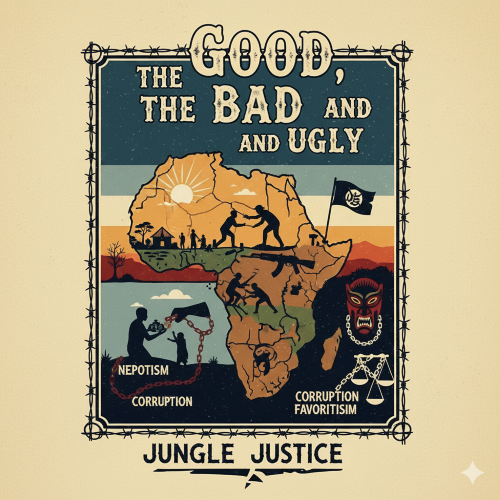
The suffering in the Democratic Republic of Congo (DRC) is widely believed to be deliberately overlooked and effectively ignored because its immense mineral wealth—particularly those minerals critical to the global green energy transition and high-tech industries—benefits powerful tech giants, energy companies, and foreign governments.
The DRC's humanitarian crisis is a classic, tragic case of the "resource curse," where the nation’s wealth acts as the fuel for conflict rather than the engine for development. Global demand for minerals like cobalt, coltan, copper, and gold creates an economic incentive for regional instability and opaque supply chains that allows the violence to continue with impunity.
The Critical Minerals Driving Global Indifference
The DRC is the world's leading producer of several minerals absolutely vital to modern technology and the global push toward decarbonization. This economic centrality is precisely what renders the conflict politically untouchable for many international actors.
1. The Global Green and Tech Transition
The silence and lack of decisive intervention from global powers are directly linked to the following resources:
-
Cobalt: The DRC produces approximately two-thirds of the world's cobalt, a non-negotiable component of lithium-ion batteries used in electric vehicles (EVs), grid-scale energy storage, and modern consumer electronics (smartphones, laptops). The transition to electric transport is highly dependent on a stable, if not ethically-sourced, supply from the DRC.
-
Copper: The country holds some of the world's richest copper deposits, a metal vital for all electrical wiring, renewable energy systems, and global infrastructure.
-
Coltan (Tantalum): Used in capacitors for electronics, tantalum is crucial for shrinking and powering devices like smartphones and laptops. Control over coltan-rich areas in the eastern DRC has been a direct catalyst for militia violence.
-
Gold (3TG): Gold is another "conflict mineral" that armed groups use for financing. It is often smuggled out through neighboring countries and laundered into global markets for jewelry and electronics.
2. Corporate Complicity and Plausible Deniability
Multinational corporations are at the end of the supply chain, and their continuous, high-volume demand for these minerals sustains the market that feeds the conflict.
-
Supply Chain Opacity: Minerals extracted in conflict zones are often sold to middlemen, smuggled across the border (particularly through neighboring countries like Rwanda and Uganda, whose domestic production is vastly exceeded by their exports), and then re-packaged and sold as "conflict-free."
-
Due Diligence Failures: While laws like the U.S. Dodd-Frank Act and the EU Conflict Minerals Regulation aim to sever the link between minerals and armed groups, enforcement is challenging. Certification schemes like the ITSCI have been accused of being circumvented or allowing the laundering of conflict minerals, enabling tech companies to claim responsible sourcing while violence persists.
-
The Economy of Silence: Global corporations benefit from the lack of governance and low prices that an unstable, conflict-ridden mining sector provides. A stable, secure, and regulated DRC would inevitably demand higher prices and stricter labor standards, increasing production costs for global tech and energy firms.
Geopolitics and Regional Complicity
The failure to intervene meaningfully is deeply rooted in geopolitical competition and the strategic interests of foreign governments.
3. Proxy Warfare and Regional Profiteering
The most significant barrier to global intervention is that the violence is not purely internal; it is sustained by state-sponsored proxy groups allegedly supported by neighboring countries, which are themselves strategic allies to Western and Eastern powers.
-
Rwanda’s Strategic Role: Rwanda, a key transit hub for smuggled minerals, is an important diplomatic and security ally for certain Western powers. This status grants it a degree of "geopolitical immunity," making Western governments highly reluctant to apply meaningful pressure or sanctions, despite repeated UN reports detailing its support for M23 rebels in the DRC.
-
Competition for Resources: Global powers, notably China, the U.S., and the EU, are engaged in a race for control or influence over the DRC's critical mineral supply.
-
China currently dominates the processing and refining capacity for many of these minerals.
-
The U.S. and EU are now strategically investing (e.g., the Lobito Corridor infrastructure project) to diversify their supply chains away from Chinese dominance. This competition prioritizes access and supply stability over human rights enforcement. The pressure to secure minerals for the "green transition" often means that ethical concerns take a backseat to the urgency of climate and technological goals.
-
4. International Apathy and the Sovereignty Trap
The crisis lacks the two factors that usually trigger decisive international action: a clear-cut perpetrator that challenges a major global power, or a simple, strategically urgent narrative.
-
Complexity and History: The DRC conflict is mired in decades of colonial legacy, ethnic tensions, weak governance, and over 120 armed groups. This complexity makes it politically unappealing for external actors seeking a swift, media-friendly resolution.
-
Sovereignty as a Shield: Any military intervention would require navigating the principle of national sovereignty. The Congolese government's request for the withdrawal of the long-standing UN peacekeeping mission, MONUSCO, due to its perceived failure, highlights the difficulty in maintaining a sustained, robust foreign presence, even if it is meant to protect civilians.
-
No Immediate Threat to the West: Unlike conflicts that directly affect global oil supplies or shipping lanes, the violence in the DRC is geographically remote from Western capitals, allowing it to remain a chronically underfunded and overlooked humanitarian crisis despite its catastrophic human toll.
In conclusion, the enduring suffering in the DRC is not ignored simply because it is complex or distant, but because stability and peace in Eastern Congo would raise the cost and complicate the supply of the essential resources that underpin the global high-tech and clean energy economies. The continued, low-cost access to these materials is a powerful incentive for influential state and corporate actors to maintain a policy of calculated non-intervention and diplomatic silence.
- Questions and Answers
- Opinion
- Motivational and Inspiring Story
- Technology
- Live and Let live
- Focus
- Geopolitics
- Military-Arms/Equipment
- Security
- Economy
- Beasts of Nations
- Machine Tools-The “Mother Industry”
- Art
- Causes
- Crafts
- Dance
- Drinks
- Film/Movie
- Fitness
- Food
- Games
- Gardening
- Health
- Home
- Literature
- Music
- Networking
- Other
- Party
- Religion
- Shopping
- Sports
- Theater
- Health and Wellness
- News
- Culture

 Chinese
 Arabic
 French
 Spanish
 Portuguese
 Deutsch
 Turkish
 Dutch
Dutch
 Italiano
 Russian
 Romaian
 Portuguese (Brazil)
 Greek
Greek