

How do mass flow meters respond to sudden flow rate changes?
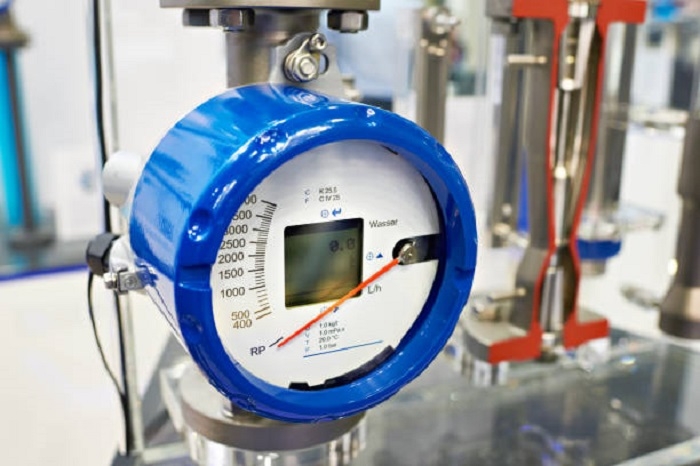
Mass flow measurement is essential in industries where precision, repeatability, and reliable data are required for process control, safety, and product quality. While steady-state conditions provide the ideal environment for accurate measurement, real-world systems frequently encounter sudden flow rate changes due to pump starts, valve adjustments, load shifts, or transient disturbances. Understanding how mass flow meters respond to these rapid fluctuations helps engineers select the appropriate meter type, configure control loops effectively, and maintain measurement accuracy under dynamic conditions. Because mass flow meters are designed to measure mass directly rather than infer it from volume, their response mechanisms depend heavily on internal sensing technology, damping characteristics, and the behavior of the fluid itself.
Understanding the Dynamics of Sudden Flow Changes
The Nature of Flow Transients
Sudden flow rate changes, also known as transients, can occur within milliseconds or seconds, depending on the mechanical or process conditions driving them. These shifts may involve rapid acceleration or deceleration of fluid, sudden pressure variations, or changes in fluid density. When transients occur, the fluid’s momentum interacts with the meter’s sensing elements, forcing the device to adjust and stabilize its measurement output. The degree to which mass flow meters can track these changes depends on their sensor response speed, structural design, and the electronic filtering used to process signals.
The Role of Sensor Technology
Different types of mass flow meters respond differently to sudden changes due to their sensing principles. Thermal mass flow meters rely on heat transfer mechanisms, while Coriolis mass flow meters depend on vibration patterns within flow tubes. These differences influence response time, accuracy, and the meter's ability to recover quickly after a disturbance. Regardless of meter type, the interaction between the fluid and the sensing mechanism determines how the device manages rapid variations.
Coriolis Mass Flow Meters and Sudden Flow Changes
Dynamic Tube Response Under Rapid Flow Variations
Coriolis mass flow meters measure mass flow by observing the vibration of internal flow tubes. When fluid flows through these tubes, Coriolis forces cause a twisting effect proportional to the mass flow rate. Sudden changes in flow introduce abrupt shifts in the magnitude of this twisting motion. The sensor system must detect, process, and stabilize this twist pattern to produce an accurate reading.
The meter’s primary challenge lies in stabilizing tube vibrations after a rapid flow change. The tubes may temporarily overshoot, oscillate, or exhibit transitional modes. Modern meters use advanced digital signal processing to dampen these oscillations, allowing the meter to quickly return to a stable state. The meter’s natural frequency, mechanical stiffness, and tube geometry all influence how rapidly the system settles after a disturbance.
Electronic Filtering and Signal Processing
To handle sudden variations, Coriolis meters use filtering algorithms that distinguish between genuine flow changes and noise caused by mechanical vibration or fluid turbulence. These filters must strike a balance between responsiveness and stability. If the filtering is too aggressive, the meter may respond sluggishly to legitimate changes. If it is too light, the output may appear erratic during transients. High-end Coriolis mass flow meters offer adjustable damping settings, enabling operators to tune the response based on process requirements.
Thermal Mass Flow Meters and Their Response Behavior
Heat Transfer During Rapid Flow Fluctuations
Thermal mass flow meters measure mass flow by monitoring how fluid carries heat away from a heated sensor. When flow rate changes suddenly, the heat transfer rate shifts instantaneously, requiring the electronic system to update the measurement accordingly. However, thermal response time depends on the thermal mass of the sensor and the heat conduction properties of the fluid.
In gases, which react quickly to temperature changes, thermal meters often respond rapidly. In liquids, where thermal conductivity and density behave differently, the response may be slower. Sudden changes may cause temporary temperature imbalances, leading to transient measurement errors until the heating element and sensors reach equilibrium.
Stability and Damping in Thermal Sensors
To maintain stability during sudden fluctuations, thermal mass flow meters incorporate electronic damping algorithms. These prevent overreaction to short-lived disturbances such as valve noise or turbulent bursts. The goal is to report genuine changes in flow while filtering out spikes that represent non-steady behaviors. Because thermal meters do not rely on mechanical resonance, their behavior during transients is smoother but sometimes slower compared to Coriolis instruments.
Impact of Fluid Characteristics on Meter Response
Density, Viscosity, and Compressibility
The response of mass flow meters depends not only on meter design but also on the properties of the fluid undergoing rapid change. For example, compressible gases may exhibit pressure surges or density waves when a sudden change occurs. These variations affect both Coriolis and thermal sensors differently. Liquids, being less compressible, typically cause more direct mechanical loading on flow tubes in Coriolis meters, potentially increasing transient effects.
Entrained Gas or Multi-Phase Conditions
Sudden flow changes can introduce bubbles or entrained particles into the stream, causing irregularities in mass measurement. Coriolis meters are particularly sensitive to bubbles, which interrupt tube vibration patterns. Thermal meters may also be affected because different phases have different heat transfer properties. The presence of transient multiphase flow can cause oscillations or delayed stabilization.
Measurement Damping and Control Loop Interaction
The Function of Damping Parameters
Both Coriolis and thermal mass flow meters include damping settings that control how quickly the meter responds to sudden changes. These parameters can be adjusted to meet process needs. Fast response is ideal for dynamic control systems, while slower response may be beneficial in noisy or turbulent environments. The damping parameter essentially filters the output signal, shaping meter behavior during transients.
Avoiding Control Loop Instability
In automated systems, mass flow meters often feed data to a control loop. If the meter responds too quickly to sudden changes, it may cause the controller to overreact, resulting in system oscillations or instability. Conversely, slow response may cause delays in system correction. Matching meter response characteristics to the control loop’s needs is essential for stable operation, especially in high-speed process systems such as chemical reactors or fuel injection lines.
Long-Term Performance and Calibration Under Transient Conditions
Importance of Calibration for Transient Accuracy
Calibration typically occurs under steady-state conditions, but understanding how mass flow meters behave during sudden changes informs expectations and maintenance strategies. Calibrations cannot reproduce every possible transient, but they ensure that baseline accuracy remains within specification. For processes with frequent rapid variations, periodic verification helps detect sensor drift or mechanical fatigue that could compromise transient performance.
Monitoring for Mechanical or Electronic Wear
Repeated exposure to sudden flow changes may stress mechanical components in Coriolis meters or accelerate sensor drift in thermal devices. Monitoring changes in response time, signal noise, or stability helps identify early signs of wear. Preventive maintenance ensures that response behavior remains predictable under future transient conditions.
Conclusion: Dynamic Response as a Measure of Meter Quality
The way mass flow meters respond to sudden flow rate changes reveals much about their design quality, sensing technology, and signal processing capabilities. Coriolis meters must manage mechanical resonance and twisting dynamics, while thermal meters must adapt to rapid heat transfer shifts. Both types depend on advanced filtering algorithms and damping settings to maintain stable, accurate readings. Understanding these behaviors allows engineers to choose appropriate meters for dynamic processes and optimize system performance even under challenging transient conditions.
- Questions and Answers
- Opinion
- Motivational and Inspiring Story
- Technology
- Live and Let live
- Focus
- Geopolitics
- Military-Arms/Equipment
- Security
- Economy
- Beasts of Nations
- Machine Tools-The “Mother Industry”
- Art
- Causes
- Crafts
- Dance
- Drinks
- Film/Movie
- Fitness
- Food
- Games
- Gardening
- Health
- Home
- Literature
- Music
- Networking
- Other
- Party
- Religion
- Shopping
- Sports
- Theater
- Health and Wellness
- News
- Culture

 Chinese
 Arabic
 French
 Spanish
 Portuguese
 Deutsch
 Turkish
 Dutch
Dutch
 Italiano
 Russian
 Romaian
 Portuguese (Brazil)
 Greek
Greek