
If individuals can sue corporations for negligence, why can’t nations sue other states whose cover-ups cause worldwide death and destruction?
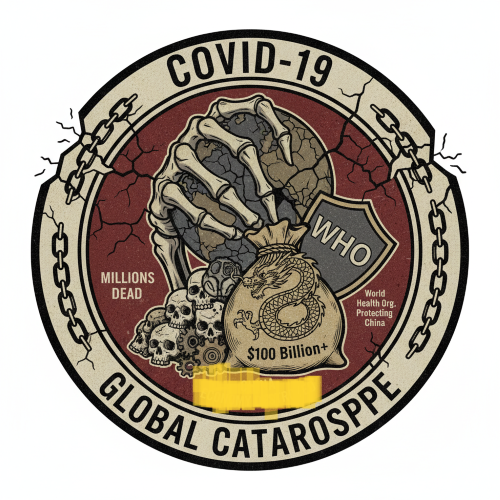
Why Nations Can’t Sue Other States Like Individuals Can Sue Corporations for Negligence-
The COVID-19 pandemic has provoked profound questions about accountability in a globalized world.
While individuals routinely sue corporations for negligence when harm occurs, no country has successfully sued China—or any other state—despite allegations that delayed disclosure of the virus caused millions of deaths and trillions in economic losses.
Understanding why nations cannot pursue legal action in the same way as private actors requires examining differences between corporate and state liability, the principles of sovereign immunity, the challenges of causation and jurisdiction, and potential avenues for evolving international law.
I. Corporate Negligence: A Model for Accountability
1. The Legal Basis
-
In most legal systems, corporations owe a duty of care to consumers, employees, and the public.
-
Negligence occurs when a company fails to meet this duty, and harm results.
-
Individuals or groups can sue for compensation, punitive damages, or injunctions.
2. Key Features
-
Corporations are legal persons: they can be sued in court without restrictions on jurisdiction, provided proper service is made.
-
Liability is generally financial, enforceable through courts with authority over the corporation’s assets.
-
Courts rely on evidence and establishing causation to determine responsibility.
3. Example
-
Pharmaceutical companies have been sued for failing to warn about harmful side effects or for defective products.
-
In such cases, plaintiffs prove that the company had knowledge of risk, failed to act, and caused harm—a model of accountability that seems straightforward and enforceable.
II. Why States Are Different
Unlike corporations, sovereign nations enjoy legal protections and privileges that make lawsuits extraordinarily complex.
1. Sovereign Immunity
-
A core principle of international law: states cannot be sued in foreign courts without their consent.
-
Sovereign immunity exists to preserve equality among nations and prevent politically motivated litigation from undermining state sovereignty.
-
Unlike corporations, which operate under the jurisdiction of courts where they conduct business, states are protected from external legal enforcement.
2. Jurisdictional Limitations
-
International courts, such as the International Court of Justice (ICJ), require consent from both parties.
-
China, like most major powers, is unlikely to accept ICJ jurisdiction in a case alleging negligence in a pandemic.
-
Without consent, no legal forum exists where a state can be compelled to defend itself or pay damages.
3. Difficulty in Enforcement
-
Even if a state were found liable in an international tribunal, enforcing a judgment is nearly impossible without the state’s cooperation.
-
Unlike corporations, states cannot be forced to sell assets or transfer funds abroad. Political realities often override legal mandates.
III. Challenges of Proving Negligence Between States
1. Duty of Care
-
In private law, duty of care is clearly defined: companies must act to prevent foreseeable harm.
-
For states, duty of care is ambiguous and context-dependent. International law recognizes obligations, such as:
-
Preventing transboundary harm (environmental law)
-
Complying with treaties (e.g., International Health Regulations)
-
Respecting human rights
-
-
But establishing a direct legal duty to other countries in a public health crisis is complex.
2. Causation
-
In negligence cases against corporations, causation is relatively direct: a defective product injures a person.
-
In a pandemic, causation is diffuse and global:
-
Virus spread is influenced by travel, government policies, healthcare capacity, and population behavior.
-
Linking delayed disclosure by one country to specific deaths or economic losses is extremely difficult.
-
3. Attribution of Harm
-
Harm must be directly attributable to the defendant’s actions or omissions.
-
Unlike a corporate product failure, which is discrete and traceable, pandemics involve multiple interacting factors across nations and populations.
IV. Why Legal Mechanisms Lag Behind Global Realities
1. International Law vs. Domestic Law
-
Domestic law provides robust frameworks for holding corporations accountable.
-
International law prioritizes sovereign equality, diplomacy, and state consent, limiting avenues for liability.
2. Political Considerations
-
Suing a major economic power risks retaliation in trade, diplomacy, or security arrangements.
-
Governments may choose practical solutions over litigation, such as negotiations, compensation funds, or treaty reforms.
3. Lack of Precedent
-
No international legal precedent exists for suing a state for negligence causing a global pandemic.
-
Environmental, industrial, and armed conflict cases offer analogies, but none provide a direct template for global health negligence.
V. Alternative Avenues for Accountability
Although traditional litigation is difficult, other mechanisms exist or could be developed:
1. Multilateral Inquiries
-
UN or WHO-led investigations can establish facts, assign responsibility, and recommend reforms.
-
While not legally binding, these inquiries create political and moral pressure.
2. Global Pandemic Treaties
-
A treaty could impose binding obligations, independent verification, and dispute resolution mechanisms, reducing reliance on voluntary compliance.
-
This could create legal consequences for suppression of critical information, even without ICJ litigation.
3. Collective Compensation Schemes
-
Nations could create funds or insurance mechanisms to compensate for losses during pandemics.
-
This avoids directly suing a state while still addressing economic harm.
4. Domestic and Regional Strengthening
-
Countries can reduce dependence on single suppliers, enhance surveillance, and improve emergency response to minimize vulnerability.
-
While not punitive, this strategy mitigates the impact of negligence elsewhere.
VI. Ethical Considerations
1. Global Responsibility
-
Even if legal avenues are limited, states have a moral obligation to act transparently in crises that affect the world.
-
The suppression of information about COVID-19 violated this principle, contributing to widespread suffering.
2. Deterrence and Norm-Building
-
Accountability mechanisms, even symbolic or non-binding, create norms that discourage negligence in global health emergencies.
-
Protecting whistleblowers, ensuring transparency, and strengthening reporting systems are ethical imperatives aligned with public safety.
VII. Lessons for the Future
-
Current international law is insufficient to hold states accountable for global negligence.
-
Treaties, multilateral agreements, and verification mechanisms are necessary to close accountability gaps.
-
Ethical norms must complement legal frameworks, ensuring states prioritize human life over political interests.
-
Preparedness and resilience at domestic and regional levels reduce dependency on the transparency of a single state.
++++++++++++++++++++++
The contrast between corporate liability and state accountability highlights a fundamental limitation of international law. While corporations are subject to lawsuits for negligence, sovereign immunity, jurisdictional constraints, and causation complexities prevent states from being sued in similar ways. Delayed reporting and suppression of information, as seen in China’s early handling of COVID-19, caused immense global harm, yet no legal forum exists where affected nations can directly seek redress.
Despite these limitations, the pandemic underscores the urgent need for reform:
-
Binding international pandemic treaties with clear reporting obligations and verification mechanisms
-
Independent investigations to establish facts and assign responsibility
-
Ethical frameworks ensuring transparency, whistleblower protection, and early warning
-
Multilateral economic mechanisms to mitigate global losses
Ultimately, while nations cannot sue other states like individuals can sue corporations, the COVID-19 crisis demonstrates the moral, ethical, and practical necessity of creating systems that hold states accountable for actions—or inactions—that threaten the world. Building such mechanisms is essential to prevent future global catastrophes and ensure that early warnings are respected, not suppressed.
- Questions and Answers
- Opinion
- Motivational and Inspiring Story
- Technology
- Live and Let live
- Focus
- Geopolitics
- Military-Arms/Equipment
- Security
- Economy
- Beasts of Nations
- Machine Tools-The “Mother Industry”
- Art
- Causes
- Crafts
- Dance
- Drinks
- Film/Movie
- Fitness
- Food
- Games
- Gardening
- Health
- Home
- Literature
- Music
- Networking
- Other
- Party
- Religion
- Shopping
- Sports
- Theater
- Health and Wellness
- News
- Culture

 Chinese
 Arabic
 French
 Spanish
 Portuguese
 Deutsch
 Turkish
 Dutch
Dutch
 Italiano
 Russian
 Romaian
 Portuguese (Brazil)
 Greek
Greek