
Should Victims’ Families Be Allowed to Bring Collective Class-Action Lawsuits Against China for COVID-19?
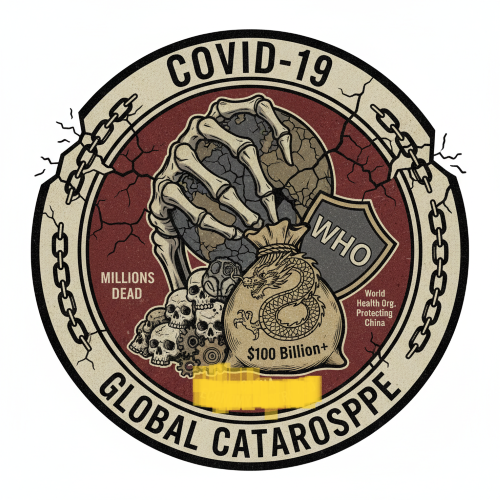
The COVID-19 pandemic has been a global tragedy, claiming millions of lives and causing unprecedented economic damage.
Families of victims across the world have experienced immense suffering, grief, and financial loss.
Naturally, the question arises: should these families be allowed to bring collective class-action lawsuits against China’s government for allegedly suppressing early warnings and delaying reporting of the virus?
While the idea of legal accountability is compelling, international law, sovereign immunity, and practical enforcement make this question highly complex.
I. The Case for Accountability
1. Early Suppression and Delayed Reporting
-
Evidence suggests that Chinese authorities punished whistleblowers, censored doctors, and delayed acknowledgment of human-to-human transmission.
-
This delay hindered the world’s ability to respond quickly, allowing the virus to spread internationally.
-
Victims’ families may argue that these actions constitute gross negligence or reckless disregard for global public health.
2. Global Human and Economic Impact
-
COVID-19 has caused millions of deaths, overwhelmed healthcare systems, and devastated economies.
-
Families have endured not only personal loss but also financial hardship due to medical bills, lost income, and economic disruption.
-
Collective legal action could offer a mechanism for justice, restitution, or moral acknowledgment.
3. Ethical Considerations
-
Beyond legality, there is a moral imperative: families who lost loved ones due to delayed information deserve a forum to voice grievances and seek accountability.
-
Legal action can send a global signal that suppressing public health information carries consequences.
II. The Challenges of Class-Action Lawsuits Against a Sovereign State
1. Sovereign Immunity
-
One of the biggest barriers is sovereign immunity, which shields states from lawsuits in foreign courts.
-
Unlike corporations, a country cannot generally be sued in another country’s courts without its consent.
-
This makes a traditional class-action lawsuit against China legally highly improbable.
2. Jurisdictional Hurdles
-
International courts, such as the International Court of Justice (ICJ), require the consent of both parties. China is unlikely to submit voluntarily to such jurisdiction.
-
Domestic courts in the U.S., Europe, or other countries could theoretically hear cases, but enforcement of any judgment would be extremely difficult.
3. Establishing Causation
-
Plaintiffs would need to prove a direct link between China’s alleged actions and individual deaths or economic losses.
-
Pandemic spread is influenced by numerous factors: international travel, government responses, healthcare infrastructure, and population behavior.
-
Isolating China’s responsibility to a legally actionable degree is extraordinarily challenging.
4. Scale and Coordination
-
Coordinating a global class-action lawsuit is unprecedented.
-
Differences in legal systems, evidence standards, and procedural rules make collective international litigation extremely complex.
III. Precedents and Analogies
1. Corporate Class-Action Suits
-
Corporations can be sued collectively for product defects or environmental harm because they operate under domestic laws and courts with enforcement power.
-
States differ fundamentally because of sovereign immunity, political status, and lack of enforceable international judgment mechanisms.
2. Environmental and Transboundary Disputes
-
International law has precedent in holding states responsible for transboundary harm, such as pollution (e.g., Trail Smelter Arbitration).
-
These cases establish principles of state responsibility but do not provide a model for private citizens suing for pandemic-related deaths.
3. Human Rights Litigation
-
Some lawsuits against governments for violations of human rights have been pursued internationally.
-
These usually involve domestic victims suing their own government or seeking remedies under human rights treaties, not suing a foreign state for negligence affecting multiple countries.
IV. Alternative Mechanisms for Justice
While a traditional class-action lawsuit may not be feasible, other mechanisms could offer victims’ families redress, acknowledgment, or compensation:
1. Multilateral Compensation Funds
-
International organizations could establish funds to compensate victims of global pandemics.
-
Contributions could come from member states or international financial mechanisms.
-
This approach bypasses the need to sue a single country while providing financial relief to families.
2. International Pandemic Treaties
-
A global treaty could mandate transparency, reporting, and accountability for pandemic-related negligence.
-
Such a treaty could include dispute resolution and compensation mechanisms, offering a legal framework for collective claims in future pandemics.
3. Independent Investigations and Public Reports
-
UN or WHO-led inquiries can document failures, identify responsible parties, and recommend reforms.
-
While not legally binding, such investigations provide moral and political accountability, which can pressure states to accept responsibility.
4. Domestic Legal Actions
-
Some families might pursue domestic litigation against local governments or health authorities for failure to respond adequately once information became available.
-
While this does not target China directly, it allows victims to seek justice within their own jurisdictions.
V. Ethical Considerations
1. Moral Imperative
-
Families who lost loved ones deserve recognition, justice, and acknowledgment of preventable harm.
-
Legal mechanisms, even if symbolic, can validate their suffering and raise awareness of systemic failures.
2. Deterrence
-
Holding states accountable, formally or informally, sends a signal to the international community that suppressing critical public health information is unacceptable.
-
This may reduce the likelihood of similar negligence in future pandemics.
3. Public Awareness
-
Even failed legal efforts can increase transparency, media attention, and international scrutiny, contributing to long-term systemic reform.
VI. Lessons for the Future
-
Need for International Legal Reform
-
The COVID-19 crisis demonstrates the gap in current international law: victims have no practical recourse against states that allegedly cause global harm.
-
Treaties, verification mechanisms, and compensation frameworks are essential.
-
-
Whistleblower Protection
-
Early warnings by doctors and scientists must be protected internationally, ensuring that information flows freely to prevent global harm.
-
-
Global Preparedness and Resilience
-
Reducing dependency on single states for early-warning information, medical supplies, and vaccines mitigates the human cost of delayed reporting.
-
++++++++++++++++++++++++
While the idea of victims’ families around the world bringing collective class-action lawsuits against China is compelling, legal, political, and practical obstacles make such lawsuits nearly impossible under current international law. Sovereign immunity, jurisdictional constraints, causation challenges, and the scale of coordination required all create formidable barriers.
However, the pandemic highlights the urgent need for alternative accountability mechanisms:
-
Multilateral compensation funds to provide restitution
-
Global pandemic treaties mandating transparency and establishing dispute resolution frameworks
-
Independent international investigations documenting failures and recommending reforms
Beyond legal remedies, there is a profound ethical and moral imperative to ensure that families who lost loved ones are recognized, that states cannot suppress critical health information without consequence, and that the international community takes proactive steps to prevent future global catastrophes.
Ultimately, while class-action lawsuits may not be feasible today, the principles of justice, accountability, and deterrence demand innovative global solutions that allow victims to seek recognition, compensation, and systemic reform in the aftermath of COVID-19.
- Questions and Answers
- Opinion
- Motivational and Inspiring Story
- Technology
- Live and Let live
- Focus
- Geopolitics
- Military-Arms/Equipment
- Security
- Economy
- Beasts of Nations
- Machine Tools-The “Mother Industry”
- Art
- Causes
- Crafts
- Dance
- Drinks
- Film/Movie
- Fitness
- Food
- Games
- Gardening
- Health
- Home
- Literature
- Music
- Networking
- Other
- Party
- Religion
- Shopping
- Sports
- Theater
- Health and Wellness
- News
- Culture

 Chinese
 Arabic
 French
 Spanish
 Portuguese
 Deutsch
 Turkish
 Dutch
Dutch
 Italiano
 Russian
 Romaian
 Portuguese (Brazil)
 Greek
Greek