

Is the South China Sea Now Effectively a “No-Go Zone” for Smaller Asian Countries Due to China’s Militarized Artificial Islands?
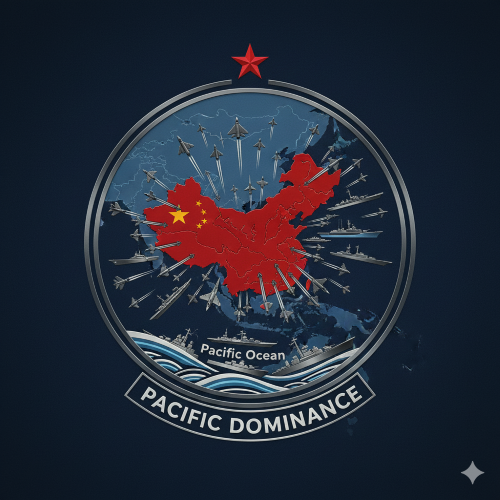
The South China Sea, one of the most strategically vital waterways in the world, has transformed dramatically over the past two decades.
Once a bustling arena of international commerce and fishing activity, it is increasingly becoming a stage for China’s assertive military and territorial ambitions.
By constructing and militarizing artificial islands—turning reefs and shoals into fortified outposts—Beijing has reshaped the maritime landscape, creating conditions that make the South China Sea appear, for many smaller Asian nations, a virtual “no-go zone.”
The question is stark: Can the Philippines, Vietnam, Malaysia, or Indonesia still operate freely in these waters, or has China’s militarization effectively locked them out?
Evidence suggests that China has succeeded, to a large degree, in making the South China Sea a strategic arena dominated by its own rules.
1. China’s Artificial Islands: Turning Reefs into Military Fortresses
Beginning in 2013, China embarked on a large-scale program of land reclamation in the Spratly and Paracel Islands. The scale of construction is unprecedented:
-
Entire reefs expanded into islands over 1,000 acres in size.
-
Runways capable of accommodating military aircraft.
-
Missile systems, including surface-to-air and anti-ship missiles.
-
Radar and electronic surveillance stations with regional coverage.
-
Ports, docks, and logistical facilities capable of sustaining long-term deployments.
These artificial islands are not civilian outposts—they are militarized strongholds. Their mere presence transforms the South China Sea from a shared maritime zone into a zone under China’s military control, visible from the air and sea.
2. The “No-Go Zone” Effect on Smaller Nations
The militarization of these islands has had a profound psychological and practical impact on smaller nations:
-
Philippines: Chinese Coast Guard and maritime militia ships frequently harass Filipino vessels near Second Thomas Shoal and Scarborough Shoal. Fishermen report intimidation, ramming, and even confiscation of gear. The Philippine Navy is limited in size and cannot challenge China’s presence directly.
-
Vietnam: Oil exploration platforms in contested waters are vulnerable to Chinese disruption. Vietnam’s fishermen face harassment and exclusion from traditional fishing grounds.
-
Malaysia: Chinese vessels have interfered with Malaysian maritime patrols and limited resource exploration in contested zones.
-
Indonesia: Although not claiming territory in the Spratlys, its Natuna waters are increasingly patrolled by China’s coast guard, creating tensions and caution in its maritime operations.
The message is unmistakable: smaller nations must operate cautiously or risk confrontation. Even routine activities—fishing, surveying, oil exploration, or patrolling—carry the risk of escalation. For many officials and mariners, the South China Sea has become, in effect, a “no-go zone” without explicit closure orders.
3. Legal and Diplomatic Constraints
The 2016 Permanent Court of Arbitration ruling in The Hague, which invalidated China’s expansive “nine-dash line” claims, should have empowered smaller nations to assert their maritime rights. Instead, China has ignored the ruling entirely, continuing to consolidate its hold on artificial islands and surrounding waters.
Smaller Asian nations face a diplomatic dilemma:
-
Challenge China militarily: Risk escalation and potential retaliation.
-
Appeal to international law: Limited enforcement mechanisms; China can veto or block meaningful action at the UN Security Council.
-
Negotiate bilaterally: Often yields concessions favoring China, leaving smaller countries frustrated.
This dynamic reinforces the “no-go” perception: even if smaller nations are legally entitled to navigate and exploit these waters, practical access is constrained by China’s overwhelming military and political presence.
4. China’s Maritime Militia and Coast Guard: A Non-Military Enforcement Tool
China does not rely solely on formal military forces to assert control. Its maritime militia—essentially armed civilian vessels—along with a powerful coast guard, acts as a flexible enforcement mechanism. This has several effects:
-
Harassment and intimidation of smaller state vessels without direct combat.
-
Deniability for Beijing—these are “civilian” actors rather than soldiers.
-
Gradual normalization of Chinese dominance; smaller nations adapt to avoid confrontation.
By using this combination of formal and informal maritime forces, China creates grey-zone control: an effective “no-go zone” without triggering open war or international backlash.
5. Economic Implications of Restricted Access
The militarization of artificial islands impacts not only security but also economics:
-
Fishing: China has effectively excluded foreign fishermen from traditional grounds, impacting livelihoods in the Philippines, Vietnam, and Malaysia.
-
Energy: Oil and gas exploration faces constant interference. Companies are forced to avoid contested waters, leaving resources underutilized.
-
Shipping: While China does not directly block commercial shipping, militarization increases risk and insurance costs, subtly deterring smaller nations from asserting freedom of navigation rights.
Economic leverage amplifies the “no-go” effect, making the South China Sea not just a strategic challenge, but also a financial burden for smaller neighbors.
6. The Psychological and Strategic Impact
Beyond physical presence, China’s islands generate a psychological barrier:
-
Persistent air and naval patrols remind smaller nations that any assertive action carries risk.
-
“Harassment fatigue” discourages repeated attempts to challenge Chinese claims.
-
Regional decision-makers increasingly calculate diplomacy and restraint over maritime assertion.
This psychological pressure is a key element of control—fear becomes an instrument of strategic compliance.
7. Can Smaller Nations Counter China’s Control?
While China’s artificial islands dominate much of the South China Sea, smaller nations are not powerless:
-
Multilateral alliances: The Philippines and Vietnam engage with the U.S., Japan, and Australia through the Quad and other partnerships to ensure freedom of navigation exercises.
-
Modernization: Vietnam and the Philippines are investing in new patrol boats, radars, and surveillance technology.
-
International advocacy: Legal and diplomatic pressure continues to build, including at ASEAN forums and the UN.
-
Diversification of resources: Countries explore alternative offshore energy and fishing options outside China’s immediate reach.
Even so, China’s combined economic, military, and diplomatic influence ensures that the “no-go” effect remains a potent reality—limiting freedom of movement and access in disputed waters.
8. The South China Sea Is Functionally Restricted, if Not Fully Closed
China’s construction and militarization of artificial islands have fundamentally altered the South China Sea. While smaller Asian nations retain legal rights to operate there, the combination of military infrastructure, maritime militia, coast guard harassment, and psychological pressure makes the region effectively constrained for them.
-
Routine fishing, patrolling, and resource exploration face constant risk.
-
Direct military challenge is highly risky, deterring assertive action.
-
Diplomacy is complicated by economic leverage and international reticence.
In practical terms, this creates a semi-closed environment, where China dictates the conditions of access and smaller nations are compelled to navigate carefully—or avoid certain zones altogether.
The South China Sea is therefore not a full “no-go zone” in the legal sense, but for smaller Asian nations seeking security and economic opportunity, it functions as one. As long as China maintains this militarized footprint, freedom of operation for neighbors will remain limited, reinforcing Beijing’s dominance over one of the most strategically vital regions in the world.
- Questions and Answers
- Opinion
- Motivational and Inspiring Story
- Technology
- Live and Let live
- Focus
- Geopolitics
- Military-Arms/Equipment
- Security
- Economy
- Beasts of Nations
- Machine Tools-The “Mother Industry”
- Art
- Causes
- Crafts
- Dance
- Drinks
- Film/Movie
- Fitness
- Food
- Games
- Gardening
- Health
- Home
- Literature
- Music
- Networking
- Other
- Party
- Religion
- Shopping
- Sports
- Theater
- Health and Wellness
- News
- Culture

 Chinese
 Arabic
 French
 Spanish
 Portuguese
 Deutsch
 Turkish
 Dutch
Dutch
 Italiano
 Russian
 Romaian
 Portuguese (Brazil)
 Greek
Greek