

Why do African leaders loudly condemn Western exploitation but stay silent about African-backed militias fueling Congo’s violence?
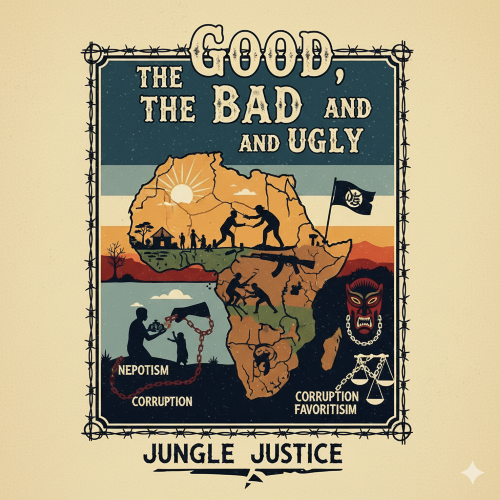
The apparent contradiction between African leaders loudly condemning Western exploitation while often remaining silent or divided on African-backed militias fueling the Congo's violence stems from a complex interplay of Realpolitik, economic self-interest, the principle of state sovereignty, and the failure of collective security mechanisms.
For many African leaders, the narrative of Western exploitation serves as a powerful, unifying political tool that resonates historically and deflects attention from internal failures.
In contrast, condemning a powerful African neighbor, such as Rwanda or Uganda, over the DRC conflict risks economic, security, and political upheaval.
The Political Utility of Anti-Western Rhetoric
Condemning Western historical and ongoing exploitation is a politically expedient and strategically safe position for African leaders, unlike challenging a powerful peer state.
1. Unifying and Deflective Narrative
-
Historical Legitimacy: The criticism of colonialism, neocolonialism, and resource extraction has deep historical roots and is universally accepted across the continent. It provides a common political ground, helping to unify diverse African states and bolster the legitimacy of the African Union (AU) and regional blocs.
-
Deflection of Responsibility: The focus on Western greed effectively deflects attention from domestic issues like weak governance, corruption, and the mismanagement of resources by African elites, including in the DRC itself. It shifts the blame to external, non-African forces, which is politically safer than criticizing one's peers.
2. The Sovereignty Shield
African states and regional bodies place an extremely high value on the principle of state sovereignty and non-interference in the internal affairs of member states.
-
Club of Incumbents: Regional bodies like the Southern African Development Community (SADC) often function as a "club of incumbents," where leaders prioritize mutual protection from external judgment or intervention. Direct, strong condemnation of a member state (like Rwanda or Uganda) for supporting militias in the DRC sets a dangerous precedent that could one day be used against the condemning leader. This instinct to protect peer sovereignty trumps the humanitarian crisis in a neighboring state.
-
Avoiding a Precedent: Intervening decisively against an African state accused of aggression, or formally designating them as an aggressor, is a heavy political move that would threaten the entire regional security framework. It is easier to call for "dialogue" (such as the Luanda and Nairobi processes) than to enforce military action.
Economic Self-Interest and Geopolitics
The main reason for the silence or half-measures is that key African states are economically complicit in the conflict's continued financing.
3. Profiteering from the Conflict Economy
-
Smuggling Hubs: Countries like Rwanda and Uganda are consistently named in UN reports as transit and processing hubs for smuggled Congolese minerals (gold, coltan, tin), despite having minimal domestic production. This illicit trade generates enormous wealth for these governments and their associated business and military elites, making the continuation of instability in Eastern Congo financially beneficial.
-
Internal Competition: The silence is not total, but the condemnation often comes from the DRC government itself and its close allies (like SADC nations). Yet, even within the region, there is intense economic and political rivalry. Uganda and Rwanda, for example, have a tense relationship and compete for influence and control over the DRC's natural resources and trade routes, adding another layer of regional instability.
4. Fear of Retaliation and Conflict Escalation
Condemning Rwanda and Uganda too strongly or intervening with a robust offensive military force (as SADC has attempted with SAMIDRC) carries the risk of military confrontation with two of Africa's most highly professionalized and effective armies.
-
Risk Aversion: Most African countries prioritize national security and budgetary stability over an expensive, high-casualty military entanglement in the DRC. The failure of the EACRF and the quick withdrawal of SAMIDRC from certain areas demonstrate the military risk involved when engaging well-equipped, state-backed rebel groups like the M23.
Institutional Weakness of African Security Blocs
The very structure and limited capacity of the African Union (AU) and regional economic communities (RECs) render them ineffective in forcing compliance from powerful member states.
5. Lack of Enforcement Power
-
Financial Dependence: The AU relies heavily on voluntary contributions from member states and external funding, limiting its ability to maintain independence and enforce its mandates on financially powerful or strategically aligned members.
-
Coordination Failure: The DRC crisis has been addressed by multiple, often competing, regional efforts (EACRF, SAMIDRC, Luanda Process, Nairobi Process), leading to duplication, conflicting mandates, and poor coordination. This fragmentation allows the aggressors to exploit the institutional gaps and diplomatic contradictions.
6. Different Definitions of Exploitation
African leaders generally define "exploitation" in terms of historical and economic injustice inflicted by non-African entities (i.e., Western powers and multinational corporations).
-
They do not readily apply the term "exploitation" to African states that profit from resource trafficking, even if that profit is earned through proxy war and humanitarian catastrophe in a fellow African nation. This linguistic and political boundary-drawing ensures that the dominant narrative remains focused on the "global injustice" perpetuated by the West, rather than the "regional greed" perpetuated by African peers.
In essence, while the condemnation of Western exploitation is an easy and unifying political statement, condemning an African military power involves significant economic, security, and diplomatic costs that most African leaders are unwilling to pay. This calculated silence allows the profitable status quo of proxy war and mineral smuggling to continue in the DRC.
- Questions and Answers
- Opinion
- Motivational and Inspiring Story
- Technology
- Live and Let live
- Focus
- Geopolitics
- Military-Arms/Equipment
- Security
- Economy
- Beasts of Nations
- Machine Tools-The “Mother Industry”
- Art
- Causes
- Crafts
- Dance
- Drinks
- Film/Movie
- Fitness
- Food
- Games
- Gardening
- Health
- Home
- Literature
- Music
- Networking
- Other
- Party
- Religion
- Shopping
- Sports
- Theater
- Health and Wellness
- News
- Culture

 Chinese
 Arabic
 French
 Spanish
 Portuguese
 Deutsch
 Turkish
 Dutch
Dutch
 Italiano
 Russian
 Romaian
 Portuguese (Brazil)
 Greek
Greek