

“How Elite Protection Networks Undermine Democracy Even Without Explicit Corruption.”
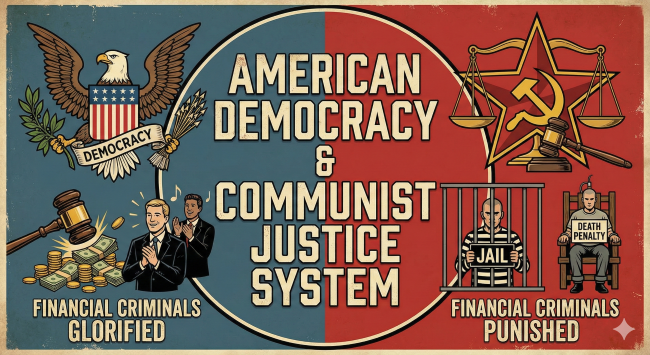
How Elite Protection Networks Undermine Democracy Even Without Explicit Corruption-
Corruption is often understood as the outright abuse of power for personal gain: bribery, embezzlement, or financial fraud.
But a more insidious threat exists—one that can destabilize democratic systems without ever violating a law: elite protection networks.
These networks consist of informal political, economic, and social alliances among the wealthy, the politically connected, and key institutional actors.
Through them, elites secure preferential treatment, evade accountability, and shape public policy in ways that favor their interests.
Crucially, this can happen without a single illegal transaction taking place.
Elite protection networks are particularly powerful in the United States because the system was not designed to prevent influence; it was designed to balance it.
When institutional checks are weakened and wealth is concentrated, these networks operate in plain sight, subtly reshaping governance, undermining democratic norms, and eroding public trust.
I. Understanding Elite Protection Networks
Elite protection networks are the informal systems that allow powerful individuals and institutions to protect each other from scrutiny and control. They operate through:
-
Mutual support among political actors: Parties and politicians often shield donors, allies, and insiders from investigations or public criticism.
-
Regulatory capture: Industries hire former regulators, ensuring rules are interpreted in their favor.
-
Media alliances: Partisan or corporate-owned media can protect friendly elites from negative coverage or spin news to their advantage.
-
Social and institutional norms: Wealthy networks share cultural assumptions, legal sophistication, and influence over think tanks and advisory bodies.
The key characteristic of these networks is that they create protection without overt illegality. Unlike bribery, no law is explicitly broken. Yet the effect is similar: the powerful are insulated from consequences, and ordinary citizens’ influence over political outcomes is diminished.
II. How Elite Networks Function Without Breaking the Law
1. Campaign Finance and Political Donations
Political donations, when fully disclosed, are legal and often celebrated as civic participation. Yet large-scale contributions create de facto influence over legislation, regulatory enforcement, and policy priorities. For example:
-
Politicians may avoid investigating major donors for fear of losing support.
-
Policy agendas are shaped by donors’ preferences rather than public need.
-
Parties form informal pacts to protect mutual financial interests.
Here, no crime occurs. Lawmakers receive legal contributions, and voters still technically choose their representatives. But the resulting policy outcomes disproportionately favor those with money.
2. Revolving Doors and Regulatory Capture
Elite networks exploit the revolving door between government agencies and private industry:
-
Former regulators join corporations, bringing inside knowledge and access.
-
Corporations place former executives in advisory roles within government agencies.
-
Decisions on compliance, enforcement, and rulemaking favor insiders.
Regulatory capture does not require illegal payments. It works because of shared incentives and aligned interests, effectively allowing elites to write their own rules.
3. Partisan Solidarity
Elite networks often extend across parties in subtle ways. Politicians rarely attack opponents’ donors or allies if doing so might expose their own networks. This creates a mutual protection system, where elites are shielded from accountability regardless of which party is in power.
4. Media and Narrative Control
Media ownership and political bias allow elite networks to manage narratives:
-
Friendly media can downplay scandals or frame investigations as politically motivated attacks.
-
Social media amplification ensures loyal audiences defend elites even in the face of ethical questions.
-
Public opinion is manipulated to protect insiders without violating journalistic or legal norms.
Even when wrongdoing is exposed, elite networks can neutralize reputational damage, making informal protection as effective as legal immunity.
III. Democratic Consequences of Elite Protection Networks
The effects of these networks on democracy are profound, even if no explicit laws are broken.
1. Erosion of Accountability
In a functioning democracy, leaders must answer for missteps. Elite networks undermine this by:
-
Shielding politicians and executives from scrutiny
-
Delaying investigations or weakening enforcement
-
Allowing the wealthy to escape consequences for policy failures
The result is a system where accountability depends on social and economic position rather than law or ethics.
2. Policy Distortion
When elites protect each other, policy outcomes skew toward their interests:
-
Tax policies favoring corporations or high-income individuals
-
Deregulation in industries with strong networks
-
Public resources allocated to projects benefiting insiders
Citizens without elite connections face reduced influence, effectively diluting the democratic principle of equal participation.
3. Public Distrust and Cynicism
When the public perceives that laws and regulations are selectively enforced:
-
Voter engagement declines
-
Civic participation falls
-
Conspiracy theories proliferate
-
Polarization increases
Even without illegal acts, the perception of rigged systems undermines the legitimacy of government.
4. Institutional Weakening
Elite networks rely on exploiting weaknesses in institutions:
-
Congress often hesitates to investigate donors
-
Courts defer to executive discretion or face political pressure
-
Regulatory agencies prioritize enforcement against smaller actors rather than powerful insiders
This erodes the structural integrity of democratic institutions, making them more susceptible to further capture.
IV. Elite Networks and the Illusion of Meritocracy
Elite protection networks perpetuate inequality under the guise of meritocracy:
-
Political and economic elites appear “deserving” because of status, education, or professional achievement
-
Networks ensure these elites maintain access to power and resources
-
Public perception of fairness diminishes, reinforcing social stratification
Citizens begin to believe that political outcomes are determined by who you know rather than what you vote for.
V. Can Democracy Survive Elite Protection Networks?
Elite protection networks do not immediately dismantle democratic institutions. Elections continue, laws remain on the books, and courts still function. But over time, the consequences are cumulative:
-
Ordinary citizens lose faith in democracy
-
Accountability becomes performative
-
Policy serves the few, not the many
-
Economic inequality grows unchecked
Unless addressed, elite protection networks can evolve into a self-perpetuating oligarchy, where elections exist, but meaningful influence does not.
VI. Toward Solutions
Combating elite protection networks requires structural and cultural reforms:
1. Strengthen Institutional Independence
-
Congressional oversight must be insulated from donor influence
-
Regulatory agencies must operate free from political interference
-
Judges must be shielded from partisan pressure
2. Increase Transparency
-
Political donations and lobbying must be fully disclosed
-
Government-corporate interactions should be publicly accessible
-
Media ownership transparency is critical to ensure accountability
3. Enhance Whistleblower Protections
-
Safe reporting mechanisms for public and private sector employees
-
Legal and financial safeguards against retaliation
4. Civic Education and Cultural Shifts
-
Citizens must understand how influence networks operate
-
Public pressure can break informal protections
-
Promoting ethical leadership can challenge entrenched alliances
While elite networks are difficult to dismantle, transparency, independent institutions, and engaged citizens can weaken their grip.
++++++++++++++++++++
Elite protection networks illustrate a troubling reality: democracy can be undermined without a single explicit act of corruption. By shielding insiders, shaping policy, and manipulating public narratives, these networks erode accountability, distort governance, and reduce public trust. They are a silent force that perpetuates inequality, strengthens oligarchic influence, and normalizes unequal application of rules.
Addressing them requires more than legal enforcement—it demands structural reform, cultural vigilance, and active citizen engagement. Until society confronts these invisible networks, American democracy will operate in a twilight zone: formally intact, but substantively skewed toward the few, while the majority is left to accept the illusion of equality under law.
- Questions and Answers
- Opinion
- Motivational and Inspiring Story
- Technology
- Live and Let live
- Focus
- Geopolitics
- Military-Arms/Equipment
- Security
- Economy
- Beasts of Nations
- Machine Tools-The “Mother Industry”
- Art
- Causes
- Crafts
- Dance
- Drinks
- Film/Movie
- Fitness
- Food
- Games
- Gardening
- Health
- Home
- Literature
- Music
- Networking
- Other
- Party
- Religion
- Shopping
- Sports
- Theater
- Health and Wellness
- News
- Culture

 Chinese
 Arabic
 French
 Spanish
 Portuguese
 Deutsch
 Turkish
 Dutch
Dutch
 Italiano
 Russian
 Romaian
 Portuguese (Brazil)
 Greek
Greek