
What's the significance of FIFA peace award to Trump?

The Significance of the FIFA Peace Award to Donald Trump-
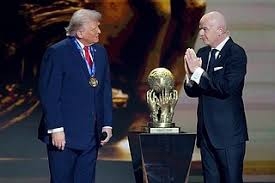
When FIFA, world football’s most influential governing body, presents a peace-related honor, the decision usually carries symbolism that reaches far beyond sports. Such awards are meant to acknowledge individuals or institutions that have contributed to reconciliation, cross-cultural unity, or conflict reduction. When that honor is attached to a former U.S. president as controversial and polarizing as Donald Trump, its significance becomes even more layered.
The implications touch global politics, soft power, diplomacy, media narratives, and the relationship between sports and global governance. To understand the weight of this award and why it matters, we must examine the broader political context, Trump’s geopolitical record, FIFA’s motivations, and how such symbolic gestures influence public perception and international relations.

1. The Evolution of Peace Awards in Sports Diplomacy
Sports has long been used as a vehicle for peace. The idea traces back to the ancient Olympic Games, where wars paused for the sake of competition. In the modern world, organizations like FIFA or the International Olympic Committee often use symbolic gestures—awards, partnerships, ambassador roles—to highlight conflict resolution.
Peace awards from sporting bodies usually aim to:
-
Promote intercultural dialogue
-
Reward conflict de-escalation
-
Inspire leaders to use sports for unity
-
Strengthen sports diplomacy
Given this tradition, FIFA’s peace award is not simply a trophy—it is a strategic communication tool. When such an award goes to a figure like Trump, it sends a global message, whether intentional or unavoidable.
2. Why Trump? Understanding the Context Behind the Recognition
Regardless of political views, Trump’s presidency produced several diplomatic moments that supporters argue contributed to global stability, especially in the Middle East. These include:
a. The Abraham Accords
Trump helped broker normalization agreements between Israel and a number of Arab nations, including the UAE, Bahrain, Morocco, and Sudan. These agreements are widely regarded as one of the most significant Middle Eastern diplomatic breakthroughs of the past few decades.
Although critics argue the accords didn’t address deeper conflicts—such as the Israeli-Palestinian issue—they nonetheless reduced tensions between Israel and its Arab neighbors.
b. Diplomatic Engagement with North Korea
Trump’s unprecedented direct meetings with Kim Jong-un were controversial, but historically notable. While they did not achieve denuclearization, they temporarily reduced hostilities and opened a new form of dialogue.
c. The Absence of Major New Wars
Supporters contend that during Trump’s presidency, the U.S. avoided major new foreign military interventions. In an era where American presidents have often been involved in foreign conflicts, this fact has been highlighted by defenders of his peace-oriented stance.
d. FIFA’s Interest in Global Unity
FIFA cares deeply about global stability because:
-
Football thrives in peaceful environments.
-
Host nations for World Cups require geopolitical cooperation.
-
FIFA’s brand benefits from associating with peace, not conflict.
If FIFA perceived Trump’s diplomatic moves as contributions to international calm, even symbolically, that alone could justify their decision from a sports-diplomacy standpoint.
3. Symbolism Over Substance: Why the Award Still Matters
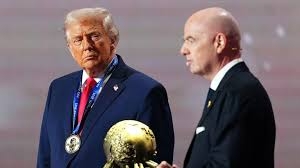
Regardless of personal opinion about Trump, the award symbolizes several deeper trends in global politics and the sports industry.
a. Acknowledging Unconventional Diplomacy
Trump’s approach to foreign policy—direct, personal, transactional—broke with traditional diplomatic methods. The fact that a global organization like FIFA recognized him validates, at least symbolically, the idea that peace can emerge from unconventional tactics.
This may embolden other nontraditional political actors to pursue bold or disruptive diplomatic experiments, believing global bodies may reward results more than methods.
b. The Globalization of Influence
FIFA is not an American institution. For it to honor a U.S. president—especially one not universally admired—signals that Trump’s influence has international dimensions. It suggests that parts of the world see Trump not only as a domestic political figure, but as a major geopolitical actor.
c. Sports as a Political Tool
This award reinforces how deeply intertwined global sports and global politics are. Football is the most watched sport on Earth; FIFA’s gestures shape public opinion.
When FIFA honors a leader, millions of people—not just football fans—take notice.
d. Legitimizing Certain Narratives
For Trump and his supporters, the award serves as international validation. It can be framed as evidence that neutral global institutions recognize his achievements—even when domestic critics disagree.
In modern politics, symbolism is a powerful tool.
4. The Award and Its Impact on Trump’s Global Image
Political figures care about international legitimacy because it affects:
-
Diplomatic leverage
-
Domestic political capital
-
Legacy and historical interpretation
-
Media narratives
a. Bolstering Trump’s Reputation as a Peacemaker
For Trump’s supporters, the award reinforces an existing narrative: that he is a dealmaker whose unconventional style produced tangible results. The award provides an external, non-partisan affirmation that strengthens this argument.
b. A Counterweight to Criticism
Trump faces intense criticism in the U.S. and abroad. But recognition from an international body helps redirect discussions toward positive contributions. Analysts may now debate:
-
Is Trump’s foreign policy more effective than critics admit?
-
Was he unfairly portrayed in global media?
-
Are some of his diplomatic achievements underrated?
c. A Legacy Move
Historical narratives evolve over decades, not years. Awards like these become footnotes that influence how future generations interpret a leader’s tenure.
Even if critics remain skeptical, historians in the future will acknowledge the existence of the recognition as one data point suggesting Trump had an impact on global peace efforts.
5. How FIFA Benefits Politically from Honoring Trump
FIFA is not a neutral entity. It is a global power player with interests that span continents. Honoring Trump can benefit FIFA in multiple ways:
a. Strengthening Ties With the U.S.
The U.S. is co-hosting the 2026 World Cup with Mexico and Canada. Awarding Trump may:
-
Increase goodwill among American political groups
-
Ensure easier cooperation with U.S. institutions
-
Guarantee smoother tournament logistics
b. Appealing to Trump-friendly Nations
Countries like Israel, the UAE, and Saudi Arabia have increasingly positive views of Trump due to the Abraham Accords. FIFA has major interests in these countries, including:
-
Club investments
-
Sponsorship deals
-
Potential World Cup bids
c. Global Media Attention
Trump is one of the most globally recognized figures. Any association with him generates massive media coverage, which FIFA often welcomes—positive or negative—because publicity keeps the organization relevant.
d. Positioning FIFA as a Peace Advocate
FIFA likes to portray itself as a global force for unity.
By giving a peace award—even a controversial one—it reinforces its preferred image.
6. Why the Award Is Controversial
Though significant, the award comes with controversy.
a. Critics Question the Timing and Motivation
Some argue the award is politically motivated, strategic rather than moral. They claim FIFA wanted to curry favor with certain regions or leaders.
b. Questions About Trump’s “Peace Record”
Critics highlight areas where they believe Trump’s actions did not promote peace:
-
Withdrawing from the Iran nuclear deal
-
Escalating trade wars
-
Harsh rhetoric toward certain nations
-
Domestic polarization
This contrast fuels debate about whether he should receive a peace-related honor at all.
c. Accusations of Sportswashing
Some analysts argue FIFA uses peace awards to distract from its own controversies, including corruption scandals or human rights criticisms related to World Cup host nations.
Awarding Trump may be seen as part of this strategy.
Even so, the political significance remains.
7. How the Award Plays Into Global Political Narratives
a. For Populist Movements
Populist leaders around the world may use this as proof that international elites are not united against them. They might argue that change-oriented, nationalist politics can coexist with global recognition.
b. For U.S.–Middle East Relations
It reinforces the narrative that diplomatic breakthroughs in the Middle East are not only appreciated by politics and governments, but also by global institutions in unrelated fields.
c. For International Diplomacy
The award may encourage future leaders to attempt bold diplomatic actions, believing that peaceful outcomes will be recognized regardless of style.
8. The Broader Significance: More Than a Trophy
Ultimately, the FIFA peace award to Trump carries layered significance:
1. It validates certain diplomatic achievements.
Whether one agrees with Trump or not, the award acknowledges tangible contributions like the Abraham Accords.
2. It highlights the influence of sports in politics.
Football is not “just a game.” It is a geopolitical tool.
3. It reshapes Trump’s international image.
The award becomes part of his global legacy.
4. It signals FIFA’s strategic interests.
The motivators behind the award reflect FIFA’s global ambitions.
5. It sparks debate about what “peace” truly means.
Is peace about avoiding war? Building alliances? Reducing hostility? The award reignites these philosophical questions.
+++++++++++++++++
The FIFA peace award given to Donald Trump is far more than a symbolic gesture. It intersects sports diplomacy, global politics, Middle Eastern peace processes, and international public relations. While supporters celebrate it as recognition of real diplomatic successes, critics question the motives and timing behind the award.
Regardless of viewpoint, the significance remains undeniable. FIFA has elevated Trump’s foreign-policy legacy onto an international stage outside politics, adding a chapter to global discourse on peace, diplomacy, and leadership. It showcases how institutions—even those centered on sports—shape political narratives and influence historical memory.
In the end, the award matters because it acknowledges a global truth: peace is complex, and those who influence it—through action, negotiation, or bold diplomacy—will always be remembered, debated, and recognized in ways that extend far beyond their time in office.
- Questions and Answers
- Opinion
- Motivational and Inspiring Story
- Technology
- Live and Let live
- Focus
- Geopolitics
- Military-Arms/Equipment
- Security
- Economy
- Beasts of Nations
- Machine Tools-The “Mother Industry”
- Art
- Causes
- Crafts
- Dance
- Drinks
- Film/Movie
- Fitness
- Food
- Games
- Gardening
- Health
- Home
- Literature
- Music
- Networking
- Other
- Party
- Religion
- Shopping
- Sports
- Theater
- Health and Wellness
- News
- Culture

 Chinese
 Arabic
 French
 Spanish
 Portuguese
 Deutsch
 Turkish
 Dutch
Dutch
 Italiano
 Russian
 Romaian
 Portuguese (Brazil)
 Greek
Greek