

What Is the Relationship Between Ezra Pound and William Carlos Williams?
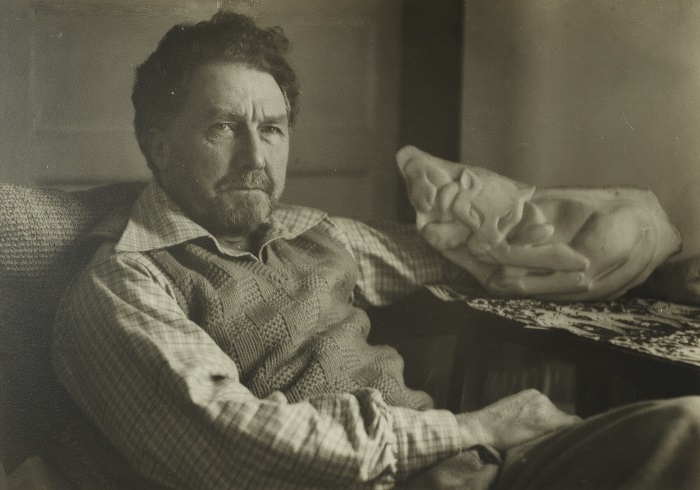
Ezra Pound and William Carlos Williams, two of the most influential figures in early 20th-century American poetry, had a complex and multifaceted relationship. While their individual poetic styles and philosophies diverged significantly, their interactions were marked by mutual respect, intellectual exchange, and even some tensions. Both poets were central to the Modernist movement and were committed to reshaping poetry to reflect the changing realities of the modern world. In this essay, we will explore the relationship between Ezra Pound and William Carlos Williams, examining how their influence on each other, their shared ideas, and their artistic differences shaped their respective works and the development of modernist poetry.
Early Encounters and Shared Interests
The Influence of Modernism on Their Work
Ezra Pound and William Carlos Williams were both foundational figures in the modernist movement, which sought to break away from the formal constraints of 19th-century poetry and explore new forms, structures, and subject matter. Pound, who had lived in Europe for much of his early career, was instrumental in shaping the direction of modernism, advocating for artistic experimentation, minimalism, and a rejection of the sentimental and the ornate. He championed the use of free verse, the creation of sharp, vivid images, and the importance of direct engagement with the material world. His advocacy for precise language and his interest in the imagistic nature of poetry had a lasting impact on the American poets who came after him, including William Carlos Williams.
Williams, who was based in the United States, had a different sensibility from Pound. However, like Pound, he believed that poetry should reflect modern life and break away from the constraints of conventional forms. Williams' style was grounded in an emphasis on simplicity, everyday language, and the lived experiences of ordinary people. His focus on the individual, as well as his love of the local and the particular, also set him apart from many of his contemporaries. Although Williams would eventually distinguish himself from Pound’s more global, intellectual approach to poetry, early on, the two poets were aligned in their desire to innovate and transform the landscape of poetry.
Pound’s Role as Mentor and Advocate
The relationship between Pound and Williams began in the early 20th century when Williams was just starting to find his voice as a poet. Pound, who had already made a name for himself in literary circles, took an active role in supporting Williams' career. In the early years of their friendship, Pound was instrumental in introducing Williams to new literary ideas, particularly the concept of "imagism" — a movement that emphasized precision in language, clear imagery, and the stripping away of unnecessary words. Pound’s "Make it new" mantra, a call for poetic innovation, resonated with Williams, who was in the process of developing a style of his own.
Williams often expressed admiration for Pound's intellect and vision, acknowledging the important role that his mentor played in his own development. Despite their different backgrounds and aesthetic approaches, Williams was deeply influenced by Pound’s insistence on linguistic clarity and his disdain for the excesses of Victorian poetry. Yet, Williams remained critical of some of Pound’s more formal and elitist tendencies, and as his poetic style matured, he distanced himself from some of the ideas that Pound espoused.
Diverging Poetic Philosophies
Ezra Pound’s Intellectualism and European Focus
Pound’s contributions to modernist poetry were vast and wide-ranging. He was not just a poet but a critic, editor, and translator, and he had a profound influence on many important figures in the early 20th century, including T.S. Eliot, James Joyce, and H.D. (Hilda Doolittle). Pound’s style was deeply intellectual, drawing on an extensive knowledge of European history, art, and literature. His poems were often dense, allusive, and highly crafted, and they frequently explored themes of culture, politics, and the role of the artist in society. His major works, such as The Cantos, reflect his belief in the power of art to shape the future and his commitment to political and social change.
Pound’s use of free verse and his emphasis on precise, imagistic language were central to his modernist vision. He was interested in creating poetry that was both innovative and intellectually challenging, often borrowing elements from other languages, cultures, and historical periods. While this approach earned him considerable acclaim, it also made his work difficult for many readers to access. His poetry, often abstract and esoteric, was more concerned with intellectual rigor than emotional accessibility, which created a divide between Pound’s work and that of poets like Williams, who sought to capture more immediate, human experiences in his poetry.
William Carlos Williams’ Americanism and Focus on the Local
While Ezra Pound was deeply invested in European literary traditions, Williams’ vision of modernism was more focused on the American experience. Williams believed that poetry should be rooted in the language and experiences of the everyday person. His work was defined by its directness, simplicity, and use of local imagery, particularly from his native New Jersey. Williams embraced what he called "the American Idiom" — a style that reflected the rhythms and vocabulary of American speech, often drawn from the rural, industrial, and working-class experiences he knew intimately.
Unlike Pound, who was fascinated by European high culture and often wrote about grand historical and political themes, Williams focused on the small, specific moments of daily life. His most famous poem, "The Red Wheelbarrow," exemplifies his belief that "so much depends" on ordinary things, highlighting the beauty in the mundane. Williams’ poetry is often described as more emotionally immediate and accessible compared to Pound’s, with its focus on the individual and the particular rather than the universal or the intellectual.
Williams also believed in the importance of localism in poetry. He thought that poets should create works that reflected their own environments, speaking in the language of their communities. This philosophy was in direct contrast to Pound’s more cosmopolitan approach, which saw art as a way to transcend local boundaries and engage with global issues.
Tensions in Their Relationship
The Fracture Over Aesthetic and Political Differences
While Pound and Williams shared a mutual respect for each other’s work, their differences in artistic vision and political philosophy eventually led to tensions in their relationship. One of the most significant points of divergence was Pound’s political involvement during the Second World War. Pound’s fascist sympathies, which became more apparent as the war progressed, caused a rift between him and many of his former allies, including Williams. Williams was not only disillusioned by Pound’s political leanings but also by his increasingly elitist approach to art, which he felt was out of touch with the realities of American life.
Williams’ poetry, with its focus on localism and human experience, was rooted in a belief in the accessibility of art to the general public. In contrast, Pound’s work often seemed more abstract and insular, aimed at an intellectual elite. This ideological divide became apparent in their correspondence and occasional critiques of each other’s work. While Williams continued to respect Pound’s influence on the modernist movement, he grew more critical of Pound’s style and politics as time went on.
Williams’ Critique of Pound’s Influence
As Williams’ poetry evolved, he became increasingly critical of what he saw as Pound’s intellectualism and his obsession with form. In particular, Williams disagreed with Pound’s reliance on complex historical references and the dense, allusive nature of his poetry. Williams believed that poetry should be more direct and accessible, and he rejected Pound’s view that poetry needed to be intellectual or scholarly in nature. In his later works, Williams distanced himself from the modernist aesthetic that Pound had championed, emphasizing a more personal and emotionally grounded approach to poetry.
Although Williams’ criticism of Pound was often veiled, it was evident in his evolving body of work. Williams’ poetry began to focus more on themes of identity, everyday life, and personal experience, moving away from the intellectualism that Pound had embraced. Williams was interested in capturing the rhythms and feelings of ordinary people, while Pound was more concerned with preserving and transforming cultural heritage.
Legacy and Continuing Influence
Pound’s Role in Shaping Williams’ Career
Despite their differences, Pound’s influence on Williams cannot be overstated. Pound introduced Williams to the modernist movement, helped him find a broader audience, and provided intellectual rigor to Williams’ early works. Without Pound’s encouragement and editorial support, Williams may not have achieved the same level of recognition in the early stages of his career. Furthermore, it was Pound’s emphasis on clarity, precision, and imagism that helped shape Williams’ poetic voice.
However, as Williams grew as a poet, he moved further away from Pound’s influence, crafting his own distinctive style that reflected his individual experiences and beliefs. While he may have rejected some aspects of Pound’s work, Williams acknowledged that his mentor’s contributions to modernist poetry were vital in helping establish a new approach to poetic form and expression.
The Enduring Legacy of Both Poets
Today, both Ezra Pound and William Carlos Williams are regarded as central figures in the development of modernist poetry. While they may have had differing views on politics, aesthetics, and the role of poetry in society, their work continues to inspire and challenge readers and writers alike. The tension between their artistic sensibilities—Pound’s intellectualism and Williams’ focus on the local and the human—reflects the diversity and complexity of the modernist movement itself. Their relationship, though fraught with differences, was instrumental in shaping the trajectory of American poetry in the 20th century.
In conclusion, the relationship between Ezra Pound and William Carlos Williams was one of mutual influence, intellectual exchange, and occasional discord. While they ultimately diverged in terms of their artistic and political philosophies, both poets left an indelible mark on modernist literature. Their interactions, from collaboration to critique, helped to define an era in which poetry became a means of expressing both personal and collective experiences of alienation, identity, and change.
- Questions and Answers
- Opinion
- Motivational and Inspiring Story
- Technology
- Live and Let live
- Focus
- Geopolitics
- Military-Arms/Equipment
- Security
- Economy
- Beasts of Nations
- Machine Tools-The “Mother Industry”
- Art
- Causes
- Crafts
- Dance
- Drinks
- Film/Movie
- Fitness
- Food
- Games
- Gardening
- Health
- Home
- Literature
- Music
- Networking
- Other
- Party
- Religion
- Shopping
- Sports
- Theater
- Health and Wellness
- News
- Culture

 Chinese
 Arabic
 French
 Spanish
 Portuguese
 Deutsch
 Turkish
 Dutch
Dutch
 Italiano
 Russian
 Romaian
 Portuguese (Brazil)
 Greek
Greek