

JF-17 Thunder Boom or Hype? Unpacking How ‘Exclusive’ Unnamed Sources Fuel Pakistan’s Jet Marketing

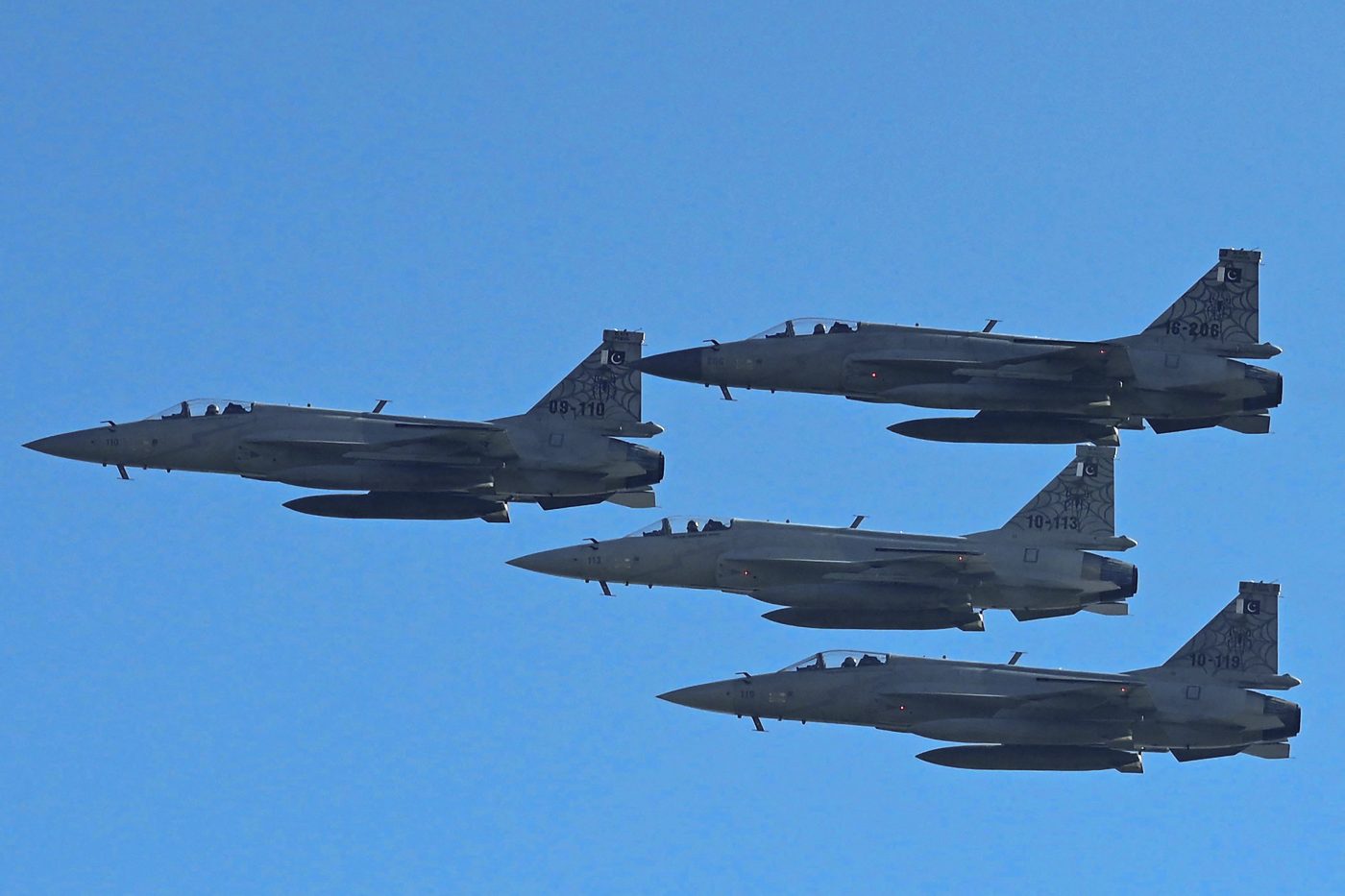
In the highly competitive yet lucrative fighter jet market, there is a new rising star: the Pakistani-Chinese co-developed JF-17 Thunder aircraft, if reports from a new agency, quoting “highly-placed anonymous sources”, are to be believed.
According to the news agency, Pakistan finalized a multi-billion-dollar deal with Libya to supply 16 JF-17 jets and is in advanced talks to supply the aircraft to Saudi Arabia, Sudan, Bangladesh, and Indonesia.
Interestingly, all five stories about the sale of JF-17 jets came from the same media outlet, Reuters, with three branded as “Exclusive“.
Furthermore, four of the five stories had the same byline – Saad Sayeed.
Not surprisingly, all of them were based on highly-placed anonymous sources.
The back-to-back success of the JF-17 Thunder (again, if you believe Reuters stories) has definitely created a lot of buzz around the fighter jet, which, incidentally, has been around for nearly two decades with little export success.
The JF-17 Thunder had its first flight in 2003 and achieved initial operational capability in a frontline unit by 2010.
Apart from Pakistan, the fighter jet had only two export successes till 2025.
In 2015, Myanmar ordered 16 Block 2 JF-17s, becoming the first export customer of the jet. Deliveries were completed by 2020. However, the JF-17s have faced cripling miantanance issues in Myanmar, leading to multiple groundings.
In 2016, Nigeria ordered 3 JF-17s (Block 2/Thunder variant). They never ordered more, instead opting for Italian M-346FA jets over Sino-Pak aircraft.
Curiously, even China, which is a co-developer of the jet with Pakistan, does not operate any JF-17s in its PLA Air Force.
Then came 2025.
First, Azerbaijan signed a deal for 40 JF-17s, valued at USD 4.6 billion. Given the strategic partnership between Islamabad and Baku, that deal was not surprising. Also, the deal with Azerbaijan was publicly and officially announced by both parties.
And then, since December 2025, came a flurry of media reports that Pakistan has signed a JF-17 export deal with Libya and is close to finalizing agreements with Saudi Arabia, Sudan, Bangladesh, and Indonesia.
This will make anyone question: why this sudden bout of interest in the JF-17, a fighter jet that has been around for two decades and even saw combat in Myanmar and Pakistan in 2019.
What changed in 2025?
One might argue that the India-Pakistan aerial clash in May 2025.
Pakistan initially claimed to have shot down five Indian jets, including three Rafales. Later, Islamabad claimed to have shot down six, even seven Indian fighter jets, including four Rafales, without losing a single Pakistan Air Force (PAF) jet.
From the Pakistani side, the JF-17s, J-10CE, and possibly F-16s took part in the operation.
India accepted operational losses of one Rafale but rejected Pakistan’s claims as exaggerated.
Lately, international reports, including those by the US Congress, seem to suggest that India might have lost two to three aircraft. On the other hand, Reuters deleted a paragraph from its story where it is said Pakistan might have lost 6-9 jets during the clash with India.
However, those kills were attributed to the J-10CE fighter jets, not the JF-17s.
And yet, the J-10CE has still had no export success since the conflict, despite China’s splendid efforts, including AI-generated footage of the J-10CE shooting down Rafales.
Pakistan, however, credited the JF-17 with eliminating the Indian S-400 air defense system. Again, India outrightly rejected the claim. Infact, Indian PM Narendra Modi himself “fact checked” Pakistan by sharing a picture of S-400 from Adampur base, where the Russian-origin AD systems were deployed.
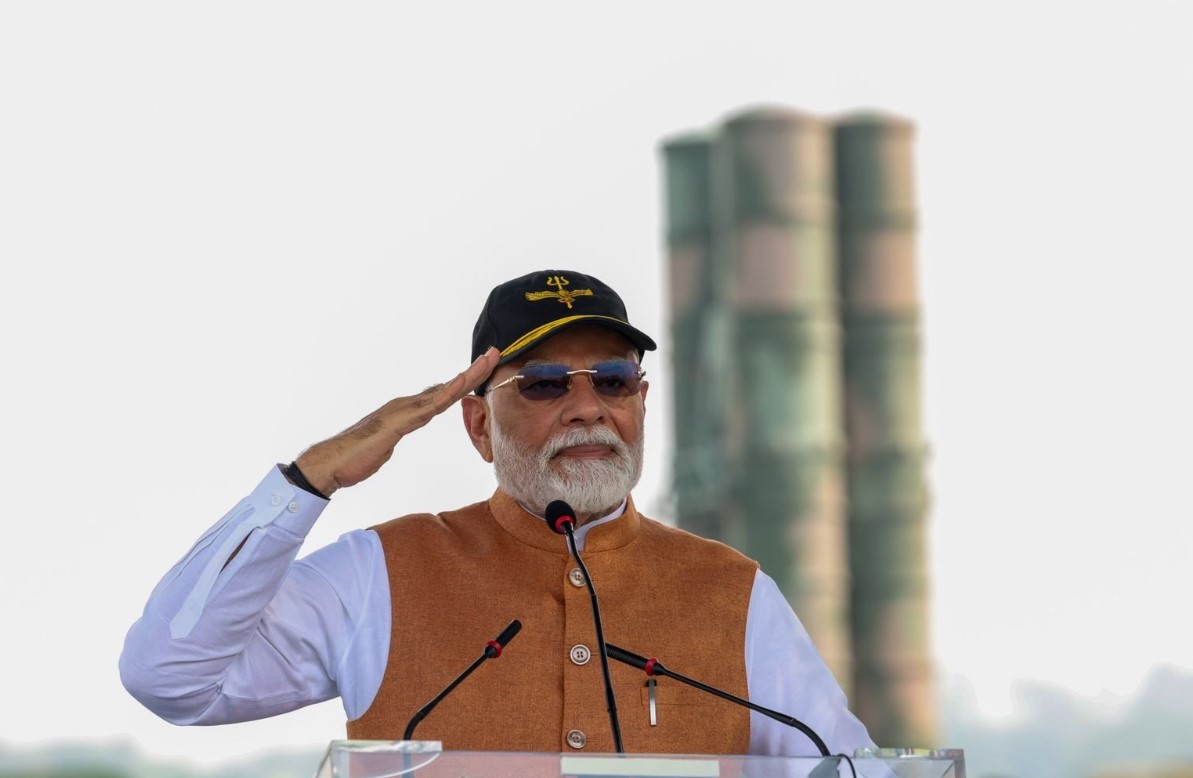
Still, even if one believes Pakistani claims, can a single S-400 kill generate the sale of over 100 aircraft to five countries in deals possibly worth over USD 10 billion?
So, what’s cooking here?
It all started with the story about the USD 4 billion defense deal between Pakistan and Libya (the LNA faction led by Saddam Khalifa Haftar), which involved the supply of 16 JF-17s.
The story broke on December 22 and stood out from all others, as here the deal was finalized and signed rather than discussed.
However, two things are crucial. The Reuters story was based on four unnamed Pakistani defense officials. Meanwhile, LNA officials confirmed only that a defense deal had been signed, without detailing any agreement on the purchase of JF-17s.
More importantly, even after three weeks have passed, there is still no official confirmation of the deal from either the Pakistan Army or the ISPR.
Why the Pakistan Army is mum on a great export success of its JF-17 fighter jet is intriguing, to say the least.
Furthermore, it is noteworthy that Libya is under a UN-sanctioned arms embargo.
The reports on the possible JF-17 deals with Saudi Arabia, Sudan, Bangladesh, and Indonesia all broke on Reuters, and they share more than passing similarities.
Not only are they all based on anonymous sources, but they also share the same byline: Saad Sayeed. (Sayeed shares the bylines with other reporters, but his name is common in all four stories)
Within a span of six days, Sayeed had churned out four exclusive scoops about the emergence of a new superpower in the competitive fighter jet market – Pakistan.
Interestingly, Saad’s back-to-back Pakistan-centric bylines came almost a year after his last byline for Reuters.
Seems like Saad has suddenly developed deep sources inside the Pakistan military.
All four stories also had other similarities.
In each story, the key details are, as a rule, attributed to unnamed officials described as “sources close to the military” or “sources with knowledge of the matter”.
To substantiate these claims made by nameless, faceless sources close to the military, commentary is then added by retired Pakistani military officials, who were all “informally” briefed on the developments.
For instance, the story about the possible JF-17 deal with Sudan, published on January 9, reads: “Pakistan is in the final phases of striking a $1.5-billion deal to supply weapons and jets to Sudan, a former top air force official and three sources said.”
The story about the deal with Saudi Arabia, published on January 8, reads, “Pakistan and Saudi Arabia are in talks to convert about $2 billion of Saudi loans into a JF-17 fighter jet deal, two Pakistani sources said.”
Similarly, the story about the potential deal with Indonesia, published on January 12, reads, “Indonesia’s defence minister met Pakistan’s air force chief in Islamabad to discuss a potential deal that includes the sale of combat jets and killer drones to Jakarta, three security officials with knowledge of the meeting on Monday said.”
The story further says, “One source said the talks revolved around the sale of JF-17 jets, a multi-role combat aircraft jointly developed by Pakistan and China, and drones designed for surveillance and striking targets. The other two sources said the talks were in an advanced stage and involved more than 40 JF-17 jets. One of them said Indonesia was also interested in Pakistan’s Shahpar drones.”
Now compare these statements made by unnamed sources to the statement made by a person who was identified in the story.
“The meeting focused on discussing general defence cooperation relations, including strategic dialogue, strengthening communication between defence institutions, and opportunities for mutually beneficial cooperation in various fields in the long term,” defence ministry spokesperson Brigadier General Rico Ricardo Sirait told Reuters, adding the talks had not yet led to concrete decisions.
Curiously, Brigadier General Rico Ricardo Sirait did not mention any discussion on fighter jets at all.
Official sources, when cited, generally only confirmed that meetings took place or that discussions were held.
The juicy details about JF-17s were all provided by unidentified sources, apparently close to the military.
Again, the story about the potential deal with Saudi Arabia reads: “Aamir Masood, a retired Air Marshal and analyst, said Pakistan was in talks about or had finalised deals with six countries to provide equipment, including JF-17s, electronic systems, and weapons systems for the jets. He said those countries included Saudi Arabia, but could not confirm any details about the negotiations.”
It’s intriguing how retired PAF Air Marshals are regularly briefed on sensitive defense meetings and what is being discussed in them.
All stories also included commentary on the JF-17’s combat worthiness and the growing appeal of Pakistan’s defense sector.
“The deal is another feather in the cap for Pakistan’s growing defence sector, which has drawn growing interest and investment, particularly since its jets were deployed in a conflict with India last year,” read one story.
“The government sees Pakistan’s burgeoning industry as a catalyst to secure long-term economic stability,” it added.
“Interest in the Pakistani military’s weapons development programme has surged since its jets were deployed in a short conflict with India last year,” read the story about the potential deal with Indonesia.
Another interesting feature of these back-to-back reports is that each report self-references previous reports by the same author as proof of the JF-17 fighter jet’s groundbreaking global interest.
For instance, the Indonesia report points back to the Sudan, Saudi Arabia, Libya, and Bangladesh pieces, as proof of JF-17s growing appeal.
To the unsuspecting reader, it appears corroborated by multiple reports, whereas in reality, the author is self-referencing his own work, which might have been built on the same unnamed, anonymous sources.
This circular loop of self-referencing one’s own work creates a narrative, in this case, of Pakistan’s emergence as a credible and key player in defense exports, which, in reality, might not exist.
Further, the back-to-back stories created a narrative that Pakistan, which is neck-deep in loans, is on the cusp of a defense export revolution that might cure all its economic woes.
The stories also cited Pakistan Defense Minister Khwaza Asif’s statement that the JF-17’s export success will soon ensure that Islamabad will not need any further IMF loans.
“Our aircraft have been tested, and we are receiving so many orders that Pakistan may not need the International Monetary Fund in six months,” Khawaja Asif told broadcaster Geo News, read one of the stories.
It is obvious that Pakistan’s military would like to create a buzz around its fighter jets and other defense items; that the Pakistan government would like to build a narrative that its anticipated success in defense exports will transform the country economically is also understandable. The question is, on whose behalf is the media doing this job?
- Questions and Answers
- Opinion
- Motivational and Inspiring Story
- Technology
- Live and Let live
- Focus
- Geopolitics
- Military-Arms/Equipment
- Sicurezza
- Economy
- Beasts of Nations
- Machine Tools-The “Mother Industry”
- Art
- Causes
- Crafts
- Dance
- Drinks
- Film/Movie
- Fitness
- Food
- Giochi
- Gardening
- Health
- Home
- Literature
- Music
- Networking
- Altre informazioni
- Party
- Religion
- Shopping
- Sports
- Theater
- Health and Wellness
- News
- Culture

 Chinese
 English
 Arabic
 French
 Spanish
 Portuguese
 Deutsch
 Turkish
 Dutch
Dutch
 Russian
 Romaian
 Portuguese (Brazil)
 Greek
Greek