
Could China's political training programs for African leaders and bureaucrats inadvertently lead to the rise of more authoritarian regimes? By Hugo Keji
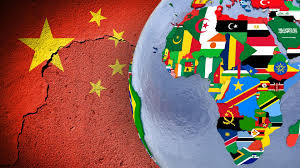
China's political training programs for African leaders and bureaucrats could have an indirect impact on governance in Africa, but whether they lead to the rise of more authoritarian regimes is a complex issue involving various factors.
Here are several key points to consider:
1. Nature of China's Engagement
China’s political training programs are part of broader diplomatic and economic engagement strategies in Africa. These programs often focus on governance, economic management, and party-building, drawing on the Chinese Communist Party's (CCP) own model of centralized, one-party rule. While they emphasize economic development and political stability, they do not necessarily advocate for democracy, political pluralism, or the Western liberal model of governance. Instead, they promote the Chinese development model, which combines a strong state apparatus with economic liberalization.
2. Appeal of China's Development Model
Many African governments are attracted to China’s model because of its focus on rapid economic growth, infrastructure development, and poverty reduction without the governance conditionalities typically imposed by Western powers or international institutions like the IMF or World Bank. For some leaders, the Chinese model appears to offer a way to achieve development without embracing democracy, aligning with authoritarian governance structures.
AfriPrime App link: FREE to download...
https://www.amazon.com/Africircle-AfriPrime/dp/B0D2M3F2JT
3. Reinforcement of Authoritarian Tendencies
Leaders who attend these training programs might be influenced by China's governance practices, particularly the emphasis on state control, political stability, and limited tolerance for dissent. For African governments with authoritarian tendencies, such exposure could reinforce existing practices that centralize power, limit political freedoms, and suppress opposition. Leaders may see China's success as justification for adopting similar methods, which could lead to more repressive governance styles.
4. Impact on Institutions and Bureaucracy
Bureaucrats and mid-level officials participating in these training programs may return home with new management skills but also with ideas about centralized control and top-down governance. This could influence how institutions are run and potentially lead to a preference for hierarchical, less transparent decision-making processes. If these bureaucrats rise to higher leadership positions, this may contribute to more centralized and authoritarian governance styles in the long term.
5. Varied Responses in African Countries
However, the impact of these training programs is not uniform across the continent. African nations are diverse, with different political histories, cultures, and governance structures. Some countries may adopt elements of China's model while maintaining democratic frameworks, while others may already have authoritarian regimes where Chinese influence simply reinforces pre-existing tendencies. Additionally, opposition groups and civil society in some countries actively push back against authoritarianism, complicating any direct cause-effect relationship.
6. China's Non-Interference Policy
China's policy of non-interference in the domestic politics of African countries means that it typically does not overtly push for regime change or specific political outcomes. While this hands-off approach is often welcomed by authoritarian leaders, it also means China is not directly encouraging authoritarianism. Instead, its model is made available, and it is up to the individual country leaders to decide how much of it to adopt.
Conclusion
While China’s political training programs could inadvertently contribute to the rise of more authoritarian regimes by providing a successful, non-democratic model of governance, the outcome is contingent on the internal dynamics of each African country. The programs might reinforce authoritarian tendencies where they already exist, but they do not necessarily create authoritarian regimes by themselves. African leaders and bureaucrats remain the key actors in shaping their own governance systems, even if influenced by external models like China's.
AfriPrime App link: FREE to download...
- Questions and Answers
- Opinion
- Motivational and Inspiring Story
- Technology
- Live and Let live
- Focus
- Geopolitics
- Military-Arms/Equipment
- Security
- Economy
- Beasts of Nations
- Machine Tools-The “Mother Industry”
- Art
- Causes
- Crafts
- Dance
- Drinks
- Film/Movie
- Fitness
- Food
- Games
- Gardening
- Health
- Home
- Literature
- Music
- Networking
- Other
- Party
- Religion
- Shopping
- Sports
- Theater
- Health and Wellness
- News
- Culture

 Chinese
 Arabic
 French
 Spanish
 Portuguese
 Deutsch
 Turkish
 Dutch
Dutch
 Italiano
 Russian
 Romaian
 Portuguese (Brazil)
 Greek
Greek