

Ancient Iraqis may have worshipped Alexander the Great, says British Museum

British Museum experts could have solved an archaeological mystery after discovering a temple where Alexander the Great may have been proclaimed divine.
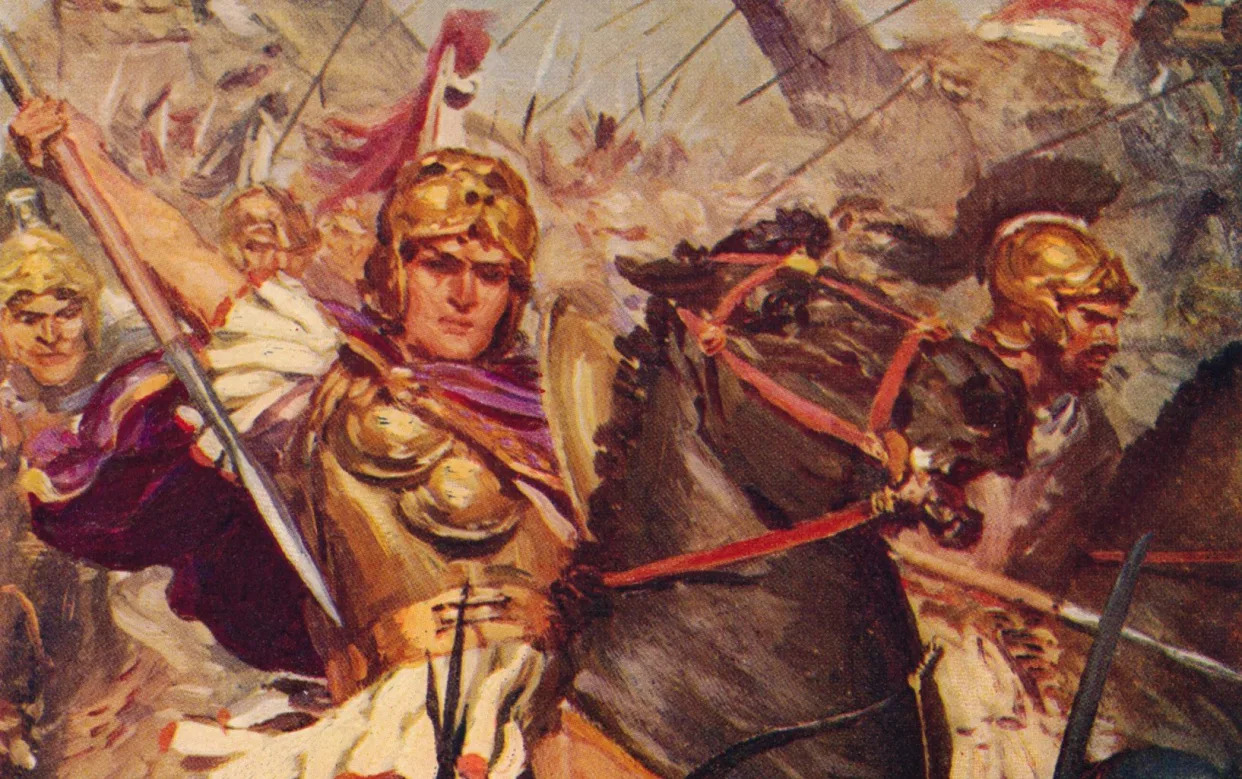
Alexander at the Battle with Porus', 326 BC .
Experts working on the ancient city of Girsu in southern Iraq unearthed a 4,000-year-old Sumerian temple, so old that later extremely cryptic Greek inscriptions found at the site made no historical sense.
British Museum archaeologists now believe the site boasted a Greek temple possibly commissioned by Alexander the Great himself to honour ancient gods and his own divine status.
If the theory is correct, it may have been one of the last acts of the conqueror before his death at age 32.
The discovery of the temple also suggests that Alexander’s contemporaries had knowledge of the previous 4,000-year-old site which had been abandoned for millennia, suggesting that ancient societies had an accurate historical knowledge and cultural memory.
British Museum archaeologist Dr Sebastien Rey said: “It is truly mind-blowing. Our discoveries place the later temple in Alexander’s lifetime.
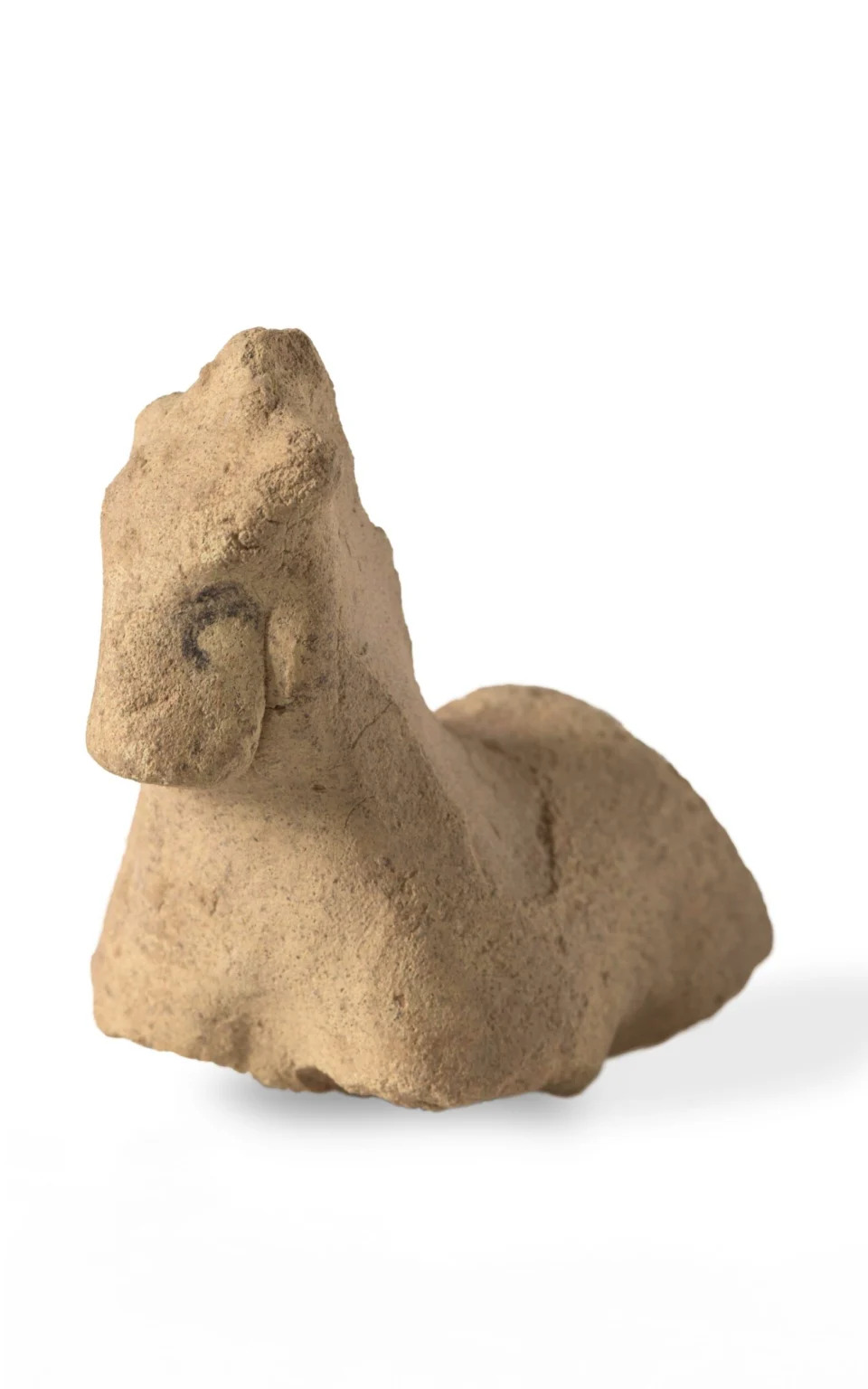
“We found offerings, the kinds of offerings that would be given after a battle, figures of soldiers and cavalrymen.
“There is a chance, we will never know for certain, that he might have come here, when he returned to Babylon, just before he died.”
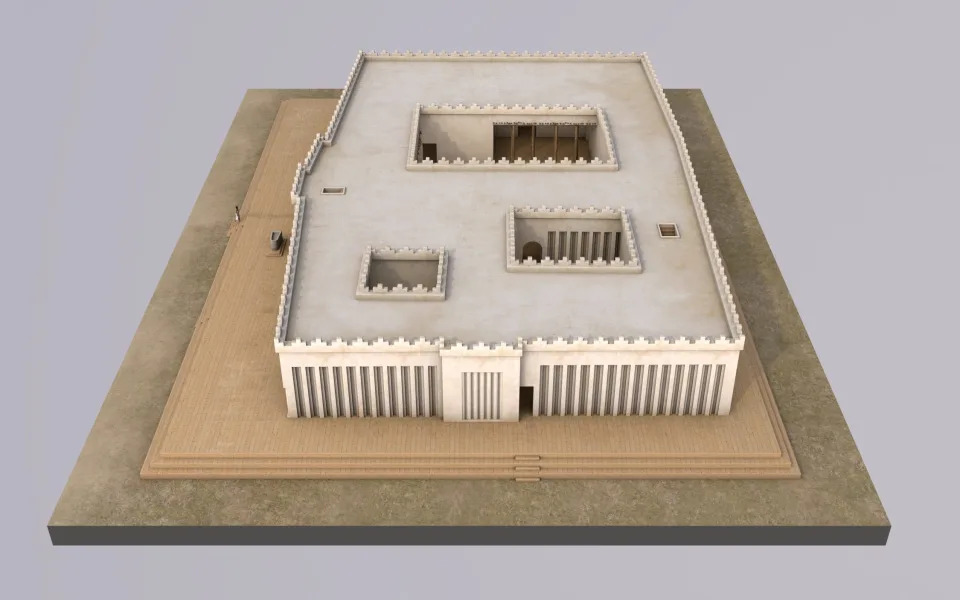
Girsu was likely inhabited from 5000 BC and by the 3rd millennium BC was a city sacred to the Sumerians, the world’s first civilization, as the home of their warrior god Ningirsu.
The site being excavated by the British Museum’s Girsu Project, funded by Getty, was abandoned in 1750 BC, more than 1,000 years before the Macedonian king Alexander was born.
This civilisation was revealed to the world when Girsu was unearthed in the 19th century by French excavations, which also found far later Greek material mixed in with the older Sumerian statues, creating a chronological conundrum.
It appeared that a Greek structure may have been built on the site, but there were no clues beyond a tablet written in Aramaic and Greek that simply stated “Adad-nadin-aḫḫe”, which means “giver of the two brothers”.
The British Museum expedition may have solved this mystery, after finding a silver drachma coin minted by Alexander’s men in the 330s BC, within the lifetime of Alexander the Great and immediately after he had defeated the Persians who ruled over the region.
They also found an altar and figurines which would typically have been left at Greek temples as offerings, including the coin, suggesting that this was a place of worship.
These offerings took the form of terracotta cavalrymen similar to those in the Companion Cavalry which formed Alexander’s bodyguard, suggesting that whoever left votive offerings there was extremely close to the commander, if not the general himself.
Alexander was obsessed with mythical strongmen, and in Egypt had himself declared the Son of Zeus, thereby becoming the brother of his hero Hercules. Hercules has similarities with the far more ancient figure of Ningirsu, including the completion of Twelve Labours.
Dr Rey believes that Alexander may have asked the people of Mesopotamia who their equivalent to Hercules was and been told that it was Ningirsu, making the general the brother of this fused Greek and Sumerian deity.
If he then sought a sacred site to honour him, those with the knowledge of Girsu as the home of the god would have directed him there.
The cryptic inscription “giver of the two brothers”, Dr Rey believes, refers to Alexander’s purported father Zeus, who had given the world both the commander and his brothers Hercules and Ningirsu.
The fact that local people knew that Girsu, which had been abandoned more than 1,000 years before, was the home of the god Ninrusu suggests “deep cultural memory”, Dr Rey said.
The archaeologist has suggested that there is a chance that the later Hellenistic temple placed on top of the older sacred site was founded when Alexander passed through the region near Girsu on his return from campaign in India, a march which took place just before his death in 323 BC.
Dr Rey said: “This site honours Zeus and two divine sons. The sons are Heracles and Alexander. That is what these discoveries suggest.”
- Questions and Answers
- Opinion
- Motivational and Inspiring Story
- Technology
- Live and Let live
- Focus
- Geopolitics
- Military-Arms/Equipment
- Segurança
- Economy
- Beasts of Nations
- Machine Tools-The “Mother Industry”
- Art
- Causes
- Crafts
- Dance
- Drinks
- Film/Movie
- Fitness
- Food
- Jogos
- Gardening
- Health
- Início
- Literature
- Music
- Networking
- Outro
- Party
- Religion
- Shopping
- Sports
- Theater
- Health and Wellness
- News
- Culture

 Chinese
 English
 Arabic
 French
 Spanish
 Deutsch
 Turkish
 Dutch
Dutch
 Italiano
 Russian
 Romaian
 Portuguese (Brazil)
 Greek
Greek