

What If the U.S. Navy Never Built the Badass F-14 Tomcat Fighter?

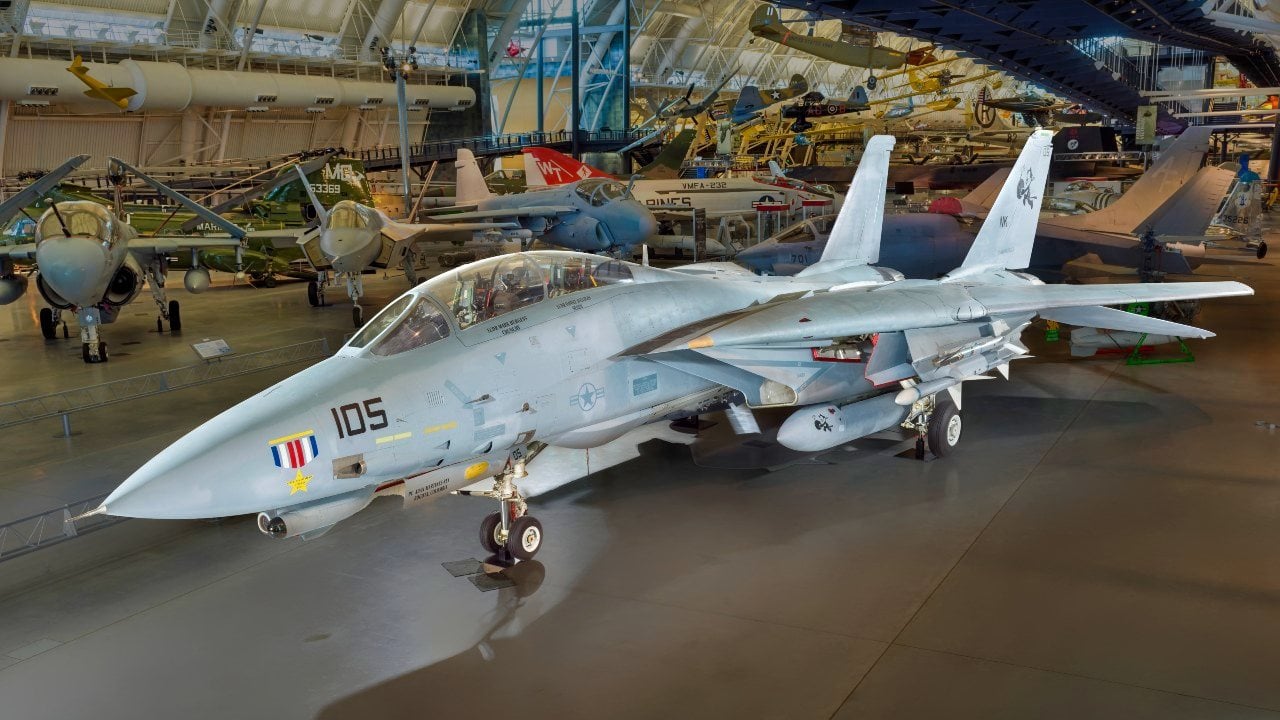
What if the F-14 Tomcat had never happened? The iconic fighter served the U.S. Navy for more than thirty years before finally (and some say prematurely) being retired in 2006. Over time, the F-14 shifted from its initial long-range fleet air-defense role to a ground-attack mission. But what if the problems that plagued the program in the 1960s and 1970s had proved insoluble? How would the Navy have filled the gap?
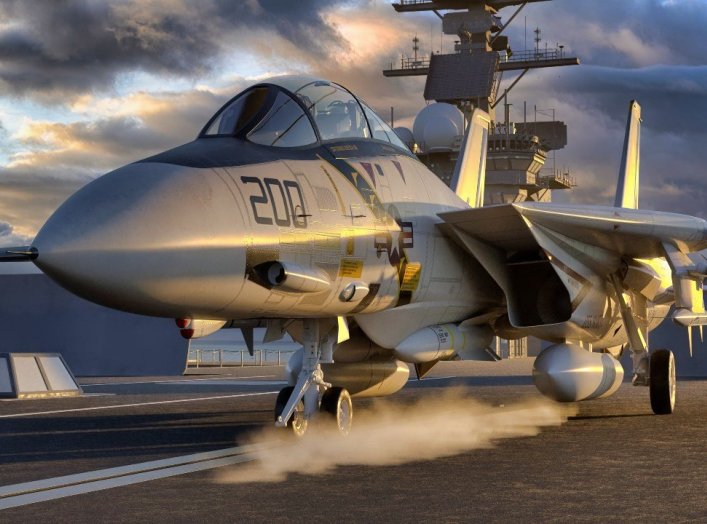
The Problem:
The F-14 grew out of the F-111 project, pushed by Secretary of Defense Robert McNamara as a fighter that could serve in both the Navy and the Air Force. USN and USAF's needs differed, however; the Navy wanted for a long-range carrier-based interceptor came from concern over Soviet air-launched cruise missiles. Soviet bombers could strike American carrier battle groups from a great distance, without entering the envelope either of ship-based SAMs or short-range fighters. This disrupted the layered missile, interceptor, and gun systems that the Navy had developed for air defense since World War II.
Unfortunately, the F-111 did not work out; too many capabilities were pushed into the frame, resulting in a fighter too large for the Navy’s needs, and not particularly well-suited to the air-superiority mission. By the mid-1960s the Navy began work on an alternative project, which eventually became the F-14. The Tomcat contributed to solving the Soviet bomber problem by combining long-range and high speed with the Phoenix missile, which could kill targets at extreme BVR.
But in its early years, the Tomcat itself faced problems. The engines were temperamental, and the fighter was both heavy and costly. Design decisions, including swept-wings, made the Tomcat a complex beast to manage. Congress complained, comparing the performance of the Tomcat unfavorably with the Air Force’s new heavy fighter, the F-15 Eagle. With the general post-Vietnam drawdown in full swing, the Tomcat’s journey to operability was touch and go; a decision at several points could have ended the project.
F-14 Substitutes:
What would have taken the Tomcat’s place? The F-14 began to enter service in 1974; the F/A-18 would not reach the Navy until 1983. This would leave a nine-year gap, not to mention the substantial capabilities gaps between the two aircraft. How would the Navy have filled it?
One alternative would simply have been to retain the F-4 in its interceptor and air superiority roles. The Phantom was more than adequate for such missions, although it lacked the range and BVR capability of the Tomcat. Indeed, the F-4 remained in Navy service until the F/A-18 came online, in large part because of the need to populate the decks of USS Midway and USS Coral Sea. But of course, the F-4 was not the Tomcat, and the balance of capabilities would have tilted in the direction of the big Soviet bomber formations, especially after the deployment of the Tu-22M “Backfire.”
Another alternative would have involved developing a naval version of the F-15 Eagle. Much thought was given to this in the early 1970s, with various concepts hitting the drawing board. After considerable modification to operate off carriers and carry the long-range Phoenix missile, the “Sea Eagle” might have made an adequate fighter, although probably not the equal of the Tomcat. And the Navy has consistently resisted efforts to force it to buy the same aircraft as the Air Force.
Bigger Changes:
In the early 1970s, as today, the Navy debated the future of the big carrier. Much like today, some argued that the ships were simply too expensive, wrapping up too much value into one vulnerable platform. After the order of the USS Carl Vinson in 1974, the future of the big carrier was an open question. Had the Tomcat not offered a resolution to at least one of those threats (long-range Soviet bombers) alternative arguments might have carried the day.
One option popular in the early 1970s, as the Essex class carriers were approaching the end of their useful service lives, was the “Sea Control Ship.” Light carriers dedicated to the anti-submarine mission, these fourteen-thousand-ton ships would have carried VSTOL fighters (such as the Harrier) and helicopters. Far cheaper than the big carriers, they offered a means of defending the trans-Atlantic corridor from Soviet submarines at a reasonable cost and were probably too small to attract the attention of the Soviet bomber formations.
Another option involved retooling the surface fleet to take on some of the roles played by carriers. The nuclear strike cruiser project offered a large surface combatant bristling with missiles and carrying an early version of the Aegis combat system. This ship would have combined strike and air defense capabilities at lower cost than a carrier battle group and would have been supported by additional Aegis-equipped cruisers and destroyers.
Parting Thoughts:
The Navy eventually worked out the problems with the F-14, and the Tomcat became a superlative air defense fighter. Eventually, it even gained a ground-attack mission. The temperamental nature of the design, the collapse of the Soviet Union, and the success of the Super Hornet made the Tomcat superfluous by the 2000s, however, and the Navy now lacks a long-range interceptor. The main threats to carrier battle groups no longer come from flights of bombers, but rather from ballistic missiles, and no fighter has yet demonstrated much promise at the ABM mission. Nevertheless, the Tomcat contributed a core defensive capability during one of the critical periods of the development of the supercarrier.
- Questions and Answers
- Opinion
- Motivational and Inspiring Story
- Technology
- Live and Let live
- Focus
- Geopolitics
- Military-Arms/Equipment
- Sicurezza
- Economy
- Beasts of Nations
- Machine Tools-The “Mother Industry”
- Art
- Causes
- Crafts
- Dance
- Drinks
- Film/Movie
- Fitness
- Food
- Giochi
- Gardening
- Health
- Home
- Literature
- Music
- Networking
- Altre informazioni
- Party
- Religion
- Shopping
- Sports
- Theater
- Health and Wellness
- News
- Culture

 Chinese
 English
 Arabic
 French
 Spanish
 Portuguese
 Deutsch
 Turkish
 Dutch
Dutch
 Russian
 Romaian
 Portuguese (Brazil)
 Greek
Greek