

Strategic Science and Technology: Microfluidic Chips
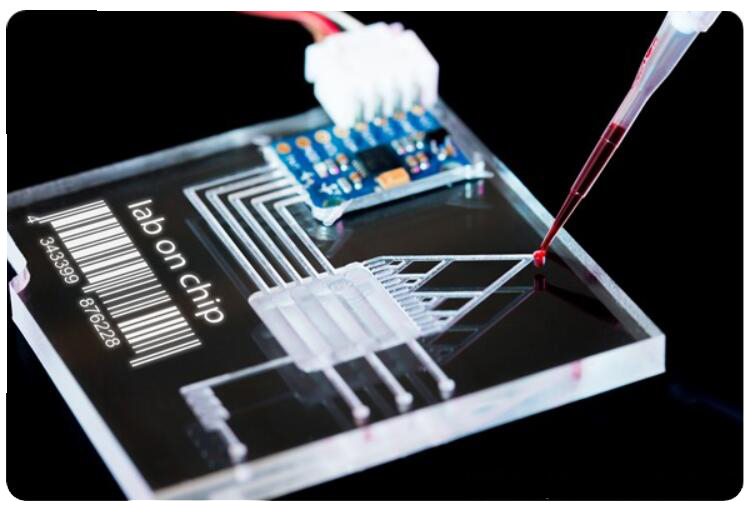
Microfluidic chips have garnered significant interest from both academic and industrial sectors since their inception. The launch of the journal "Lab on a Chip" in 2001 marked a pivotal moment, quickly establishing itself as a cornerstone publication and catalyzing further global research in microfluidic chips. In 2004, Business 2.0 magazine featured chip laboratories prominently, identifying them among the "seven technologies that will change the future" on its cover. Subsequently, in July 2006, Nature dedicated a special issue to "Chip Laboratories," offering insights into their research history, current status, and future applications. The editorial highlighted the potential of chip laboratories to become the defining technology of the 21st century, underscoring their strategic importance recognized by both academia and industr
y on a global scale.
The significance of microfluidic chips stems from several factors. Firstly, the trend of miniaturization aligns with the societal drive towards optimizing resource utilization amidst concerns of resource depletion on an already strained Earth. Secondly, the manipulation of fluids at the micrometer scale unveils novel phenomena, some yet to be fully understood, amidst the plethora of existing technologies and fluid manipulations. Thirdly, there exists a pressing need for systemic research tools capable of comprehensively examining interconnected components within complex systems. Throughout history, such tools have been lacking, making microfluidic chips—with their ability to accommodate diverse unit technologies and facilitate flexible combination and scale integration—a pivotal platform for systemic research.
In the 20th century, the strategic significance of "information" flowing through semiconductors or metals via electronics paved the way for breakthroughs in information science and technology. Similarly, in the 21st century, the exploration of life processes, understanding of biological phenomena, and even partial manipulation of biological entities through microfluidic channels may herald a new era of strategically vital science and technology: microfluidics. This is because "life" and "information" form the cornerstone of modern scientific inquiry and technolog
ical advancement.
The advent of microfluidics-based point-of-care testing (POCT) technology represents a paradigm shift in healthcare. By delivering rapid and precise biochemical indicators directly at the
patient's bedside, Microfluidics-based POCT facilitates real-time guidance for medication, revolutionizing the continuum of detection, diagnosis, and treatment and significantly enhancing early disease detection and intervention capabilities.
The future trajectory of POCT instruments entails miniaturization and user-friendliness, enabling simple operation without necessitating specialized personnel. Direct input of bodily fluid samples should yield swift diagnostic outcomes, which can be seamlessly transmitted to remote monitoring centers for medical guidance. While simpler flow tests suffice for basic diagnostics, the complexity of testing demands the precision afforded by microfluidic technology. The adaptability and scalability of microfluidic chips make them the preferred platform for modern POCT applications. Notably, recent years have witnessed numerous successful
instances of molecular and immunodiagnostic POCT leveraging microfluidic chip technology.
Introducing two immiscible liquids into microfluidic chip channels and dispersing one into small droplets within the continuous phase at high speeds unlocks a versatile approach for microreactors or carriers of micro-biochemical samples. These microfluidic droplets serve as indispensable microreactors, enabling rapid, large-scale, and ultra-low-concentration reactions at the single-molecule and single-cell levels. Characterized by flexible manipulation, uniform sizing, and excellent heat and mass transfer properties, droplets exhibit immense potential in high-throughput drug screening and material selection realms, boasting frequencies ranging from tens to hundreds of kHz.
- Questions and Answers
- Opinion
- Motivational and Inspiring Story
- Technology
- True & Inspiring Quotes
- Live and Let live
- Focus
- Art
- Causes
- Crafts
- Dance
- Drinks
- Film/Movie
- Fitness
- Food
- Juegos
- Gardening
- Health
- Home
- Literature
- Music
- Networking
- Other
- Party
- Religion
- Shopping
- Sports
- Theater
- Wellness
- News
- Culture

 Chinese
 English
 Arabic
 French
 Portuguese
 Deutsch
 Turkish
 Dutch
Dutch
 Italiano
 Russian
 Romaian
 Portuguese (Brazil)
 Greek
Greek