

Despite Trump, Canada Still Wants to Buy the F-35 Fighter from America

After Prime Minister Mark Carney declined to explicitly oppose buying the F-35s, the Department of National Defence has cautiously moved forward with the purchase.
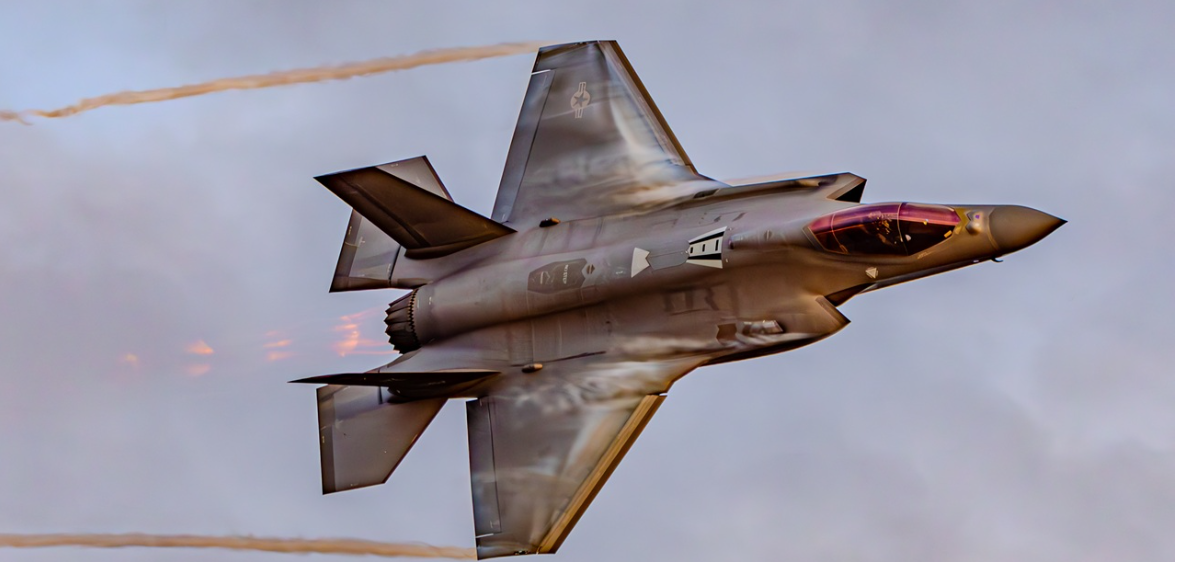
Canada isn’t likely to become the “51st state” anytime soon, but despite the suddenly frosty relations between the United States and its northern neighbor, Canada’s military still appears on track to adopt the Lockheed Martin F-35 Lightning II.
CBC reported this week that the Canadian Armed Forces is taking a “full steam ahead” approach to the program—at least until it hears otherwise from Ottawa.
Carney on the F-35: Qui Tacet Consentit
Canada’s adoption of the F-35 has long been seen as controversial due to the costs, and earlier this year, incoming Prime Minister Mark Carney even ordered a review of the CAD $27.7 billion (USD $19.76 billion) acquisition of the stealth fighters. Carney had said a decision on the order, including a possible reduction of the planned acquisition of 88 F-35s, would be made by late summer.
Without a decision from the top, however, Deputy Defence Minister Stefani Beck told the tri-party public accounts committee on Tuesday that the F-35s are therefore a go.
“What we have as direction is to continue with the contract… with the arrangements that we have in place until we hear otherwise,” Beck told the Canadian MPs. He added, “We are full steam ahead, full steam ahead focused on making sure we’ve got the infrastructure, the pilots, the training in place for the arrival of those F-35s.”
How Many F-35s Does Canada Need?
Ottawa has already paid for four F-35A models, the conventional takeoff and landing (CTOL) variants, with a “down payment” made for an additional eight. Canada is on track to acquire at least 16, with the number possibly increasing to the full previous order of 88. The first of the Lightning IIs is expected to be delivered next year, with training then taking place in the United States before operational aircraft arrive in 2027 or early 2028.
Conservative lawmakers have supported the acquisition of the F-35s, which are seen as the best option to replace the Royal Canadian Air Force’s (RCAF) fleet of aging CF-18s. The variant of the American McDonnell Douglas F/A-18 Hornet was produced from 1982 to 1988, and Canada currently operates 89 of the aircraft.
The Canadian government selected the F-35 over the Saab JAS 39 Gripen, which led to a formal and high-profile protest from the Swedish aerospace firm.
Reducing the purchase and keeping the newest CF-18s in service longer, and/or splitting the order with the Gripen, likely creates new problems, including the need to train on multiple platforms.
Lt.-Gen. Jamie Speiser-Blanchet, the new commander of the RCAF, acknowledged this will occur, at least for a while, as the F-35 enters service and the aging CF-18s are finally retired in the early 2030s.
“It would duplicate a certain amount of infrastructure and training,” she told lawmakers, but also said that Canada will need the fifth-generation F-35, as other nations are adopting more advanced aircraft.
“Both China and Russia have fifth generation fighter aircraft and fifth generation missiles that are able to go at much greater speeds and with much more that are holding Western allies at risk at this moment in time,” Speiser-Blanchet added.
America Can’t Build the F-35 Without Canadian Help
As previously reported, there are a number of reasons that it would be extremely difficult for Canada to bail out of the F-35 program—notably the fact that more than 100 Canadian firms supply components for the F-35. There had been past concerns that the tariffs imposed by President Donald Trump as part of his international policy to address trade imbalances could raise the cost of those parts.
Another concern is that if Canada opts out of the F-35, the US may need to seek alternative sources for its own parts. That could be easier said than done, as the Ontario-based Gastops is currently the only firm in the world that produces engine sensors for the Lightning II—leaving few options for lead contractor Lockheed Martin or Pratt & Whitney, maker of the F135 engines that power the advanced fighter jet.
- Questions and Answers
- Opinion
- Motivational and Inspiring Story
- Technology
- Live and Let live
- Focus
- Geopolitics
- Military-Arms/Equipment
- Segurança
- Economy
- Beasts of Nations
- Machine Tools-The “Mother Industry”
- Art
- Causes
- Crafts
- Dance
- Drinks
- Film/Movie
- Fitness
- Food
- Jogos
- Gardening
- Health
- Início
- Literature
- Music
- Networking
- Outro
- Party
- Religion
- Shopping
- Sports
- Theater
- Health and Wellness
- News
- Culture

 Chinese
 English
 Arabic
 French
 Spanish
 Deutsch
 Turkish
 Dutch
Dutch
 Italiano
 Russian
 Romaian
 Portuguese (Brazil)
 Greek
Greek