
Is Nigeria losing control of its northern territories—and what will that mean for the entire African continent?
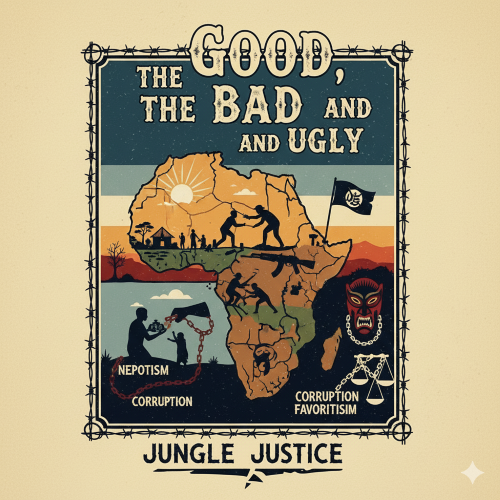
Nigeria is demonstrably losing effective control of vast swathes of its northern territories, particularly the rural areas of the Northeast (due to insurgency) and the Northwest/North-Central regions (due to banditry and communal violence).
This loss of control, characterized not by flags planted by a rival state but by the collapse of governance and the normalization of non-state armed rule, poses an existential threat to the Nigerian state and carries profound, destabilizing consequences for the entire African continent, especially the fragile West African and Sahel regions.
1. Evidence of De Facto Loss of Control
The loss of control is not merely a matter of military defeat but a sovereignty deficit, where the state is unable to exercise its core functions over its territory and populace.
A. The Endemic Rule of Non-State Actors
-
Insurgent Strongholds (Northeast): In the Lake Chad Basin (Borno, Yobe, Adamawa), groups like the Islamic State West Africa Province (ISWAP) and, to a lesser extent, Boko Haram, have established areas of de facto governance. They collect taxes, adjudicate disputes, and provide a twisted form of security and social service provision, directly challenging the state's monopoly on violence. While the Nigerian military has prevented these groups from permanently holding major towns, their control over rural areas and key supply routes remains robust.
-
Bandit Fiefdoms (Northwest/North-Central): In states like Zamfara, Katsina, and Kaduna, highly organized bandit gangs control vast forested enclaves and use these ungoverned spaces for refuge, training, and launching attacks. These groups have effectively imposed a criminal economy on local communities, whose primary interaction with authority is the payment of ransoms or protection money—taxes paid to criminals, not the state. The state's inability to end the mass kidnapping crisis is the clearest sign of its sovereignty deficit in these regions.
B. Collapse of State Services
A key indicator of lost control is the retreat of legitimate state institutions:
-
Educational Collapse: Hundreds of schools have been closed across the North, particularly the Northwest, due to the threat of mass abduction, creating a "lost generation" and reinforcing the anti-education ideology of extremist groups.
-
Food and Health Crisis: Violence has disrupted farming across Nigeria's food basket (the Middle Belt and parts of the Northwest). Farmers are afraid to cultivate fields, leading to massive food shortages and driving nearly 35 million people in the region toward acute food insecurity, the highest number ever recorded. This has compounded health crises, such as cholera outbreaks, which the state cannot effectively contain in conflict-hit areas.
2. Implications for the Nigerian State
The sustained loss of control in the North presents an existential crisis for Nigeria's political and economic future.
A. Existential Threat to National Unity
The failure to protect citizens fosters deep ethnic and religious polarization. As communities feel abandoned by the central government, they increasingly rely on ethnic militias or self-defense groups, deepening inter-communal mistrust. This fuels separatist sentiments in other regions (like the Southeast), as the core argument for Nigeria's unity—that the central state can guarantee security—is fundamentally undermined.
B. Economic Devastation
Insecurity directly impacts Nigeria's economy, which is already struggling with debt and inflation:
-
Agricultural Collapse: The disruption of agriculture in the food basket region is severely threatening national food security and driving up inflation.
-
Capital Flight: The high risk environment deters both Foreign Direct Investment (FDI) and domestic business activity, leading to capital flight and stagnation of commercial operations in the North and nationally. Insecurity cost Nigeria an estimated 8% of its GDP in 2021.
3. Continental Contagion: What This Means for Africa
As the continent’s most populous nation, largest economy (currently), and a major anchor for regional stability, Nigeria's internal crisis has destabilizing, cascading effects across West Africa and the wider Sahel.
A. Security Contagion and Jihadist Expansion
-
The Sahel Corridor: Nigeria's porous northern borders allow extremists and criminals to move freely. ISWAP, already a force in the Lake Chad region, and the al-Qaeda-linked Jama'at Nusrat al-Islam wal-Muslimin (JNIM), which operates across the Sahel (Mali, Burkina Faso, Niger), are reportedly expanding their operational reach and even carrying out attacks inside Nigeria. This creates a terrifying contiguous arc of instability stretching from the Atlantic coast of West Africa across the Sahel to the Lake Chad region.
-
Arms and Fighters: Instability ensures the continuous, illegal flow of small arms and light weapons (SALWs) southward from Libya and the Sahel into Nigeria, fueling the bandit and herder-farmer conflicts. Nigerian instability also serves as a crucial staging ground for transnational criminal and terrorist networks.
B. Humanitarian and Economic Strain
-
Refugee Crisis: The displacement of over 2.5 million people across the Northeast and Northwest places immense pressure on Nigeria’s neighbors—Cameroon, Chad, and Niger—who already struggle with their own internal security challenges.
-
Weakening Regional Bodies: Nigeria has historically been the hegemon and primary financial contributor to regional bodies like the Economic Community of West African States (ECOWAS). As Nigeria becomes increasingly preoccupied with its internal survival, its capacity to project leadership, resolve regional disputes, and stabilize its neighbors diminishes significantly, contributing to the recent wave of military coups and anti-democratic upheavals across the subregion.
In short, Nigeria is at a critical juncture. The failure to reclaim sovereignty in the North is not just a localized tragedy but the failure of a regional anchor state, which risks turning West Africa and the Sahel into a deeply entrenched, interconnected zone of chaos and humanitarian disaster.
- Questions and Answers
- Opinion
- Motivational and Inspiring Story
- Technology
- Live and Let live
- Focus
- Geopolitics
- Military-Arms/Equipment
- Security
- Economy
- Beasts of Nations
- Machine Tools-The “Mother Industry”
- Art
- Causes
- Crafts
- Dance
- Drinks
- Film/Movie
- Fitness
- Food
- Games
- Gardening
- Health
- Home
- Literature
- Music
- Networking
- Other
- Party
- Religion
- Shopping
- Sports
- Theater
- Health and Wellness
- News
- Culture

 Chinese
 Arabic
 French
 Spanish
 Portuguese
 Deutsch
 Turkish
 Dutch
Dutch
 Italiano
 Russian
 Romaian
 Portuguese (Brazil)
 Greek
Greek