
Should China Be Taken to International Court for Early Suppression of COVID-19 Information?
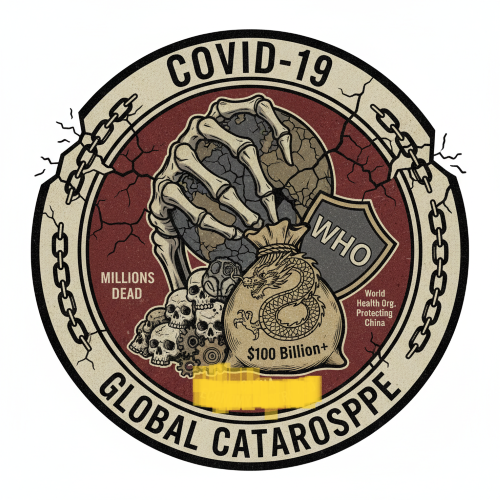
The COVID-19 pandemic, which has claimed millions of lives and devastated economies worldwide, began as a localized outbreak in Wuhan, China, in late 2019. Early evidence suggests that Chinese authorities suppressed information about the virus, censored whistleblowers, and delayed reporting to international health authorities.
These actions may have significantly accelerated the global spread of SARS-CoV-2, raising urgent questions about accountability. Should China be held responsible in an international court for its early actions?
The question intersects law, ethics, and global public health policy.
I. Evidence of Early Suppression
1. Silencing of Whistleblowers
Doctors and scientists who attempted to alert the public and authorities in December 2019 faced:
-
Official reprimands and threats for “spreading rumors.”
-
Restrictions on speaking to the media or publishing early findings.
This suppression delayed the broader recognition of the virus’s severity, preventing timely containment measures.
2. Delayed Reporting
China did not report the outbreak to the World Health Organization (WHO) until late December 2019, despite indications of human-to-human transmission. Internal communications and whistleblower testimony suggest that officials:
-
Delayed sharing patient data and viral sequences
-
Controlled information flow from hospitals to central authorities
These delays allowed the virus to spread domestically and internationally before mitigation efforts could begin.
3. Censorship of Scientific Data
Leaked documents indicate that early research on the virus was censored or restricted, limiting global understanding of transmissibility, incubation period, and severity. As a result:
-
WHO and other international bodies relied on incomplete or inaccurate information
-
Countries outside China were unprepared for rapid transmission
II. Legal and Ethical Considerations
1. International Law
Currently, no specific international law directly addresses pandemic accountability in the way that criminal law addresses war crimes or human rights violations. However, several principles are relevant:
-
International Health Regulations (IHR) 2005: Countries are legally obliged to report public health emergencies of international concern promptly. Failure to do so constitutes a breach of these regulations.
-
State Responsibility: Under international law, states may be held responsible for acts that cause transboundary harm, including economic or health damage, if negligence or deliberate concealment is demonstrated.
2. Ethical Responsibility
Beyond legal obligations, there is a strong ethical case for accountability:
-
Governments have a moral duty to protect human life, not only domestically but globally, in an interconnected world.
-
Early suppression of information, knowingly or negligently, contributed to preventable deaths and economic disruption worldwide.
-
Transparency in public health emergencies is essential for trust, compliance, and coordinated action.
3. Precedent Challenges
Bringing China to an international court faces practical and legal challenges:
-
Sovereign immunity protects states from some forms of litigation.
-
Evidence must demonstrate a clear causal link between early suppression and global harm.
-
International courts, such as the International Court of Justice (ICJ), require the consent of states for disputes, which China is unlikely to grant voluntarily.
III. The Global Impact of Early Suppression
1. Human Cost
-
Delays in reporting and response likely contributed to the virus spreading undetected across multiple countries in January and February 2020.
-
Millions of lives could have been saved if containment and mitigation measures had been implemented earlier.
2. Economic Fallout
-
Global supply chains were disrupted due to uncertainty and delayed action.
-
Economies reliant on exports, imports, and tourism suffered catastrophic losses, with trillions of dollars lost worldwide.
3. Undermining Trust
-
The pandemic exposed vulnerabilities in international health governance and the reliance on accurate data from member states.
-
WHO’s early praise of China, despite contradictory evidence, further eroded confidence in global institutions.
IV. Arguments for International Legal Action
1. Accountability for Preventable Deaths
-
Early suppression arguably increased the global mortality toll.
-
Legal proceedings could establish responsibility, serving both justice and deterrence for future pandemics.
2. Upholding International Health Standards
-
Enforcement of IHR obligations reinforces global health governance.
-
Holding states accountable deters future concealment and promotes transparency.
3. Strengthening Global Norms
-
Legal action emphasizes that pandemic information is a global public good, not a national secret to be manipulated for political advantage.
-
It sets a precedent for international cooperation and responsibility in future health crises.
V. Counterarguments and Challenges
1. Practical Obstacles
-
Enforcement of international rulings against a major power like China is extremely difficult.
-
Even if a court finds wrongdoing, sanctions or reparations may be politically and economically hard to implement.
2. Political and Diplomatic Consequences
-
Pursuing litigation could escalate geopolitical tensions, potentially destabilizing global trade and cooperation.
-
Countries may fear jeopardizing future collaboration in public health, trade, or climate negotiations.
3. Causation Complexity
-
Establishing direct causation between early suppression and global deaths is challenging: multiple factors, including national responses, mobility patterns, and health infrastructure, influenced outcomes.
VI. Alternative Mechanisms for Accountability
Given legal and political constraints, alternative measures may be more feasible:
1. Independent International Inquiry
-
A UN- or WHO-backed inquiry could investigate early pandemic management, publish findings, and recommend reforms.
-
Transparency and credibility are critical, even without judicial enforcement.
2. Pandemic Treaty Compliance
-
Future global health agreements could include binding accountability provisions, ensuring states cannot delay reporting without consequences.
-
Such treaties could strengthen WHO independence and prevent donor or political influence over decision-making.
3. Global Compensation Mechanisms
-
While direct litigation may be difficult, countries could negotiate compensation funds or reparations through multilateral channels for pandemic-related economic losses.
-
These mechanisms can provide practical accountability without provoking direct confrontation.
VII. Moral and Policy Imperatives
Even if legal action is difficult, the moral imperative remains clear:
-
States have an obligation to prevent transnational harm when public health threats emerge.
-
The international community must strengthen norms, mechanisms, and enforcement to deter early suppression of information.
-
Transparency, rapid reporting, and independent verification are not optional—they are essential to saving lives and safeguarding economies globally.
++++++++++++++++++++++
COVID-19 exposed the catastrophic consequences of early suppression of information. Evidence suggests that China’s initial handling of the outbreak—silencing whistleblowers, delaying reporting, and controlling data—contributed to the virus’s rapid global spread. The resulting human and economic toll has been staggering.
While pursuing China in an international court faces significant legal, diplomatic, and practical obstacles, the question of accountability is urgent. At minimum, the world must:
-
Conduct independent investigations into early outbreak management.
-
Strengthen international health governance to prevent political interference.
-
Establish binding mechanisms for transparency and rapid reporting through a future pandemic treaty.
Holding a major power accountable is difficult, but global public health demands a system where no country can conceal critical information with impunity. Whether through legal channels, multilateral inquiries, or future treaties, the world must ensure that lessons from COVID-19 translate into actionable reforms—so that lives and livelihoods are protected, and history does not repeat itself.
- Questions and Answers
- Opinion
- Motivational and Inspiring Story
- Technology
- Live and Let live
- Focus
- Geopolitics
- Military-Arms/Equipment
- Security
- Economy
- Beasts of Nations
- Machine Tools-The “Mother Industry”
- Art
- Causes
- Crafts
- Dance
- Drinks
- Film/Movie
- Fitness
- Food
- Games
- Gardening
- Health
- Home
- Literature
- Music
- Networking
- Other
- Party
- Religion
- Shopping
- Sports
- Theater
- Health and Wellness
- News
- Culture

 Chinese
 Arabic
 French
 Spanish
 Portuguese
 Deutsch
 Turkish
 Dutch
Dutch
 Italiano
 Russian
 Romaian
 Portuguese (Brazil)
 Greek
Greek