
1979-Like Revolution Erupts In Iran! “Pahlavi Will Return” Slogans Rock Streets; Is Mullah Regime Collapsing?

As nationwide protests in Iran entered the 13th day, amid the slogans “This is the final battle, Reza Pahlavi (the exiled Crown Prince, who lives in Washington DC) will return” and “Death to the Dictator (Ayatollah Ali Khamenei)”, will Iran see a change of regime?
This is the question dominating the minds of strategic elites worldwide, but there does not seem to be a clear answer.
Ironically, it was the widespread street protests in 1979 that had toppled Prince Reza’s father, Mohammad Reza Pahlavi, the Shah of Iran.
It was said to be the so-called Iranian Revolution that marked the end of autocratic rule and paved the way for the self-exiled Islamist Ayatollah Ruhollah Khomeini, then in Paris, to return and establish an Islamic Republic, fundamentally changing Iran’s government and direction.
Shah eventually died in exile in Egypt in 1980. And now it is the same street protests that have brightened the chances of the younger Shah’s dream of returning to his country becoming true.
The present spell of protests is said to be unprecedented since 1979. It has spread to over 348 locations across all of Iran’s 31 provinces. Initially, the movement was sparked by the collapse of the national currency (the rial) and skyrocketing food prices. It began in Tehran, on 28th December, when the Iranian rial hit a record low, trading at approximately 1,420,000 rials to one US dollar.
Besides, severe food shortages, malnutrition (affecting 57% of the population), and chronic energy crises have left many Iranians unable to afford basic necessities like meat and cooking oil.
But now, the movement has evolved into a broader “regime change” demand, with protesters calling for an end to clerical rule. To date, at least 42 people have been killed in the violence surrounding the protests, while more than 2,270 others have been detained, according to the U.S.-based Human Rights Activists News Agency.
Incidentally, there have been three principal identified Iranian groups that have been known in the recent three decades to have attempted a change in the Mullah-led regime in Tehran.
One is the People’s Mujahideen, also known as the Mojahedin-e-Khalq (MEK) or People’s Mojahedin Organization of Iran (PMOI), which is primarily based in exile. It began in the 1960s as an Islamist-Marxist student militia, which played a decisive role in helping to topple the Shah during the 1979 Iranian revolution.
Anti-capitalist, anti-imperialist, and anti-American, MEK fighters had actually helped pave the way for the return of the exiled Khomeini, but he quickly identified the MEK as a serious threat to his plan to turn Iran into an Islamic republic under the control of the clergy. He used the security services, the courts, and the media to choke off the MEK’s political support and then crush it entirely.
After it fought back, killing more than 70 senior leaders of the Islamic Republic – including the president and Iran’s chief justice – in audacious bomb attacks, Khomeini ordered a violent crackdown on MEK members and sympathisers. The survivors fled the country.
For almost two decades, under their embittered leader, Massoud Rajavi, the MEK staged attacks against civilian and military targets across the border in Iran and helped Saddam suppress his own domestic enemies. But after siding with Saddam, who indiscriminately bombed Iranian cities and routinely used chemical weapons in a war that cost a million lives, the MEK lost nearly all the support it had retained inside Iran.
After the U.S. invasion of Iraq, the MEK launched a lavish lobbying campaign to reverse its designation as a terrorist organisation, despite reports implicating the group in assassinations of Iranian nuclear scientists in 2012.
In 2009, the UK delisted the MEK as a terror group. The Obama administration removed the group from the US terror list in 2012, and later helped negotiate its relocation to Albania.
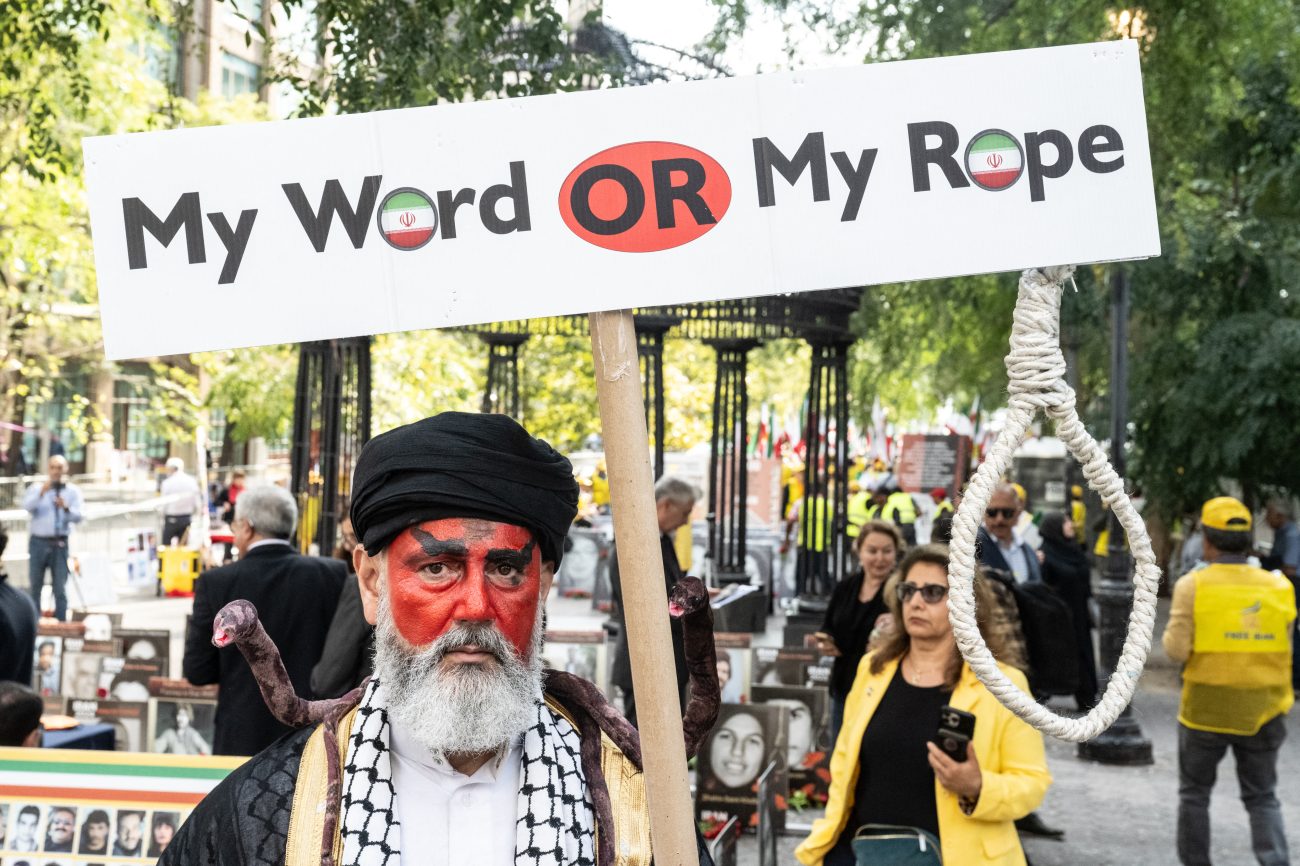
However, in Albania, the MEK is struggling to retain its own members, who have begun to defect. No strategic analyst thinks that the MEK has the capacity or support within Iran to overthrow the Islamic Republic.
The second has been “the Green Movement,” which emerged during the contested 2009 presidential elections, ending with hard-liner Mahmoud Ahmadinejad’s fraudulent reelection. The movement, characterized by peaceful demonstrations and a focus on democratic reforms, aimed to challenge the Iranian regime and advocate for greater freedoms and human rights.
The Green Movement progressed apace with mass demonstrations and civil disobedience until February 14, 2010, when its attempt to stage a rally in support of the emerging Arab revolutions was brutally suppressed.
Its leaders were systematically arrested, subjected to kangaroo courts, and jailed. But Mir Hossein Mousavi, who became universally recognised as the symbolic leader of the movement, valiantly stood his ground, and in a series of public statements that culminated in the Manshur-e Jonbesh-e Sabz [the Charter of the Green Movement], joined the Iranian people in writing a new chapter in their long and tumultuous struggle for democracy.
But he was put under House arrest, and the movement faded away over the years, with some of its supporters saying they had faith in the institutional foundations of the Islamic Republic and only wanted democratic reforms.
They also made it clear that they were not advocating the Western style of democracy and would never tolerate Western interference in Iran’s domestic politics.
Thirdly, there are monarchists who fled the country during the 1979 revolution. One of them is Reza Pahlavi, the son of the former Shah of Iran, who could theoretically return to Iran to reclaim his father’s throne.
In fact, when Donald Trump won the Presidency for the first time in 2016, the younger Shah had asked him to engage with secular and democratic forces in Iran.
Soon after Trump won the election for a second time, Pahlavi gave an interview to Newsweek magazine, sketching out a vision of a democratic Iran that would prosper from ties with the West, be at peace with Israel, and be in harmony with its neighbors.
“My only goal in life is that the Iranians can finally go to the election polls and vote their conscience and decide their fate,” he said while talking of a “constitutional monarchy.”
According to him, the current regime in Tehran is loathed by at least 80% of the population, who not only would prefer Western-style freedoms but also look to countries like the United Arab Emirates and see the prosperity that has eluded them.
He also believes that once the people rebel, under the right circumstances, they might be joined by key parts of the regime apparatus, including not only the military but also, critically, some parts of the Islamic Revolutionary Guards Corps – a sort of all-powerful Praetorian guard with a strong presence in the economy that he characterized as corrupt.
They would need to believe they would not be hounded by the new regime and might even play a role in the reconstruction.
Pahlavi said even many Muslim clergy dislike the regime and are “feeling threatened or weakened, as a result of this regime, which, in the name of Islam, has done so much harm.” Islam, he said, “has become not people’s priority.”
In his latest interview to Fox news few days ago, Pahlavi has said that he is prepared “to lead this transition from this tyranny to a future democracy,” adding his aim is a peaceful change “by means of national referendum and constitutional assembly,” and that he is “more than ever ready to step in Iran” for the “ultimate battle.”
“At the call of my compatriots, I stepped forward to lead this transition from this tyranny to a future democracy,” Pahlavi told Sean Hannity on Fox on Tuesday. “My role is to help my compatriots achieve that goal… I’m impartial as to what the ultimate result will be, so long as it’s a secular democracy.”
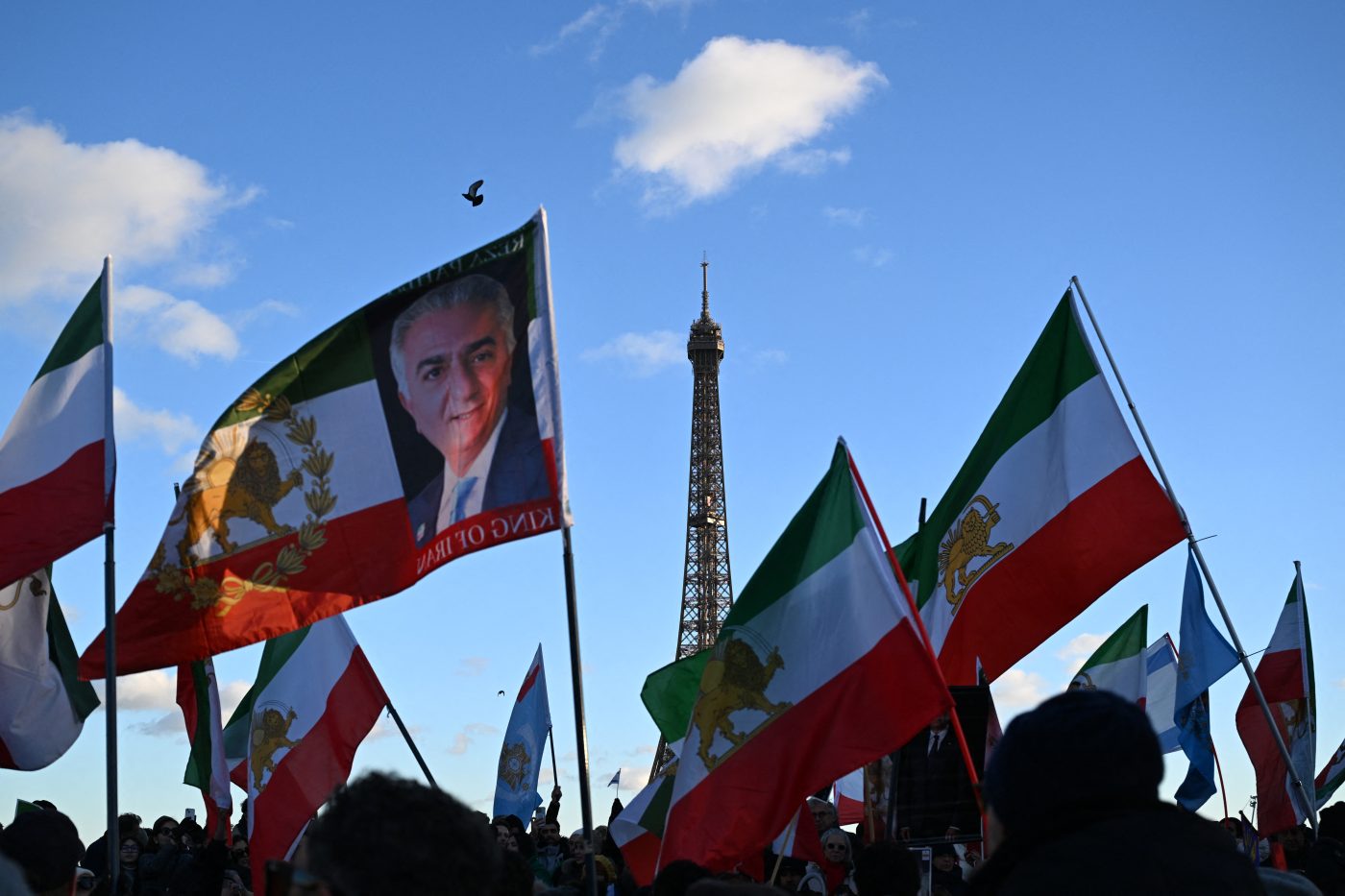
“I’ve trained all my life to serve my nation,” Pahlavi said. “I’m more than ever ready to step in Iran as soon as the situation warrants itself, and I’ll be there among my compatriots to lead the ultimate battle.”
However, all told, his support within Iran does not yet appear strong enough to overcome the strong resistance to and suppression by Khamenei. The latter has responded with a significant crackdown, including nationwide internet and phone blackouts, and security forces have been given a license to respond forcefully to “rioters.”
Khamenei retains supreme command over the armed forces and the powerful Islamic Revolutionary Guard Corps (IRGC), which is central to enforcing his rule, even though there are speculations that he has a contingency plan to flee to Moscow if the protests spiral out of control and his security forces fail to contain the unrest.
However, in any change in Iran’s regime, the United States’ role as a source of international support is very important. As noted above, Pahlavi has been in touch with President Donald Trump.
On January 2, writing on his Truth Social platform, Trump said that if Iran “violently kills peaceful protesters,” the United States “will come to their rescue.” The warning, only months after American forces bombed Iranian nuclear sites, includes the assertion, without elaboration, that “We are locked and loaded and ready to go.”
But then, Trump’s latest press interview signals a confusing picture. Apparently, he has reportedly ruled out a meeting with Reza Pahlavi, suggesting that Washington is not ready to back a successor to the Iranian government, should it collapse.
On Thursday (January 8), Trump called Pahlavi a “nice person.” But he added that, as President, it would not be appropriate to meet with him. “I think that we should let everybody go out there and see who emerges,” Trump told “the Hugh Hewitt Show” podcast. “I’m not necessarily sure that it would be an appropriate thing to do.”
If anything, Trump’s vacillation seems to have added a volatile international dimension to the ongoing unrest in Iran. Understandably, the American President, already under international opprobrium for his capture of Venezuela’s president, Nicolas Maduro, is a little cautious about another international intervention.
He is likely to play a patient game, though he would put maximum pressure short of war on the Muulah-led government in Iran to quit, many experts suggest.
Even otherwise, a foreign military intervention is a big risk in the sense that it could boomerang, as the Iranians are known for their strong nationalism and would not like an America that denies them nuclear and missile power.
The moral of the story, thus, is that, though the Khamenei regime in Tehran looks more vulnerable than ever before, it is difficult to say whether it is about to collapse at any moment.
- Questions and Answers
- Opinion
- Motivational and Inspiring Story
- Technology
- Live and Let live
- Focus
- Geopolitics
- Military-Arms/Equipment
- Beveiliging
- Economy
- Beasts of Nations
- Machine Tools-The “Mother Industry”
- Art
- Causes
- Crafts
- Dance
- Drinks
- Film/Movie
- Fitness
- Food
- Spellen
- Gardening
- Health
- Home
- Literature
- Music
- Networking
- Other
- Party
- Religion
- Shopping
- Sports
- Theater
- Health and Wellness
- News
- Culture

 Chinese
 English
 Arabic
 French
 Spanish
 Portuguese
 Deutsch
 Turkish
 Italiano
 Russian
 Romaian
 Portuguese (Brazil)
 Greek
Greek