

India Overlooks Sukhoi Su-57’s Interim Power Plant For Su-30 MKI Upgrade ; May Consider Russian Product 177S

On February 7, Russia’s state-owned news agency RIA Novosti reported: “New products await guests at the Russian exposition in the aircraft engine segment. For the first time at Aero India, United Engine Corporation will showcase the new ‘Product 177S’ engine, designed for 4++ and 5th-generation multirole fighters, along with the VK-650V, intended for light multirole helicopters.”
Surprisingly, the Product 177S engine has received no mention in the Indian media. Even the few in India who may have come across the RIA Novosti report likely overlooked this reference.
Russia has never been known for strong marketing.
Here’s the key takeaway — Russia is pitching the Product 177S engine for India’s Su-30MKI upgrade program.
Su-3O MKI Upgrade
On November 30, 2023, the Defence Acquisition Council (DAC) granted Acceptance of Necessity (AoN) for the modernization of the Indian Air Force’s Su-30MKI fleet by Hindustan Aeronautics Limited (HAL).
As part of this upgrade, HAL will equip the aircraft with the indigenously developed Virupaksha AESA radar, an Electronic Warfare (EW) suite, and other advanced avionics.
Additionally, HAL will integrate several indigenously developed long-range weapon systems into the aircraft’s weapon management system. The modernization will also extend the service life of the Su-30MKI fleet by more than 20 years, with the IAF reportedly planning to retain the upgraded aircraft until 2055.
However, there have been no reports indicating that HAL plans to upgrade the aircraft’s engine.
HAL’s Engine Upgrade Options
Until recently, the only engine upgrade option available to HAL was the more powerful and fuel-efficient AL-41F-1S, which currently powers the Russian Su-35S air superiority fighter and the Su-57 Stage 1 stealth fighter.
Russia claims that integrating the AL-41F-1S, which offers 16% more thrust and is twice as cost-effective, would not require any airframe modifications.
However, Russia has yet to demonstrate the engine’s compatibility with its own Su-30SM fleet. The Su-30SM is an analog of the IAF’s Su-30MKI.
Russia is currently upgrading the Su-30SM to the Su-30SM2 standard, equipping it with a more powerful radar, long-range precision strike capability, improved situational awareness, and a strengthened airframe, among other enhancements. Flight trials of the Su-30SM2 with the AL-41F-1S engine are underway.
In August 2024, the United Aircraft Corporation (UAC) delivered an unspecified number of Su-30SM2 fighters to the Russian Ministry of Defense. However, these aircraft were not fitted with the AL-41F-1S engine.
The delivery of Su-30SM2 fighters equipped with AL-41F-1S engines is expected to begin by mid-2025. The early delivery of Su-30SM2 fighters without the engine upgrade may have been driven by operational requirements due to the ongoing war in Ukraine.
The time taken to upgrade SU-30M2 variants with AL-41F-1S engines suggests that the integration is not seamless.
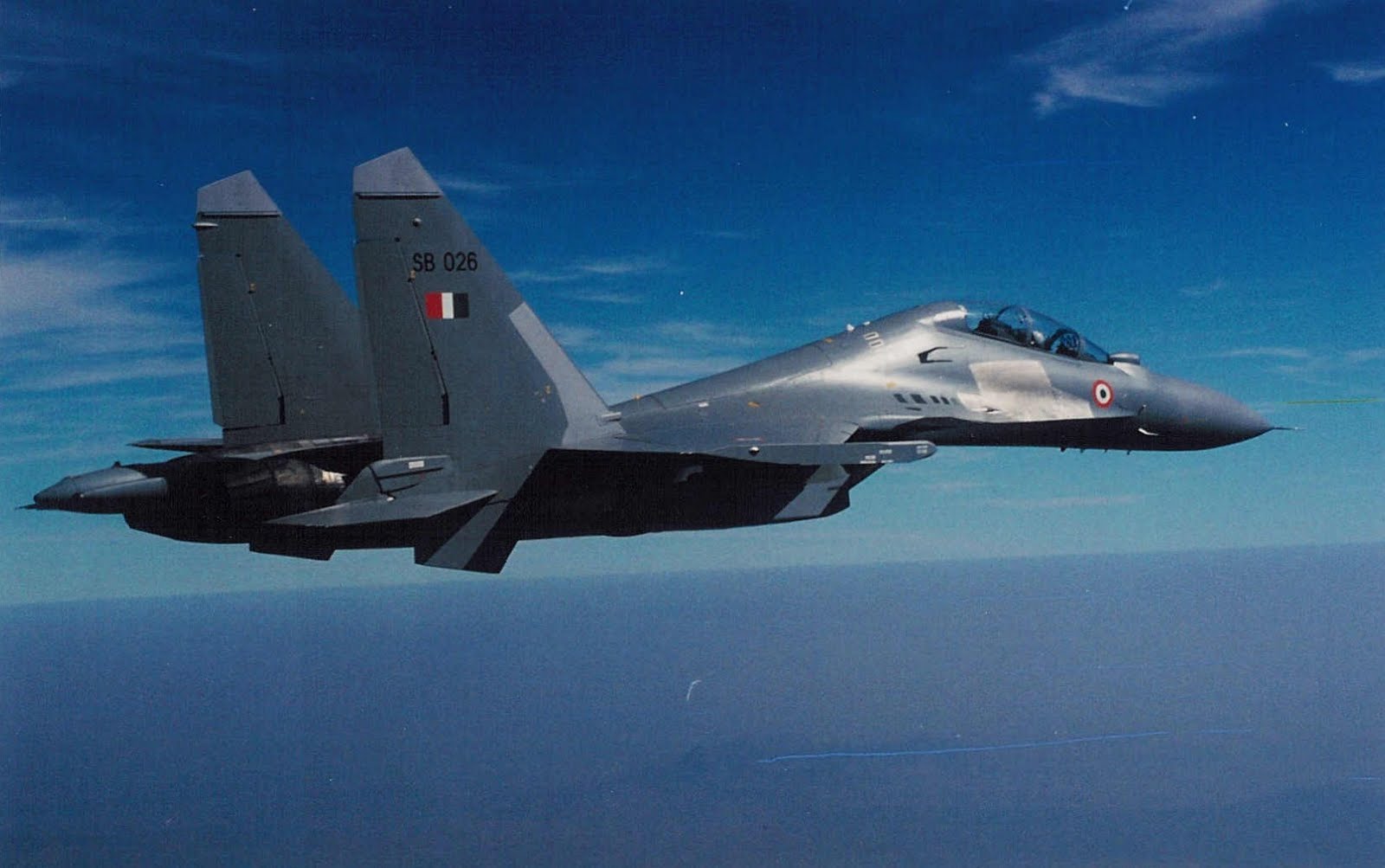
Understanding Why The IAF Remains Uncommitted
Given the broad scope of the planned Su-30MKI upgrade and the relatively low capability maturity levels of HAL and DRDO in implementing such upgrades, it is unlikely that the upgraded aircraft will be delivered to the IAF within the next six to eight years.
At this stage, not committing to an engine upgrade appears to be a practical decision.
The Su-30MKI upgrade program is still in its early stages, and the AL-41F-1S has yet to be fully integrated with the Su-30 platform. The IAF will have the option to consider an engine upgrade at a later phase of the program if required.
HAL has made significant investments in the local manufacturing of the AL-31FP engine. However, the absorption of its technology has been slow, with the indigenous content currently at just over 54%.
HAL aims to increase this to 63% by the end of its current delivery program. To support this effort, HAL is collaborating with Indian industries, including micro, small, and medium enterprises (MSMEs), to enhance these engines’ local production and maintenance capabilities.
Switching to a new powerplant at this stage could significantly increase upgrade costs and pose additional challenges for HAL.
In the long run, however, upgrading to a more powerful, fuel-efficient engine with lower operating costs would be in the IAF’s best interest.
Russia’s Product 177S Engine Pitch
Russia likely recognizes India’s need for a lower-cost, lower-risk alternative to the AL-41F-1S and has developed the Product 177S engine, which offers improved thrust, fuel efficiency, and service life.
Rostec unveiled the Product 177S aircraft engine for the first time at Airshow China in Zhuhai in November 2024.
The Product 177S and the AL-31FP engines used in the Su-30MKI have identical weights and dimensions, making them fully interchangeable.
The AL-31FP delivers a maximum combat thrust of 12,500 kg, whereas the Product 177S provides 14,500 kg. Both engines have a dry weight of 1,520 kg.
As a result, the thrust-to-weight (T:W) ratio of the AL-31FP is 8.2:1, while that of the Product 177S is 9.5:1.
The Product 177S also boasts a service life of 6,000 hours, three times that of the AL-31FP. Additionally, it features reduced specific fuel consumption across all operating modes, lowering operating costs and increasing the aircraft’s flight range.
The fan design enhances foreign object and bird ingestion resistance, improving engine safety.
The Product 177S is equipped with a Full Authority Digital Engine Control (FADEC) system, complemented by redundant hydro-mechanical control circuits for enhanced reliability.
Conclusion
It would be unwise for the IAF to overlook technological advancements that could enhance the combat potential, range, and endurance of the Su-30MKI while also reducing operating costs.
Given the likely high degree of component commonality between the AL-31FP and the Product 177S engines, HAL could transition relatively easily from manufacturing the AL-31FP to producing the 177S locally.
Since the Product 177S shares the same dimensions and weight as the AL-31FP, it could be integrated into upgraded Su-30MKIs and retrofitted onto existing aircraft, significantly improving their performance, range, and endurance.
More importantly, the Product 177S represents a major leap in Russian aero-engine technology, bringing it on par with Western alternatives available to India.
By taking ownership of the 177S, HAL could develop an entire range of indigenous fighters around it in a short time, accelerating India’s self-reliance in combat aircraft development.
- Questions and Answers
- Opinion
- Motivational and Inspiring Story
- Technology
- Live and Let live
- Focus
- Geopolitics
- Military-Arms/Equipment
- Sicherheit
- Economy
- Beasts of Nations
- Machine Tools-The “Mother Industry”
- Art
- Causes
- Crafts
- Dance
- Drinks
- Film/Movie
- Fitness
- Food
- Spiele
- Gardening
- Health
- Startseite
- Literature
- Music
- Networking
- Andere
- Party
- Religion
- Shopping
- Sports
- Theater
- Health and Wellness
- News
- Culture

 Chinese
 English
 Arabic
 French
 Spanish
 Portuguese
 Turkish
 Dutch
Dutch
 Italiano
 Russian
 Romaian
 Portuguese (Brazil)
 Greek
Greek