• Water Salinity
    Definition
    Water salinity refers to the content of dissolved salts in water, typically measured in grams of salt per kilogram of water (g/kg, or parts per thousand). Salinity is a key physical and chemical property of water, significantly impacting aquatic ecosystems, agricultural irrigation, industrial production, and human health.

    https://www.renkeer.com/tds-conductivity-and-salinity-in-water-quality/
    Water Salinity Definition Water salinity refers to the content of dissolved salts in water, typically measured in grams of salt per kilogram of water (g/kg, or parts per thousand). Salinity is a key physical and chemical property of water, significantly impacting aquatic ecosystems, agricultural irrigation, industrial production, and human health. https://www.renkeer.com/tds-conductivity-and-salinity-in-water-quality/
    WWW.RENKEER.COM
    TDS, Conductivity and Salinity Relationship
    TDS, EC, and salinity are interrelated: EC reflects ion concentration, TDS measures total dissolved solids, and salinity indicates total salt content.
    0 Comments 0 Shares 862 Views 0 Reviews
  • Soil monitoring involves scientifically testing and analyzing the physical, chemical, and biological properties of soil to assess its health. Key indicators monitored include soil moisture, temperature, pH, electrical conductivity (salinity), nutrients (such as nitrogen, phosphorus, and potassium), and pollutants (such as heavy metals and pesticide residues). This technology facilitates precise irrigation and fertilization, improving crop yields and quality while preventing soil degradation and pollution and ensuring agricultural product safety.

    Soil monitoring is crucial for sustainable agriculture, optimizing resource utilization, addressing climate change, supporting land use planning, and promoting ecological restoration. The application of modern technologies, such as sensors, the Internet of Things, and remote sensing, makes monitoring more efficient and accurate, promoting the development of smart agriculture.

    https://www.renkeer.com/soil-moisture-measurement-and-calculation/
    Soil monitoring involves scientifically testing and analyzing the physical, chemical, and biological properties of soil to assess its health. Key indicators monitored include soil moisture, temperature, pH, electrical conductivity (salinity), nutrients (such as nitrogen, phosphorus, and potassium), and pollutants (such as heavy metals and pesticide residues). This technology facilitates precise irrigation and fertilization, improving crop yields and quality while preventing soil degradation and pollution and ensuring agricultural product safety. Soil monitoring is crucial for sustainable agriculture, optimizing resource utilization, addressing climate change, supporting land use planning, and promoting ecological restoration. The application of modern technologies, such as sensors, the Internet of Things, and remote sensing, makes monitoring more efficient and accurate, promoting the development of smart agriculture. https://www.renkeer.com/soil-moisture-measurement-and-calculation/
    WWW.RENKEER.COM
    Soil Moisture Measurement and Calculation
    Soil moisture affects plant health, nutrient transport, and soil structure. Learn its types, measurements, and impact on crop growth and irrigation.
    0 Comments 0 Shares 2K Views 0 Reviews
  • Application Scenarios and Value of Capacitive Liquid Level Sensors in Agriculture

    Capacitive liquid level sensors, with their high precision, low maintenance, and strong environmental adaptability, enable multi-dimensional optimization in agricultural production, from water resource management to crop cultivation. Their core function is to drive irrigation automation, intelligent equipment, and efficient resource utilization through real-time liquid level monitoring. The following are specific applications.

    Core Applications in Smart Irrigation Systems

    Agricultural irrigation is a typical application scenario for sensors. By accurately monitoring water levels and soil moisture, they enable "on-demand water supply," significantly improving water conservation and crop yields.

    https://www.renkeer.com/product/capacitive-fuel-level-sensor/
    Application Scenarios and Value of Capacitive Liquid Level Sensors in Agriculture Capacitive liquid level sensors, with their high precision, low maintenance, and strong environmental adaptability, enable multi-dimensional optimization in agricultural production, from water resource management to crop cultivation. Their core function is to drive irrigation automation, intelligent equipment, and efficient resource utilization through real-time liquid level monitoring. The following are specific applications. Core Applications in Smart Irrigation Systems Agricultural irrigation is a typical application scenario for sensors. By accurately monitoring water levels and soil moisture, they enable "on-demand water supply," significantly improving water conservation and crop yields. https://www.renkeer.com/product/capacitive-fuel-level-sensor/
    WWW.RENKEER.COM
    Capacitive Fuel Level Sensor
    The capacitive fuel level sensor uses the principle of radio frequency admittance to monitor the liquid level inside fuel tanks or water tanks.
    0 Comments 0 Shares 1K Views 0 Reviews
  • What industries besides oil and gas could help diversify Nigeria’s economy?
    Nigeria possesses immense potential in various sectors beyond oil and gas that could drive significant economic diversification and sustainable growth. Here are some of the most promising industries:

    Agriculture and Agro-processing:
    Vast Arable Land: Nigeria has extensive arable land, much of which is underutilized. It was once a major global producer of cash crops like cocoa, palm oil, groundnuts, and rubber.

    Food Security and Export Potential: Investing in agriculture can address food insecurity and provide significant export earnings. Focus areas include staple crops (rice, maize, cassava, wheat), cash crops (cocoa, cashew, sesame, ginger), and livestock/aquaculture.

    Value Addition: Moving beyond raw commodity export to agro-processing (e.g., transforming cassava into starch/ethanol, cocoa into chocolate products, palm oil into various derivatives) creates more jobs, increases revenue, and reduces post-harvest losses.

    Technology and Modernization: Adopting modern farming techniques, irrigation, biotechnology, and precision agriculture can boost productivity.

    Public-Private Partnerships: Attracting private investment through incentives and improving rural infrastructure (roads, storage) are crucial.

    Manufacturing:
    Large Domestic Market: Nigeria's huge population provides a massive domestic market for manufactured goods, reducing reliance on imports.

    Backward Integration: Encouraging local sourcing of raw materials for manufacturing can stimulate other sectors (like agriculture and solid minerals).

    Specific Sub-sectors: Opportunities exist in light manufacturing (textiles, garments, footwear), food and beverage processing, pharmaceuticals, construction materials (cement, steel), and potentially automotive assembly.

    Challenges: This sector faces significant hurdles like unreliable power supply, high cost of finance, import dependency for raw materials, and competition from cheap imports. Addressing these through targeted policies, special economic zones, and infrastructure development is key.

    Solid Minerals:
    Abundant Untapped Resources: Nigeria is rich in various solid minerals, including gold, coal, iron ore, limestone, lead, zinc, bitumen, and critical minerals like lithium (increasingly important for global energy transition).

    Revenue and Jobs: Proper exploration, extraction, and processing can generate substantial government revenue and create jobs, particularly in rural areas.

    Value Addition: Like oil, exporting raw minerals offers limited value. Establishing processing plants to refine minerals into higher-value products (e.g., iron ore to steel, bauxite to aluminum) would maximize benefits.


    Challenges: The sector is plagued by illegal mining, lack of comprehensive geological data, inadequate infrastructure, and limited regulatory oversight. Recent government efforts to formalize artisanal mining and attract investment show promise.

    Information and Communication Technology (ICT) / Digital Economy:
    Young, Tech-Savvy Population: Nigeria has a large, vibrant, and increasingly tech-savvy youth population, driving innovation.

    Growth of Tech Hubs: Cities like Lagos are emerging as significant tech hubs, attracting venture capital.

    Areas of Opportunity: Software development, fintech (mobile payments, digital banking), e-commerce, digital content creation (Nollywood, music), animation, and IT services are all areas with strong growth potential.

    Digital Inclusion: Expanding internet penetration and digital literacy can further unlock this sector's potential for inclusive growth.

    Creative Industry (Nollywood, Music, Fashion, Arts):
    Global Recognition: Nigeria's creative industry, particularly Nollywood (the film industry) and its music scene (Afro-beats), has gained significant international acclaim and generated substantial revenue.

    Job Creation: This sector is a major employer of youth, spanning actors, producers, musicians, designers, technicians, and marketing professionals.

    Export Potential: Nigerian creative content and fashion are increasingly exported, showcasing cultural soft power and earning foreign exchange.

    Investment Needs: Support for intellectual property protection, access to finance for productions, and infrastructure for studios and performance venues can boost growth.

    Tourism and Hospitality:
    Diverse Attractions: Nigeria boasts a rich cultural heritage, diverse landscapes (beaches, mountains, wildlife reserves), historical sites, and vibrant festivals.

    Job Creation: Tourism can create numerous jobs, from tour guides and hotel staff to artisans and transport providers.

    Domestic and International Tourism: While international tourism has potential, developing domestic tourism can also be a significant revenue generator.

    Challenges: Insecurity in certain regions, inadequate infrastructure (transport, accommodation), poor marketing, and insufficient investment are major hindrances. Addressing these is crucial to unlocking its potential.

    Renewable Energy:
    Energy Deficit: Nigeria faces a significant power deficit, making renewable energy (solar, wind, hydropower, biomass) crucial for sustainable development.

    Abundant Resources: The country has abundant solar radiation, potential for wind energy, and biomass.

    Investment and Job Creation: Investing in renewable energy infrastructure can provide stable power, reduce reliance on fossil fuels, and create jobs in installation, maintenance, and manufacturing of components.

    Decentralized Solutions: Off-grid solutions and mini-grids can particularly benefit rural areas and small businesses.

    To successfully diversify, Nigeria needs to implement consistent policies, improve infrastructure, address insecurity, strengthen institutions to combat corruption, and create an enabling business environment that attracts both domestic and foreign investment in these critical non-oil sectors.

    What industries besides oil and gas could help diversify Nigeria’s economy? Nigeria possesses immense potential in various sectors beyond oil and gas that could drive significant economic diversification and sustainable growth. Here are some of the most promising industries: Agriculture and Agro-processing: Vast Arable Land: Nigeria has extensive arable land, much of which is underutilized. It was once a major global producer of cash crops like cocoa, palm oil, groundnuts, and rubber. Food Security and Export Potential: Investing in agriculture can address food insecurity and provide significant export earnings. Focus areas include staple crops (rice, maize, cassava, wheat), cash crops (cocoa, cashew, sesame, ginger), and livestock/aquaculture. Value Addition: Moving beyond raw commodity export to agro-processing (e.g., transforming cassava into starch/ethanol, cocoa into chocolate products, palm oil into various derivatives) creates more jobs, increases revenue, and reduces post-harvest losses. Technology and Modernization: Adopting modern farming techniques, irrigation, biotechnology, and precision agriculture can boost productivity. Public-Private Partnerships: Attracting private investment through incentives and improving rural infrastructure (roads, storage) are crucial. Manufacturing: Large Domestic Market: Nigeria's huge population provides a massive domestic market for manufactured goods, reducing reliance on imports. Backward Integration: Encouraging local sourcing of raw materials for manufacturing can stimulate other sectors (like agriculture and solid minerals). Specific Sub-sectors: Opportunities exist in light manufacturing (textiles, garments, footwear), food and beverage processing, pharmaceuticals, construction materials (cement, steel), and potentially automotive assembly. Challenges: This sector faces significant hurdles like unreliable power supply, high cost of finance, import dependency for raw materials, and competition from cheap imports. Addressing these through targeted policies, special economic zones, and infrastructure development is key. Solid Minerals: Abundant Untapped Resources: Nigeria is rich in various solid minerals, including gold, coal, iron ore, limestone, lead, zinc, bitumen, and critical minerals like lithium (increasingly important for global energy transition). Revenue and Jobs: Proper exploration, extraction, and processing can generate substantial government revenue and create jobs, particularly in rural areas. Value Addition: Like oil, exporting raw minerals offers limited value. Establishing processing plants to refine minerals into higher-value products (e.g., iron ore to steel, bauxite to aluminum) would maximize benefits. Challenges: The sector is plagued by illegal mining, lack of comprehensive geological data, inadequate infrastructure, and limited regulatory oversight. Recent government efforts to formalize artisanal mining and attract investment show promise. Information and Communication Technology (ICT) / Digital Economy: Young, Tech-Savvy Population: Nigeria has a large, vibrant, and increasingly tech-savvy youth population, driving innovation. Growth of Tech Hubs: Cities like Lagos are emerging as significant tech hubs, attracting venture capital. Areas of Opportunity: Software development, fintech (mobile payments, digital banking), e-commerce, digital content creation (Nollywood, music), animation, and IT services are all areas with strong growth potential. Digital Inclusion: Expanding internet penetration and digital literacy can further unlock this sector's potential for inclusive growth. Creative Industry (Nollywood, Music, Fashion, Arts): Global Recognition: Nigeria's creative industry, particularly Nollywood (the film industry) and its music scene (Afro-beats), has gained significant international acclaim and generated substantial revenue. Job Creation: This sector is a major employer of youth, spanning actors, producers, musicians, designers, technicians, and marketing professionals. Export Potential: Nigerian creative content and fashion are increasingly exported, showcasing cultural soft power and earning foreign exchange. Investment Needs: Support for intellectual property protection, access to finance for productions, and infrastructure for studios and performance venues can boost growth. Tourism and Hospitality: Diverse Attractions: Nigeria boasts a rich cultural heritage, diverse landscapes (beaches, mountains, wildlife reserves), historical sites, and vibrant festivals. Job Creation: Tourism can create numerous jobs, from tour guides and hotel staff to artisans and transport providers. Domestic and International Tourism: While international tourism has potential, developing domestic tourism can also be a significant revenue generator. Challenges: Insecurity in certain regions, inadequate infrastructure (transport, accommodation), poor marketing, and insufficient investment are major hindrances. Addressing these is crucial to unlocking its potential. Renewable Energy: Energy Deficit: Nigeria faces a significant power deficit, making renewable energy (solar, wind, hydropower, biomass) crucial for sustainable development. Abundant Resources: The country has abundant solar radiation, potential for wind energy, and biomass. Investment and Job Creation: Investing in renewable energy infrastructure can provide stable power, reduce reliance on fossil fuels, and create jobs in installation, maintenance, and manufacturing of components. Decentralized Solutions: Off-grid solutions and mini-grids can particularly benefit rural areas and small businesses. To successfully diversify, Nigeria needs to implement consistent policies, improve infrastructure, address insecurity, strengthen institutions to combat corruption, and create an enabling business environment that attracts both domestic and foreign investment in these critical non-oil sectors.

    0 Comments 0 Shares 7K Views 0 Reviews
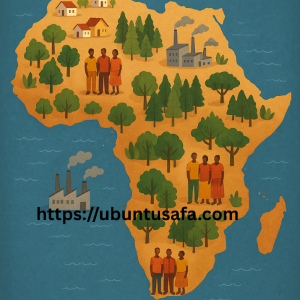
  • "Before the Colonizers: Africa’s Forgotten Empires and Innovators"

    Rediscovering our roots beyond slavery.
    Before the Colonizers: Africa’s Forgotten Empires and Innovators
    For centuries, the narrative of Africa has often been tragically constrained by the shadows of the transatlantic slave trade and subsequent European colonization. Yet, long before the arrival of colonizers, the continent was a vibrant tapestry of sophisticated empires, advanced civilizations, and groundbreaking innovators whose contributions to human knowledge and culture are only now beginning to be fully appreciated. Rediscovering these roots is not just an academic exercise; it is an essential reclaiming of history and identity.

    Great Empires of Gold, Learning, and Power:

    Ancient Egypt (c. 3100 BCE – 30 BCE): While often considered separately, Egypt is undeniably African. Its monumental architecture, advanced understanding of mathematics, medicine, and astronomy, and complex social and religious structures laid foundations for civilizations worldwide. The Library of Alexandria, though Hellenistic in its later iterations, was a beacon of knowledge on African soil.

    The Kingdom of Kush (c. 1070 BCE – 350 CE): South of Egypt, in modern-day Sudan, Kush rivaled its northern neighbor. Known for its skilled archers, iron production, and pyramids (more numerous than Egypt's, though smaller), Kush maintained a distinct cultural identity and even ruled Egypt for a period as the 25th Dynasty.

    The Aksumite Empire (c. 100 CE – 940 CE): Located in present-day Ethiopia and Eritrea, Aksum was a major naval and trading power, controlling routes between Africa and Asia. It developed its own script (Ge'ez), minted its own coins, and was one of the first empires to officially adopt Christianity, building impressive rock-hewn churches that still stand today.

    The Ghana Empire (c. 300 CE – 1200 CE): Flourishing in West Africa, this empire grew rich from the trans-Saharan gold and salt trade. Its capital, Koumbi Saleh, was a bustling center of commerce and learning, attracting scholars and merchants from across the Islamic world.

    The Mali Empire (c. 1230 CE – 1600 CE): Successor to Ghana, the Mali Empire under legendary rulers like Mansa Musa became arguably the wealthiest empire of its time. Mansa Musa's pilgrimage to Mecca, with his immense wealth, famously devalued gold in the regions he passed through. Timbuktu, a major city within the empire, became a renowned center of Islamic scholarship, housing universities and libraries that predated many in Europe.

    The Songhai Empire (c. 1464 CE – 1591 CE): Following Mali, Songhai rose to prominence, extending its control over key trade routes and consolidating power. Under rulers like Askia the Great, it further developed Timbuktu and Djenné as intellectual and commercial hubs, promoting education and justice.

    The Great Zimbabwe (c. 11th – 15th centuries CE): In Southern Africa, this powerful kingdom constructed massive stone enclosures without mortar, demonstrating remarkable architectural and engineering prowess. It was a hub for a vast trading network, exchanging gold and ivory with Swahili coast merchants.

    The Kongo Kingdom (c. 1390 CE – 1914 CE): Located in Central Africa, this highly organized kingdom had a sophisticated political structure, a strong agricultural base, and intricate trade networks. It engaged with the Portuguese early on, showcasing the complexity of pre-colonial African diplomacy.

    Innovators Beyond the Narrative:
    Beyond the grand empires, countless African societies made significant advancements in various fields:

    Metallurgy: The Nok culture of West Africa (c. 1000 BCE – 300 CE) was one of the earliest sub-Saharan African civilizations to smelt iron, a skill that spread across the continent and revolutionized agriculture, warfare, and tool-making. Evidence of sophisticated iron and steel production has been found in regions like Tanzania (Haya people) dating back over 2,000 years.

    Agriculture: African communities developed diverse and resilient farming systems, domesticating indigenous crops like millet, sorghum, yams, and teff, adapting them to varied climates and terrains. Complex irrigation systems were also employed in many regions.

    Mathematics and Astronomy: Evidence suggests ancient African knowledge of complex mathematical concepts, including fractals (as seen in some traditional architectural designs). Astronomical observations informed agricultural cycles and religious practices across various cultures.

    Medicine: Traditional African medicine was highly developed, with knowledge of herbal remedies, surgical procedures (including successful C-sections documented in the 19th century among the Banyoro of Uganda), and inoculation techniques against diseases like smallpox, predating Western adoption.

    Art and Architecture: From the intricate bronzes of Benin and Ife to the rock-hewn churches of Lalibela and the mud-brick mosques of Djenné, African artistic and architectural traditions are rich, diverse, and deeply symbolic, often reflecting complex spiritual and social structures.

    Governance and Law: Many African societies developed sophisticated systems of governance, including federal structures, checks and balances, and customary law that ensured social cohesion and justice, often with strong emphasis on community participation and consensus-building.

    Reclaiming the Narrative:
    The tendency to view African history solely through the lens of slavery and colonization fundamentally distorts its reality. By highlighting these forgotten empires and innovators, we begin to reconstruct a more complete and accurate understanding of a continent that was, for millennia, a cradle of civilization, a hub of intellectual exchange, and a source of profound human achievement. This reclamation is vital for all of humanity to fully appreciate the shared heritage and diverse contributions that have shaped our world.
    "Before the Colonizers: Africa’s Forgotten Empires and Innovators" Rediscovering our roots beyond slavery. Before the Colonizers: Africa’s Forgotten Empires and Innovators For centuries, the narrative of Africa has often been tragically constrained by the shadows of the transatlantic slave trade and subsequent European colonization. Yet, long before the arrival of colonizers, the continent was a vibrant tapestry of sophisticated empires, advanced civilizations, and groundbreaking innovators whose contributions to human knowledge and culture are only now beginning to be fully appreciated. Rediscovering these roots is not just an academic exercise; it is an essential reclaiming of history and identity. Great Empires of Gold, Learning, and Power: Ancient Egypt (c. 3100 BCE – 30 BCE): While often considered separately, Egypt is undeniably African. Its monumental architecture, advanced understanding of mathematics, medicine, and astronomy, and complex social and religious structures laid foundations for civilizations worldwide. The Library of Alexandria, though Hellenistic in its later iterations, was a beacon of knowledge on African soil. The Kingdom of Kush (c. 1070 BCE – 350 CE): South of Egypt, in modern-day Sudan, Kush rivaled its northern neighbor. Known for its skilled archers, iron production, and pyramids (more numerous than Egypt's, though smaller), Kush maintained a distinct cultural identity and even ruled Egypt for a period as the 25th Dynasty. The Aksumite Empire (c. 100 CE – 940 CE): Located in present-day Ethiopia and Eritrea, Aksum was a major naval and trading power, controlling routes between Africa and Asia. It developed its own script (Ge'ez), minted its own coins, and was one of the first empires to officially adopt Christianity, building impressive rock-hewn churches that still stand today. The Ghana Empire (c. 300 CE – 1200 CE): Flourishing in West Africa, this empire grew rich from the trans-Saharan gold and salt trade. Its capital, Koumbi Saleh, was a bustling center of commerce and learning, attracting scholars and merchants from across the Islamic world. The Mali Empire (c. 1230 CE – 1600 CE): Successor to Ghana, the Mali Empire under legendary rulers like Mansa Musa became arguably the wealthiest empire of its time. Mansa Musa's pilgrimage to Mecca, with his immense wealth, famously devalued gold in the regions he passed through. Timbuktu, a major city within the empire, became a renowned center of Islamic scholarship, housing universities and libraries that predated many in Europe. The Songhai Empire (c. 1464 CE – 1591 CE): Following Mali, Songhai rose to prominence, extending its control over key trade routes and consolidating power. Under rulers like Askia the Great, it further developed Timbuktu and Djenné as intellectual and commercial hubs, promoting education and justice. The Great Zimbabwe (c. 11th – 15th centuries CE): In Southern Africa, this powerful kingdom constructed massive stone enclosures without mortar, demonstrating remarkable architectural and engineering prowess. It was a hub for a vast trading network, exchanging gold and ivory with Swahili coast merchants. The Kongo Kingdom (c. 1390 CE – 1914 CE): Located in Central Africa, this highly organized kingdom had a sophisticated political structure, a strong agricultural base, and intricate trade networks. It engaged with the Portuguese early on, showcasing the complexity of pre-colonial African diplomacy. Innovators Beyond the Narrative: Beyond the grand empires, countless African societies made significant advancements in various fields: Metallurgy: The Nok culture of West Africa (c. 1000 BCE – 300 CE) was one of the earliest sub-Saharan African civilizations to smelt iron, a skill that spread across the continent and revolutionized agriculture, warfare, and tool-making. Evidence of sophisticated iron and steel production has been found in regions like Tanzania (Haya people) dating back over 2,000 years. Agriculture: African communities developed diverse and resilient farming systems, domesticating indigenous crops like millet, sorghum, yams, and teff, adapting them to varied climates and terrains. Complex irrigation systems were also employed in many regions. Mathematics and Astronomy: Evidence suggests ancient African knowledge of complex mathematical concepts, including fractals (as seen in some traditional architectural designs). Astronomical observations informed agricultural cycles and religious practices across various cultures. Medicine: Traditional African medicine was highly developed, with knowledge of herbal remedies, surgical procedures (including successful C-sections documented in the 19th century among the Banyoro of Uganda), and inoculation techniques against diseases like smallpox, predating Western adoption. Art and Architecture: From the intricate bronzes of Benin and Ife to the rock-hewn churches of Lalibela and the mud-brick mosques of Djenné, African artistic and architectural traditions are rich, diverse, and deeply symbolic, often reflecting complex spiritual and social structures. Governance and Law: Many African societies developed sophisticated systems of governance, including federal structures, checks and balances, and customary law that ensured social cohesion and justice, often with strong emphasis on community participation and consensus-building. Reclaiming the Narrative: The tendency to view African history solely through the lens of slavery and colonization fundamentally distorts its reality. By highlighting these forgotten empires and innovators, we begin to reconstruct a more complete and accurate understanding of a continent that was, for millennia, a cradle of civilization, a hub of intellectual exchange, and a source of profound human achievement. This reclamation is vital for all of humanity to fully appreciate the shared heritage and diverse contributions that have shaped our world.
    0 Comments 0 Shares 3K Views 0 Reviews
  • RainPoint 2-Zone Smart Irrigation Timer Review: A Top-Tier Watering Solution

    https://www.amazon.com/dp/B0DQ9416VQ?maas=maas_adg_1FC32A59925127C4BDC9F02F7E78B4A6_afap_abs&ref_=aa_maas&tag=maas&th=1
    RainPoint 2-Zone Smart Irrigation Timer Review: A Top-Tier Watering Solution https://www.amazon.com/dp/B0DQ9416VQ?maas=maas_adg_1FC32A59925127C4BDC9F02F7E78B4A6_afap_abs&ref_=aa_maas&tag=maas&th=1
    Amazon.com : RAINPOINT WiFi Water Timer for Garden Hose, 2 Zone Smart Hose Timer WiFi Sprinkler Controller with Antenna Gateway (Support WiFi & Ethernet Connection), Automatic Watering System for Lawn and Yard : Patio, Lawn & Garden
    Amazon.com : RAINPOINT WiFi Water Timer for Garden Hose, 2 Zone Smart Hose Timer WiFi Sprinkler Controller with Antenna Gateway (Support WiFi & Ethernet Connection), Automatic Watering System for Lawn and Yard : Patio, Lawn & Garden
    0 Comments 0 Shares 666 Views 0 Reviews
  • RainPoint WiFi Timer with Ethernet Gateway Review: The Future of Smart Irrigation

    https://www.amazon.com/dp/B0DQ98QRX1?maas=maas_adg_6FD520BF2C338E537A0E1A37C537A78E_afap_abs&ref_=aa_maas&tag=maas
    RainPoint WiFi Timer with Ethernet Gateway Review: The Future of Smart Irrigation https://www.amazon.com/dp/B0DQ98QRX1?maas=maas_adg_6FD520BF2C338E537A0E1A37C537A78E_afap_abs&ref_=aa_maas&tag=maas
    Amazon.com : RAINPOINT WiFi Water Timer, Smart Sprinkler Hose Timer with Antenna Gateway (with LAN Port, Support WiFi Ethernet Connection), App Remote Control, Weather-Based Smart Watering, for Lawn, Garden : Patio, Lawn & Garden
    Amazon.com : RAINPOINT WiFi Water Timer, Smart Sprinkler Hose Timer with Antenna Gateway (with LAN Port, Support WiFi Ethernet Connection), App Remote Control, Weather-Based Smart Watering, for Lawn, Garden : Patio, Lawn & Garden
    0 Comments 0 Shares 814 Views 0 Reviews
  • RainPoint Smart Hose Timer Review: A Versatile & Reliable Irrigation Hub

    https://www.amazon.com/dp/B09WHPQ9N6?maas=maas_adg_ED161A464CCC3A9AE07593486F89CB70_afap_abs&ref_=aa_maas&tag=maas&th=1
    RainPoint Smart Hose Timer Review: A Versatile & Reliable Irrigation Hub https://www.amazon.com/dp/B09WHPQ9N6?maas=maas_adg_ED161A464CCC3A9AE07593486F89CB70_afap_abs&ref_=aa_maas&tag=maas&th=1
    Amazon.com : RAINPOINT WiFi Water Timer with Brass Inlet, 2 Outlets Sprinkler Timer,Automatic Irrigation System Controller, APP & Voice Control, Irrigation by Weather/Quantity/Soil Moisture : Patio, Lawn & Garden
    Amazon.com : RAINPOINT WiFi Water Timer with Brass Inlet, 2 Outlets Sprinkler Timer,Automatic Irrigation System Controller, APP & Voice Control, Irrigation by Weather/Quantity/Soil Moisture : Patio, Lawn & Garden
    0 Comments 0 Shares 543 Views 0 Reviews
  • https://www.skylinewaterpumps.com/pressure-booster-pump.php

    Pressure Booster Pumps Manufacturers

    Pressure Booster Pump Manufacturers design and supply high-performance pumps to enhance water pressure in residential, commercial, and industrial applications. These manufacturers provide reliable solutions for maintaining consistent water flow in high-rise buildings, hotels, hospitals, and irrigation systems. With advanced technology and durable materials, Pressure Booster Pumps Manufacturers ensure efficiency, energy savings, and long-lasting performance. They offer a variety of models to meet different pressure requirements, catering to diverse customer needs.
    https://www.skylinewaterpumps.com/pressure-booster-pump.php Pressure Booster Pumps Manufacturers Pressure Booster Pump Manufacturers design and supply high-performance pumps to enhance water pressure in residential, commercial, and industrial applications. These manufacturers provide reliable solutions for maintaining consistent water flow in high-rise buildings, hotels, hospitals, and irrigation systems. With advanced technology and durable materials, Pressure Booster Pumps Manufacturers ensure efficiency, energy savings, and long-lasting performance. They offer a variety of models to meet different pressure requirements, catering to diverse customer needs.
    Pressure Booster Pump Manufacturers | Water Pressure Booster Pumps
    Manufacturers of Water Pressure Booster Pump for Domestic, Commercial, Industrial Purpose. Our Pressure Booster Pumps Comes with 0.5 - 2 Hp, Capacity 8 -1000 Lt
    0 Comments 0 Shares 648 Views 0 Reviews
  • Sprinkler System Lethbridge - New Way Irrigation

    New Way Irrigation is Lethbridge's best source for sprinklers & sprinkler system testing. Visit our site now to learn more

    https://newwayirrigation.com/sprinklers/
    Sprinkler System Lethbridge - New Way Irrigation New Way Irrigation is Lethbridge's best source for sprinklers & sprinkler system testing. Visit our site now to learn more https://newwayirrigation.com/sprinklers/
    Sprinklers System Installation Lethbridge | Lethbridge Sprinkler Companies | Sprinkler Control Valve | Sprinkler Irrigation Taber | Repair | New Way Irrigation
    New Way Irrigation is Lethbridge’s best source for sprinklers & sprinkler system testing. Visit our site now to learn more
    0 Comments 0 Shares 234 Views 0 Reviews
More Results
Sponsored
Sponsored
google-site-verification: google037b30823fc02426.html