• "Be happy, it drives people crazy." — Paulo Coelho
    "Be happy, it drives people crazy." — Paulo Coelho
    0 Commenti 0 condivisioni 756 Views 0 Anteprima
  • “Bad decisions make good stories.” — Ellis Vidler
    “Bad decisions make good stories.” — Ellis Vidler
    0 Commenti 0 condivisioni 753 Views 0 Anteprima
  • “Here is a test to find whether your mission on earth is finished— If you’re alive it isn’t.” — Richard Bach
    “Here is a test to find whether your mission on earth is finished— If you’re alive it isn’t.” — Richard Bach
    0 Commenti 0 condivisioni 762 Views 0 Anteprima
  • "Aspire to inspire before we expire." — Eugene Bell Jr.
    "Aspire to inspire before we expire." — Eugene Bell Jr.
    0 Commenti 0 condivisioni 752 Views 0 Anteprima
  • The easiest way to feel good is to find something that puts a smile on your face or is funny and makes you laugh. Imagine how great you will feel when you make it a daily practice to find what is funny in any situation.

    For all of you with a sense of humor enjoy these quotes about life and share to make someone else's day, too!
    The easiest way to feel good is to find something that puts a smile on your face or is funny and makes you laugh. Imagine how great you will feel when you make it a daily practice to find what is funny in any situation. For all of you with a sense of humor enjoy these quotes about life and share to make someone else's day, too!
    0 Commenti 0 condivisioni 974 Views 0 Anteprima
  • Why Good Samaritans Are Prone to Becoming Victims Themselves.
    “Nothing emboldens sin so much as mercy.” –Timon of Athens
    Reviewed by Tyler Woods

    KEY POINTS-
    Good Samaritans are about as likely to emerge as victims than as heroes.
    People are more prone to act as good Samaritans in high-risk than low-risk situations.
    Arousal theory and moral identity theory may explain good Samaritans' motivations.
    The phrase “good Samaritan” comes from the biblical parable of a traveler from Samaria who comes upon an injured Jew. The man had been robbed and beaten nearly to death. Two pious Jews had passed by and rendered no aid. But the Samaritan took pity on the dying man. He treated the man's wounds, took him to an inn, and paid for all expenses until the victim recovered. (The Jews and Samaritans were traditional enemies over religious and ethnic differences.)

    No Good Deed
    If you search for “good Samaritan” in Google News, you’ll find that the results are dominated by two kinds of stories: Good Samaritans who valiantly aided or rescued someone in distress, and good Samaritans who themselves became victims when they attempted to render aid. This latter type of story piqued my interest. Why do some people feel compelled to help others even at great personal risk?

    Consider the case of a good Samaritan in Minnesota who witnessed a crash and rollover while driving on I-94. This individual stopped to render aid. The driver of the crashed vehicle, a 22-year-old woman, then carjacked the good Samaritan. Police gave chase and finally arrested the woman, but not before ramming the good Samaritan’s car and blowing the tires with spike strips. The stolen vehicle was totaled, but fortunately the carjacker did not harm the helpful motorist (although injury or death was a real possibility in this situation).

    Another good Samaritan stopped to help some homeless people but left her car running. A few of them took this opportunity to steal her vehicle with her dog inside.

    Risky Business
    Psychologists have explored the question of why people act as good Samaritans through various theories, including social identity theory, the empathy-altruism hypothesis, and moral reasoning theory. These theories shed light on altruistic motivations. But what about people who engage in foolish or dangerous behavior to aid those in distress, such as the woman whose car and dog were stolen? Why do some people risk becoming victims themselves in order to help a stranger?

    Obviously, some people act on impulse in an emergency without stopping to weigh the pros and cons. Others are drawn to the adrenaline rush of danger. And some, like the car and dog theft victim, are just too kind-hearted and trusting to foresee danger. But research has produced some interesting findings beyond these self-evident explanations.

    One study found that people were more willing to take risks to save someone’s life than to save that person’s property. Specifically, the willingness to take risks increased as the severity of the situation increased. Contrary to what one might expect, the greater the danger, the more likely a bystander would act as good Samaritan. In a less dire situation, the same bystander would be more likely to do nothing at all (Weaver, Garcia, Schwarz, & Miller, 2015).

    An earlier study, published in the Journal of Personality and Social Psychology found that people were more likely to intervene in emergency situations when the potential harm was high, such as when someone was drowning, compared to situations where the harm was lower, such as when someone dropped their books (Fischer, Greitemeyer, Pollozek, & Frey, 2006). Similarly, a study published in the Journal of Experimental Social Psychology found that people were more likely to engage in risky behavior to help others when the situation was perceived as urgent and the potential harm was high (Aquino & Reed, 2002).

    Reasons Why
    Arousal theory suggests that people are more likely to help others when they are in a triggered emotional state, such as fear or excitement. High-risk situations often incite these kinds of emotions and thereby make people more likely to help.

    Another reason why people may act as good Samaritans in high-risk situations is that they place a high premium on their moral identity. People with deeply held moral values may feel a stronger sense of obligation to help others, especially when the consequences of not helping are severe. This can motivate people to disregard danger, even if they would not have done so in a low-risk situation.

    Finally, it's worth noting that individual factors, such as personality traits and previous experiences, play a role in shaping people's willingness to act as good Samaritans in high-risk situations. For example, people who are high in empathy may be more likely to help others in distress, regardless of the level of risk involved. This is our dilemma as human beings—to be willing to help, even at some risk to ourselves, but to do so without doubling the tragedy.

    “No act of kindness, no matter how small, is ever wasted.” – Aesop
    Why Good Samaritans Are Prone to Becoming Victims Themselves. “Nothing emboldens sin so much as mercy.” –Timon of Athens Reviewed by Tyler Woods KEY POINTS- Good Samaritans are about as likely to emerge as victims than as heroes. People are more prone to act as good Samaritans in high-risk than low-risk situations. Arousal theory and moral identity theory may explain good Samaritans' motivations. The phrase “good Samaritan” comes from the biblical parable of a traveler from Samaria who comes upon an injured Jew. The man had been robbed and beaten nearly to death. Two pious Jews had passed by and rendered no aid. But the Samaritan took pity on the dying man. He treated the man's wounds, took him to an inn, and paid for all expenses until the victim recovered. (The Jews and Samaritans were traditional enemies over religious and ethnic differences.) No Good Deed If you search for “good Samaritan” in Google News, you’ll find that the results are dominated by two kinds of stories: Good Samaritans who valiantly aided or rescued someone in distress, and good Samaritans who themselves became victims when they attempted to render aid. This latter type of story piqued my interest. Why do some people feel compelled to help others even at great personal risk? Consider the case of a good Samaritan in Minnesota who witnessed a crash and rollover while driving on I-94. This individual stopped to render aid. The driver of the crashed vehicle, a 22-year-old woman, then carjacked the good Samaritan. Police gave chase and finally arrested the woman, but not before ramming the good Samaritan’s car and blowing the tires with spike strips. The stolen vehicle was totaled, but fortunately the carjacker did not harm the helpful motorist (although injury or death was a real possibility in this situation). Another good Samaritan stopped to help some homeless people but left her car running. A few of them took this opportunity to steal her vehicle with her dog inside. Risky Business Psychologists have explored the question of why people act as good Samaritans through various theories, including social identity theory, the empathy-altruism hypothesis, and moral reasoning theory. These theories shed light on altruistic motivations. But what about people who engage in foolish or dangerous behavior to aid those in distress, such as the woman whose car and dog were stolen? Why do some people risk becoming victims themselves in order to help a stranger? Obviously, some people act on impulse in an emergency without stopping to weigh the pros and cons. Others are drawn to the adrenaline rush of danger. And some, like the car and dog theft victim, are just too kind-hearted and trusting to foresee danger. But research has produced some interesting findings beyond these self-evident explanations. One study found that people were more willing to take risks to save someone’s life than to save that person’s property. Specifically, the willingness to take risks increased as the severity of the situation increased. Contrary to what one might expect, the greater the danger, the more likely a bystander would act as good Samaritan. In a less dire situation, the same bystander would be more likely to do nothing at all (Weaver, Garcia, Schwarz, & Miller, 2015). An earlier study, published in the Journal of Personality and Social Psychology found that people were more likely to intervene in emergency situations when the potential harm was high, such as when someone was drowning, compared to situations where the harm was lower, such as when someone dropped their books (Fischer, Greitemeyer, Pollozek, & Frey, 2006). Similarly, a study published in the Journal of Experimental Social Psychology found that people were more likely to engage in risky behavior to help others when the situation was perceived as urgent and the potential harm was high (Aquino & Reed, 2002). Reasons Why Arousal theory suggests that people are more likely to help others when they are in a triggered emotional state, such as fear or excitement. High-risk situations often incite these kinds of emotions and thereby make people more likely to help. Another reason why people may act as good Samaritans in high-risk situations is that they place a high premium on their moral identity. People with deeply held moral values may feel a stronger sense of obligation to help others, especially when the consequences of not helping are severe. This can motivate people to disregard danger, even if they would not have done so in a low-risk situation. Finally, it's worth noting that individual factors, such as personality traits and previous experiences, play a role in shaping people's willingness to act as good Samaritans in high-risk situations. For example, people who are high in empathy may be more likely to help others in distress, regardless of the level of risk involved. This is our dilemma as human beings—to be willing to help, even at some risk to ourselves, but to do so without doubling the tragedy. “No act of kindness, no matter how small, is ever wasted.” – Aesop
    0 Commenti 0 condivisioni 1K Views 0 Anteprima
  • How to Avoid Experiential Avoidance.
    How do most people deal with unwanted experiences?
    Reviewed by Jessica Schrader

    KEY POINTS-
    Humans, it seems, have an unwillingness to stay in contact with their unwanted internal experiences.
    Avoiding emotional struggles can transform ordinary feelings into clinical issues.
    In experiential acceptance, there is no attempt to avoid one’s unwanted emotions.
    “The resolution to avoid an evil is seldom framed till the evil is far advanced, as to make avoidance impossible.” –Thomas Hardy

    How do most people deal with unwanted experiences? They avoid them. They try to displace them with alcohol, drugs, half-truths, or lies, to themselves or others. Does it work? Possibly, at least temporarily, but not usually long-term. The depression, anxiety, fear, trauma, etc., still seem to find a place to reside, either in our emotions or in our thoughts.

    Humans, it seems, have an unwillingness to stay in contact with their unwanted internal experiences. This attempt to get rid of or avoid unwanted feelings, sometimes quite normal feelings like sadness or anger, can have drawbacks. Avoiding emotional struggles can transform ordinary feelings into clinical issues. Experiential avoidance exacerbates these normal everyday problems (Moran, 2022).

    Experiential Acceptance
    The process of not simply noticing but also embracing one’s experience without judgment or defence is known as experiential (or psychological) acceptance. This concept is essentially the antithesis of experiential avoidance. “Psychological acceptance typically goes hand-in-hand with cognitive distancing or defusion. In fact, some theorists argue that the process of distancing oneself from one’s distressing experience automatically leads to acceptance of that experience (Brown & Ryan, 2003).”

    In experiential acceptance, there is no attempt to avoid one’s unwanted emotions. Instead, there is an acceptance of these experiences, in the service of making positive behaviour changes consistent with one’s goals and well-being.

    The definitional goal of acceptance as an emotion regulation strategy is not to change the experienced emotions, but to receive them without control attempts (Hayes, 2004; Kohl et al., 2012). Experiential avoidance seeks to control these unwanted experiences by displacing them with emotional regulation strategies that are counterproductive. They provide temporary relief at the expense of potential growth. They are the proverbial Band-Aid being applied externally in an attempt to manage an internal wound.

    “It’s very easy to be judgemental until you know someone’s truth.” –Kate Winslet

    Non-Judgemental Awareness
    Harvard researchers found another key aspect of mindfulness involves acceptance and non-judgement of our present-moment experiences. This includes accepting our thoughts and feelings—whether positive or negative—and immersing ourselves in the present moment without evaluating it.

    Observing life experiences without labelling them as right or wrong helps with being non-judgemental. Staying present-minded also keeps past experiences from encouraging a leap to judgement. Positive thinking is an attempt to chase the good instead of the bad.

    Positive Thinking
    Johns Hopkins expert Lisa R. Yanek, M.P.H., and her colleagues, found positive people from the general population were 13% less likely than their negative counterparts to have a heart attack or other coronary event. Positive thinking has been linked to multiple benefits (Park, et al., 2016).

    Better stress management, greater resistance to the common cold, longer life span, lower rates of depression, and enhanced psychological health are a few examples. Positive thinking has also been shown to reduce frailty during old age (Gale et al., 2017).

    Chasing the good and not the bad seems to be a more productive pathway to mental and physical health. The good news is that these approaches of experiential awareness, non-judgemental awareness, and positive thinking are all readily available if we choose to implement them into our lives.

    Personal Agency, Again
    Avoiding experiential avoidance is, once again, a matter of personal agency. There are no special skills required. Personal agency only requires an individual’s ability to control their own behaviours and reactions to circumstances beyond their control, even if their actions are limited by someone else or something else.

    The woman who is a victim of domestic violence only needs to decide what she needs to do for herself and her children. As she takes steps to change the situation (for example, by leaving her partner), she will likely experience anxiety, self-doubt, and other distressing experiences. It is the acceptance of these experiences, in this case in the service of making positive behaviour changes consistent with her goals and well-being that constitutes experiential acceptance (Brown & Ryan, 2003).
    How to Avoid Experiential Avoidance. How do most people deal with unwanted experiences? Reviewed by Jessica Schrader KEY POINTS- Humans, it seems, have an unwillingness to stay in contact with their unwanted internal experiences. Avoiding emotional struggles can transform ordinary feelings into clinical issues. In experiential acceptance, there is no attempt to avoid one’s unwanted emotions. “The resolution to avoid an evil is seldom framed till the evil is far advanced, as to make avoidance impossible.” –Thomas Hardy How do most people deal with unwanted experiences? They avoid them. They try to displace them with alcohol, drugs, half-truths, or lies, to themselves or others. Does it work? Possibly, at least temporarily, but not usually long-term. The depression, anxiety, fear, trauma, etc., still seem to find a place to reside, either in our emotions or in our thoughts. Humans, it seems, have an unwillingness to stay in contact with their unwanted internal experiences. This attempt to get rid of or avoid unwanted feelings, sometimes quite normal feelings like sadness or anger, can have drawbacks. Avoiding emotional struggles can transform ordinary feelings into clinical issues. Experiential avoidance exacerbates these normal everyday problems (Moran, 2022). Experiential Acceptance The process of not simply noticing but also embracing one’s experience without judgment or defence is known as experiential (or psychological) acceptance. This concept is essentially the antithesis of experiential avoidance. “Psychological acceptance typically goes hand-in-hand with cognitive distancing or defusion. In fact, some theorists argue that the process of distancing oneself from one’s distressing experience automatically leads to acceptance of that experience (Brown & Ryan, 2003).” In experiential acceptance, there is no attempt to avoid one’s unwanted emotions. Instead, there is an acceptance of these experiences, in the service of making positive behaviour changes consistent with one’s goals and well-being. The definitional goal of acceptance as an emotion regulation strategy is not to change the experienced emotions, but to receive them without control attempts (Hayes, 2004; Kohl et al., 2012). Experiential avoidance seeks to control these unwanted experiences by displacing them with emotional regulation strategies that are counterproductive. They provide temporary relief at the expense of potential growth. They are the proverbial Band-Aid being applied externally in an attempt to manage an internal wound. “It’s very easy to be judgemental until you know someone’s truth.” –Kate Winslet Non-Judgemental Awareness Harvard researchers found another key aspect of mindfulness involves acceptance and non-judgement of our present-moment experiences. This includes accepting our thoughts and feelings—whether positive or negative—and immersing ourselves in the present moment without evaluating it. Observing life experiences without labelling them as right or wrong helps with being non-judgemental. Staying present-minded also keeps past experiences from encouraging a leap to judgement. Positive thinking is an attempt to chase the good instead of the bad. Positive Thinking Johns Hopkins expert Lisa R. Yanek, M.P.H., and her colleagues, found positive people from the general population were 13% less likely than their negative counterparts to have a heart attack or other coronary event. Positive thinking has been linked to multiple benefits (Park, et al., 2016). Better stress management, greater resistance to the common cold, longer life span, lower rates of depression, and enhanced psychological health are a few examples. Positive thinking has also been shown to reduce frailty during old age (Gale et al., 2017). Chasing the good and not the bad seems to be a more productive pathway to mental and physical health. The good news is that these approaches of experiential awareness, non-judgemental awareness, and positive thinking are all readily available if we choose to implement them into our lives. Personal Agency, Again Avoiding experiential avoidance is, once again, a matter of personal agency. There are no special skills required. Personal agency only requires an individual’s ability to control their own behaviours and reactions to circumstances beyond their control, even if their actions are limited by someone else or something else. The woman who is a victim of domestic violence only needs to decide what she needs to do for herself and her children. As she takes steps to change the situation (for example, by leaving her partner), she will likely experience anxiety, self-doubt, and other distressing experiences. It is the acceptance of these experiences, in this case in the service of making positive behaviour changes consistent with her goals and well-being that constitutes experiential acceptance (Brown & Ryan, 2003).
    0 Commenti 0 condivisioni 2K Views 0 Anteprima
  • Why Do We Diss Women’s Speech?
    The 3 reasons women’s voices are subject to negative stereotypes.
    Reviewed by Tyler Woods

    KEY POINTS-
    Women's voices were historically relegated to the domestic sphere.
    Young women tend to be more creative linguistically.
    Workplace norms are often based on those more typical in men's speech.
    Like, literally, you know, so, um, totally: These are just a few of the features that often get associated with women’s speech, and not in a good way. Instead, most of the time, young women’s voices are not lauded but lamented. Considering that women have long been one of the most powerful forces behind language change, why do we still have such negative stereotypes about the way they talk?

    Acting like a lady
    The first reason? Quite simply, history. Women have, until very recently, been valued as silent partners, rather than verbal ones, particularly in spheres traditionally considered men’s areas of expertise. In antiquity, women were not welcome in public, political, or legal forums, forced instead to lobby their husbands or male relatives to speak on their behalf on topics that fell outside the domestic.

    Likewise, in the late Medieval period, women who spoke out in ways considered disruptive in public were accused of being “scolds” and charged with what was referred to as a sin of the tongue. Though men could be accused of such crimes as well, historian Sandra Bardsley found that women were disproportionately charged, making up well over eighty percent of cases.

    By the Victorian period, women’s voices were not subject to criminal control, but rather to intense social expectation. Well-bred and stylish women were those who knew how to be charming and proper in speech, fashion, and manners. Still today, little girls are cautioned to “act like a lady,” echoing these earlier ideas of feminine virtue.

    As a result of these historically based views of women’s talk, we are more attuned to the amount and the type of talk that women contribute. Women’s speech outside the domestic sphere is often more noticed than men’s, leading to the sense that women talk too much or use flowery and weak language. When girls use obscenity or non-standard speech, they are also more likely to be noticed for acting outside the norms of linguistic behavior compared to boys.

    Linguistic fashionistas
    The second reason we tend to diss women’s speech more is because women tend to pick up new forms and features before anyone else does. What’s new—and different from what we think of as ‘normal’—is a beacon for negative notice, at least until the rest of the population catches up and it just becomes something everyone says.

    This innovative tendency of women has brought to the fore many features we find rapidly expanding in our speech today such as quotative-like use (as in, “I was like…”), the scratchy low pitch of vocal fry, and the rise of new adverbial intensifiers like so or totally (i.e., "so totally happy").

    Though young men often play catch up within a decade or two, women’s linguistic creativity stands out and they take the heat for these features because, as leaders of a new trend, it attracts more attention to their talk. But so many forms that we treat as well-established and completely natural today, for instance, saying you instead of ye, using third person verbal forms like does instead of doth, and saying have to instead of must were initially changes led by women. It just takes a bit of time for new speech habits to move from being novel to being the norm.

    Job talk
    The third reason we are more likely to be hesitant to embrace the features that populate women’s talk is because workplace culture has long been the domain of men in leadership and managerial roles. As a result, aspects associated with women’s language, such as having a higher voice pitch or the new features they’ve introduced into language are heard as comparatively weaker or less certain. In large part, this happens because the speech of those who have traditionally been in the ranks of the organizationally powerful have a different linguistic style.

    For instance, women are more often users of discourse markers such as like or so or well as part of their linguistic style. Such features are very useful in attending to conversational structure, recognizing what has previously been said, and linking it to what is upcoming. And, in fact, some research has found that discourse markers are often used by more conscientious speakers. But because women use more of them, and discourse markers are not well perceived in professional contexts where male speech patterns predominate, this can unwittingly affect how employers and managers view women’s contributions.

    Up and comers
    A lot of our linguistic judgment is directed toward women—which is unfortunate since this has much to do with the historical absence of women’s speech in public and professional environments, and the fact that women are more innovative linguistically so their use of features such as so, like, and vocal fry draws notice. Ironically, this prescience of women for what’s up and coming has moved language forward over time rather than held it back, despite the negative press that their choices often attract.

    As far back as 1905, when studying a Swiss-French dialect in Switzerland, linguist Louis Gauchat found women most prominently leading the charge in changes there, leaving him to conclude that “women welcome every linguistic novelty with open arms.” Perhaps the time has come for all of us to open our arms a little wider to the benefits, rather than the deficits, that are to be found in women’s speech.
    Why Do We Diss Women’s Speech? The 3 reasons women’s voices are subject to negative stereotypes. Reviewed by Tyler Woods KEY POINTS- Women's voices were historically relegated to the domestic sphere. Young women tend to be more creative linguistically. Workplace norms are often based on those more typical in men's speech. Like, literally, you know, so, um, totally: These are just a few of the features that often get associated with women’s speech, and not in a good way. Instead, most of the time, young women’s voices are not lauded but lamented. Considering that women have long been one of the most powerful forces behind language change, why do we still have such negative stereotypes about the way they talk? Acting like a lady The first reason? Quite simply, history. Women have, until very recently, been valued as silent partners, rather than verbal ones, particularly in spheres traditionally considered men’s areas of expertise. In antiquity, women were not welcome in public, political, or legal forums, forced instead to lobby their husbands or male relatives to speak on their behalf on topics that fell outside the domestic. Likewise, in the late Medieval period, women who spoke out in ways considered disruptive in public were accused of being “scolds” and charged with what was referred to as a sin of the tongue. Though men could be accused of such crimes as well, historian Sandra Bardsley found that women were disproportionately charged, making up well over eighty percent of cases. By the Victorian period, women’s voices were not subject to criminal control, but rather to intense social expectation. Well-bred and stylish women were those who knew how to be charming and proper in speech, fashion, and manners. Still today, little girls are cautioned to “act like a lady,” echoing these earlier ideas of feminine virtue. As a result of these historically based views of women’s talk, we are more attuned to the amount and the type of talk that women contribute. Women’s speech outside the domestic sphere is often more noticed than men’s, leading to the sense that women talk too much or use flowery and weak language. When girls use obscenity or non-standard speech, they are also more likely to be noticed for acting outside the norms of linguistic behavior compared to boys. Linguistic fashionistas The second reason we tend to diss women’s speech more is because women tend to pick up new forms and features before anyone else does. What’s new—and different from what we think of as ‘normal’—is a beacon for negative notice, at least until the rest of the population catches up and it just becomes something everyone says. This innovative tendency of women has brought to the fore many features we find rapidly expanding in our speech today such as quotative-like use (as in, “I was like…”), the scratchy low pitch of vocal fry, and the rise of new adverbial intensifiers like so or totally (i.e., "so totally happy"). Though young men often play catch up within a decade or two, women’s linguistic creativity stands out and they take the heat for these features because, as leaders of a new trend, it attracts more attention to their talk. But so many forms that we treat as well-established and completely natural today, for instance, saying you instead of ye, using third person verbal forms like does instead of doth, and saying have to instead of must were initially changes led by women. It just takes a bit of time for new speech habits to move from being novel to being the norm. Job talk The third reason we are more likely to be hesitant to embrace the features that populate women’s talk is because workplace culture has long been the domain of men in leadership and managerial roles. As a result, aspects associated with women’s language, such as having a higher voice pitch or the new features they’ve introduced into language are heard as comparatively weaker or less certain. In large part, this happens because the speech of those who have traditionally been in the ranks of the organizationally powerful have a different linguistic style. For instance, women are more often users of discourse markers such as like or so or well as part of their linguistic style. Such features are very useful in attending to conversational structure, recognizing what has previously been said, and linking it to what is upcoming. And, in fact, some research has found that discourse markers are often used by more conscientious speakers. But because women use more of them, and discourse markers are not well perceived in professional contexts where male speech patterns predominate, this can unwittingly affect how employers and managers view women’s contributions. Up and comers A lot of our linguistic judgment is directed toward women—which is unfortunate since this has much to do with the historical absence of women’s speech in public and professional environments, and the fact that women are more innovative linguistically so their use of features such as so, like, and vocal fry draws notice. Ironically, this prescience of women for what’s up and coming has moved language forward over time rather than held it back, despite the negative press that their choices often attract. As far back as 1905, when studying a Swiss-French dialect in Switzerland, linguist Louis Gauchat found women most prominently leading the charge in changes there, leaving him to conclude that “women welcome every linguistic novelty with open arms.” Perhaps the time has come for all of us to open our arms a little wider to the benefits, rather than the deficits, that are to be found in women’s speech.
    0 Commenti 0 condivisioni 3K Views 0 Anteprima
  • DEMENTIA-
    Why I Pretend to See What My Mother Sees.
    I buy into the hallucinations wrought of Alzheimer's. Am I right or wrong?
    Reviewed by Tyler Woods

    KEY POINTS-
    Hallucinations form part of my mother’s Alzheimer’s.
    “Don’t argue, see what she sees,” a neurologist friend told me.
    What she needs is reassurance. And I offer that; I can assuage some of the fear.
    dall.e/OpenAI
    Source: dall.e/OpenAI
    My mother asks, sounding fretful, “Who are those people at the window? Why are they staring at me?”
    I look out into the garden, a sprinkler rotates lazily, the tops of trees tip slightly in the breeze. But I don’t see a soul; there’s nobody there.
    “They’ll go soon, Mum, don’t worry, they’ll go soon”.
    Hallucinations form part of my mother’s Alzheimer’s; fabrications stitching up the holes sheared wide by this disease.
    A friend, a neurologist, taught me to do this: “Don’t argue, see what she sees,” she urged. I try to remember that.

    My husband’s instinct taught him the same lesson.
    “Those children...” mum says, craning her neck as if to see better as she gazes across the lawn, “Who do you think that man is that's with them?”
    My husband does not miss a beat. He looks up and in the direction she’s pointing, feigns focus on this fictive arrangement of invisible people.
    And then he says, with conviction, as if he has recognised the gentleman my mother is gesturing towards, “Oh, that’s just their dad”.

    Mum visibly relaxes, "Oh good," she says. "I was worried."
    Don’t be, says my husband gently, “I think he must be a very good dad, spending time with his kids like that, don’t you?”
    Yes. "Yes", says Mum thoughtfully, "He must be."
    And with that, her vision slowly dissolves; she does not mention the children again that day.

    Cardiologist Sandeep Jauhar describes learning to lie to his father when he had to, to make the experience of Alzheimer’s less painful for them both, to defuse distress.
    I understand what he means. But I don’t think it’s lying. I think it’s buying into the reality dementia conjures. Holding a person’s hand as they navigate a twilight world.
    My husband reads none of the stuff I read on the illness, he does not unpick the science of dementia with my forensic habit (one sharpened by unhelpful comments from friends, "Let’s hope it’s not genetic").
    How did you know, I ask him later, “How did you know to pretend you could see what she sees? How did you know what to say?”
    He shrugs, “It’s common sense isn’t it? And kinder: You take the fear out of it and at the same time turn it into a conversation.”

    I think he must be a very good dad, spending time with his kids like that, don’t you?
    When I ask my sister why we have adopted this sort of "emperor’s new clothes" pretence—seeing what is plainly not there—she says, “We have to make mum’s reality safe, whatever her reality is.”
    My mother no longer has the means to get a grip on the realities of my—our—life.
    Surely then, it’s our job to try to fathom something of hers, to endorse what she believes even when what she believes is far-fetched fiction and frightening.

    Especially then.
    "Do I need to hide?"
    "Hide? From what, Mum? From who?"
    "From the enemy," she answers, in a tone that suggests I must be mad if I don't already know this.

    I could scoff. I could laugh. I could say, "Don’t be daft, mum; there are no enemies."
    But that would only confuse her. In her world, those foes are real. She would grow agitated, "The enemy, the enemy," she would insist, anger and frustration giving way to desperation.
    No. That would not work: I cannot magically erase what she is certain she sees.
    What she needs is reassurance. And I offer that; I can assuage some of the fear. That I can do.
    No mum. You don’t need to hide. I will keep you safe. I promise you: I will keep you safe from whatever enemies there are. Always.

    “Oh. Ok then. That’s good to know.”
    DEMENTIA- Why I Pretend to See What My Mother Sees. I buy into the hallucinations wrought of Alzheimer's. Am I right or wrong? Reviewed by Tyler Woods KEY POINTS- Hallucinations form part of my mother’s Alzheimer’s. “Don’t argue, see what she sees,” a neurologist friend told me. What she needs is reassurance. And I offer that; I can assuage some of the fear. dall.e/OpenAI Source: dall.e/OpenAI My mother asks, sounding fretful, “Who are those people at the window? Why are they staring at me?” I look out into the garden, a sprinkler rotates lazily, the tops of trees tip slightly in the breeze. But I don’t see a soul; there’s nobody there. “They’ll go soon, Mum, don’t worry, they’ll go soon”. Hallucinations form part of my mother’s Alzheimer’s; fabrications stitching up the holes sheared wide by this disease. A friend, a neurologist, taught me to do this: “Don’t argue, see what she sees,” she urged. I try to remember that. My husband’s instinct taught him the same lesson. “Those children...” mum says, craning her neck as if to see better as she gazes across the lawn, “Who do you think that man is that's with them?” My husband does not miss a beat. He looks up and in the direction she’s pointing, feigns focus on this fictive arrangement of invisible people. And then he says, with conviction, as if he has recognised the gentleman my mother is gesturing towards, “Oh, that’s just their dad”. Mum visibly relaxes, "Oh good," she says. "I was worried." Don’t be, says my husband gently, “I think he must be a very good dad, spending time with his kids like that, don’t you?” Yes. "Yes", says Mum thoughtfully, "He must be." And with that, her vision slowly dissolves; she does not mention the children again that day. Cardiologist Sandeep Jauhar describes learning to lie to his father when he had to, to make the experience of Alzheimer’s less painful for them both, to defuse distress. I understand what he means. But I don’t think it’s lying. I think it’s buying into the reality dementia conjures. Holding a person’s hand as they navigate a twilight world. My husband reads none of the stuff I read on the illness, he does not unpick the science of dementia with my forensic habit (one sharpened by unhelpful comments from friends, "Let’s hope it’s not genetic"). How did you know, I ask him later, “How did you know to pretend you could see what she sees? How did you know what to say?” He shrugs, “It’s common sense isn’t it? And kinder: You take the fear out of it and at the same time turn it into a conversation.” I think he must be a very good dad, spending time with his kids like that, don’t you? When I ask my sister why we have adopted this sort of "emperor’s new clothes" pretence—seeing what is plainly not there—she says, “We have to make mum’s reality safe, whatever her reality is.” My mother no longer has the means to get a grip on the realities of my—our—life. Surely then, it’s our job to try to fathom something of hers, to endorse what she believes even when what she believes is far-fetched fiction and frightening. Especially then. "Do I need to hide?" "Hide? From what, Mum? From who?" "From the enemy," she answers, in a tone that suggests I must be mad if I don't already know this. I could scoff. I could laugh. I could say, "Don’t be daft, mum; there are no enemies." But that would only confuse her. In her world, those foes are real. She would grow agitated, "The enemy, the enemy," she would insist, anger and frustration giving way to desperation. No. That would not work: I cannot magically erase what she is certain she sees. What she needs is reassurance. And I offer that; I can assuage some of the fear. That I can do. No mum. You don’t need to hide. I will keep you safe. I promise you: I will keep you safe from whatever enemies there are. Always. “Oh. Ok then. That’s good to know.”
    0 Commenti 0 condivisioni 1K Views 0 Anteprima
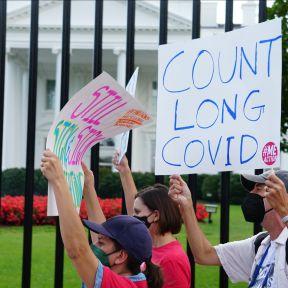
  • Solving the Pandemic After the Pandemic-
    Long COVID affects millions. It illustrates the need for a new medical paradigm.
    Reviewed by Tyler Woods

    KEY POINTS-
    Long COVID research has been pioneered by patients, with the medical establishment playing catch-up.
    A new paradigm for patient-centered health care is emerging, emboldened by new technological advances.
    A new bottom-up approach for pursuing research could transform care for many hard-to-treat diseases.
    We now stand at the meeting of two eternities, to borrow a line from Henry David Thoreau: the past and future.

    That is the present moment.
    On May 11, the Biden administration is slated to end the public health emergency for the COVID-19 pandemic. But although certain government services will end, the virus won't stop replicating and spreading, and its long-term effects on our immune systems still carry the same level of risk.

    For tens of millions of people around the world, "the pandemic after the pandemic" is well underway.

    Study after study shows that 10 to 30 percent of those infected with COVID-19 go on to develop symptoms of long COVID, including debilitating fatigue, post-exertional malaise, and brain fog, among as many as 200 other symptoms. A study from Harvard economist David Cutler estimates the long-term economic toll of long COVID at $3.7 trillion in the U.S. alone, a number that is on par with the Great Recession.

    In shifting to this new phase of the pandemic, it's essential to refocus an all-of-society endeavor to offer treatments, services, and support for COVID long-haulers to preserve their dignity and their dreams.

    As a society, we have always rallied to visions at the frontiers of the imagination: staring down the totalitarian menace in Europe during World War II, landing on the moon, and developing a vaccine in record time to quell the tide of a global pandemic. That's the magic of thinking big.

    But just as we developed public-private vaccine distribution through Operation Warp Speed, we need a similarly ambitious set of policies to reckon with the long tail of the virus, how it's etched itself into the lives of tens of millions around the world in myriad ways seen and unseen. Many have debilitating symptoms that never left them after their infection; others carry invisible organ damage that leaves them vulnerable to sudden heart attacks or strokes years from now.

    We need an Operation Warp Speed for long COVID.
    As the public health emergency is set to end, there is no more important time in a generation to be evaluating how many important lessons the pandemic has taught us about ourselves and society, and how we can leverage this moment toward a new, better normal for science and health equity. So far, innovative patient groups were the first to research and write "the first textbook on long COVID," as the Los Angeles Times put it.

    What they’ve taught us is a method for rethinking biomedicine more broadly and pursuing cures across all diseases.

    Reinventing medicine, with patients at the center
    In short, we may need an entirely new paradigm for how we think about medicine.

    The idea of a "paradigm shift" was coined by philosopher Thomas Kuhn, in his book, The Structure of Scientific Revolutions. At inflection points in history, new ways of gathering or processing or even thinking about data radically rewrite the rules of the scientific enterprise itself.

    New technology has spurred breathtaking new revolutions from the Human Genome Project, advances in supercomputing and big data, blockchain and Web 3.0, and most recently the blossoming possibilities of generative AI. Patients are likewise empowered in ways never seen in human history: we can use social media to form support groups across the globe while ill in bed, we can build our own patient registries to partner with research labs, and can generate our own data through smart watches, Oura rings, or other wearable devices. And new platforms even enable us to organize our own clinical trials.

    All these changes add up to the full coming-of-age for precision medicine. This personalized approach is becoming more accessible to every man, woman, and child, with costs falling exponentially, and access to these technologies available through the iPhone in your pocket.

    This new paradigm can and should be a patient-centered paradigm.

    From a different vantage point, that was also the message from Psychology Today editor-at-large Hara Marano, after she wrote a harrowing feature story delving into the depths of physician burnout, and how it was leading higher rates of suicide among people who had dedicated their lives to health care.

    But in their own way, the healers are hurting as much as the sick. Doctors allocate their time into 15-minute appointments, becoming cogs in a machine meant to fully optimize bureaucratic “relative value units” rather than to connect with a fellow human being in need. Constrained by the system, this leads to what’s called "moral injury." That’s when an individual is compelled to respond to or witness a system that runs contrary to their own ethical beliefs.

    Studies from the American Medical Association show that 80 percent of physicians report burnout, and suicide rates among doctors outpace those in the general population. In short, a failure to embrace this more human-centered frame puts not just patients’ lives at risk, but physicians' lives as well.

    But most importantly, forging a more humane way of thinking for doctors and patients can liberate all of us.

    Welcome to the Revolution
    In this new column, "Patient Revolution," I'll be chronicling these stories at the front lines of science and democracy. It's a breathtaking time to be alive, to be a science writer, and to have a foothold in helping forge the next generation of policies that can improve the lives of potentially billions of people around the world.

    I'm excited to share the first volley of stories: in the coming weeks, I'll delve more into the movement to treat long COVID, the tales of those who laid the groundwork for the patient-led movement, and the stories of communities who are forging the new paradigm in medicine.

    The human need is being met by patient entrepreneurs with long COVID who are creating new apps to track and manage symptoms, generating bottom-up solutions with patients rightfully claiming the mantle of true expertise. We'll explore how the Biden administration's new long COVID health report lays out a roadmap to use long COVID as a catalyst to roll out human-centered design principles across the health care system.

    COVID long-haulers are just the latest example of how patients have harnessed emerging technologies to take back their own agency in medicine. I'll take you into some seminal experiences over the past decade through the Stanford Medicine X community with dozens of "ePatient Scholars"—such as a philosopher with brain cancer and a quadriplegic artist with multiple sclerosis—all challenged the health system to be better. I'll also peel back the curtain on my own creative process: I chronicled patients’ quest to change health care forever in my book The Long Haul. But it’s often not enough to just be a journalist covering the story. Stories cry out for action, and should compel us to roll our sleeves up to be part of the solution. I want every would-be creator to make their writing or art part of their own vision for their own future success or for inaugurating a better world.

    These stories are constantly unfolding, across disease and discipline and demographic. The Wall Street Journal's Amy Dockser Marcus recently published the book We The Scientists, illustrating how families with children afflicted by the rare and deadly Niemann-Pick disease organized clinical trials to race toward a cure. Those families were pursuing their game-changing work, just as Brian Wallach, an alum of the Obama '08 campaign, was being diagnosed with ALS, the same terminal disease that felled baseball great Lou Gehrig and physicist Stephen Hawking. Determined to change that trajectory for himself and thousands of future patients, Wallach decided to tackle his medical care like a presidential campaign, galvanizing ALS advocates and leading toward a landmark $100 million bill signed into law that could transform ALS treatments. As Politico put it in a headline, "He was given six months to live. Then he changed DC." I believe that these sorts of moments can become the norm, rather than the exception.

    At every step, this patient-led innovation requires relentless optimism, constant drive, and an unyielding audacity to change our own lives.

    "If you hang out with the cowboys and the rebels and the pioneers, you will see the future faster," says Susannah Fox, a former chief technology officer for the U.S. Department of Health and Human Services, and the author of an upcoming book called Rebel Health.

    Come hang out with me. And let's go see the future together.

    Solving the Pandemic After the Pandemic- Long COVID affects millions. It illustrates the need for a new medical paradigm. Reviewed by Tyler Woods KEY POINTS- Long COVID research has been pioneered by patients, with the medical establishment playing catch-up. A new paradigm for patient-centered health care is emerging, emboldened by new technological advances. A new bottom-up approach for pursuing research could transform care for many hard-to-treat diseases. We now stand at the meeting of two eternities, to borrow a line from Henry David Thoreau: the past and future. That is the present moment. On May 11, the Biden administration is slated to end the public health emergency for the COVID-19 pandemic. But although certain government services will end, the virus won't stop replicating and spreading, and its long-term effects on our immune systems still carry the same level of risk. For tens of millions of people around the world, "the pandemic after the pandemic" is well underway. Study after study shows that 10 to 30 percent of those infected with COVID-19 go on to develop symptoms of long COVID, including debilitating fatigue, post-exertional malaise, and brain fog, among as many as 200 other symptoms. A study from Harvard economist David Cutler estimates the long-term economic toll of long COVID at $3.7 trillion in the U.S. alone, a number that is on par with the Great Recession. In shifting to this new phase of the pandemic, it's essential to refocus an all-of-society endeavor to offer treatments, services, and support for COVID long-haulers to preserve their dignity and their dreams. As a society, we have always rallied to visions at the frontiers of the imagination: staring down the totalitarian menace in Europe during World War II, landing on the moon, and developing a vaccine in record time to quell the tide of a global pandemic. That's the magic of thinking big. But just as we developed public-private vaccine distribution through Operation Warp Speed, we need a similarly ambitious set of policies to reckon with the long tail of the virus, how it's etched itself into the lives of tens of millions around the world in myriad ways seen and unseen. Many have debilitating symptoms that never left them after their infection; others carry invisible organ damage that leaves them vulnerable to sudden heart attacks or strokes years from now. We need an Operation Warp Speed for long COVID. As the public health emergency is set to end, there is no more important time in a generation to be evaluating how many important lessons the pandemic has taught us about ourselves and society, and how we can leverage this moment toward a new, better normal for science and health equity. So far, innovative patient groups were the first to research and write "the first textbook on long COVID," as the Los Angeles Times put it. What they’ve taught us is a method for rethinking biomedicine more broadly and pursuing cures across all diseases. Reinventing medicine, with patients at the center In short, we may need an entirely new paradigm for how we think about medicine. The idea of a "paradigm shift" was coined by philosopher Thomas Kuhn, in his book, The Structure of Scientific Revolutions. At inflection points in history, new ways of gathering or processing or even thinking about data radically rewrite the rules of the scientific enterprise itself. New technology has spurred breathtaking new revolutions from the Human Genome Project, advances in supercomputing and big data, blockchain and Web 3.0, and most recently the blossoming possibilities of generative AI. Patients are likewise empowered in ways never seen in human history: we can use social media to form support groups across the globe while ill in bed, we can build our own patient registries to partner with research labs, and can generate our own data through smart watches, Oura rings, or other wearable devices. And new platforms even enable us to organize our own clinical trials. All these changes add up to the full coming-of-age for precision medicine. This personalized approach is becoming more accessible to every man, woman, and child, with costs falling exponentially, and access to these technologies available through the iPhone in your pocket. This new paradigm can and should be a patient-centered paradigm. From a different vantage point, that was also the message from Psychology Today editor-at-large Hara Marano, after she wrote a harrowing feature story delving into the depths of physician burnout, and how it was leading higher rates of suicide among people who had dedicated their lives to health care. But in their own way, the healers are hurting as much as the sick. Doctors allocate their time into 15-minute appointments, becoming cogs in a machine meant to fully optimize bureaucratic “relative value units” rather than to connect with a fellow human being in need. Constrained by the system, this leads to what’s called "moral injury." That’s when an individual is compelled to respond to or witness a system that runs contrary to their own ethical beliefs. Studies from the American Medical Association show that 80 percent of physicians report burnout, and suicide rates among doctors outpace those in the general population. In short, a failure to embrace this more human-centered frame puts not just patients’ lives at risk, but physicians' lives as well. But most importantly, forging a more humane way of thinking for doctors and patients can liberate all of us. Welcome to the Revolution In this new column, "Patient Revolution," I'll be chronicling these stories at the front lines of science and democracy. It's a breathtaking time to be alive, to be a science writer, and to have a foothold in helping forge the next generation of policies that can improve the lives of potentially billions of people around the world. I'm excited to share the first volley of stories: in the coming weeks, I'll delve more into the movement to treat long COVID, the tales of those who laid the groundwork for the patient-led movement, and the stories of communities who are forging the new paradigm in medicine. The human need is being met by patient entrepreneurs with long COVID who are creating new apps to track and manage symptoms, generating bottom-up solutions with patients rightfully claiming the mantle of true expertise. We'll explore how the Biden administration's new long COVID health report lays out a roadmap to use long COVID as a catalyst to roll out human-centered design principles across the health care system. COVID long-haulers are just the latest example of how patients have harnessed emerging technologies to take back their own agency in medicine. I'll take you into some seminal experiences over the past decade through the Stanford Medicine X community with dozens of "ePatient Scholars"—such as a philosopher with brain cancer and a quadriplegic artist with multiple sclerosis—all challenged the health system to be better. I'll also peel back the curtain on my own creative process: I chronicled patients’ quest to change health care forever in my book The Long Haul. But it’s often not enough to just be a journalist covering the story. Stories cry out for action, and should compel us to roll our sleeves up to be part of the solution. I want every would-be creator to make their writing or art part of their own vision for their own future success or for inaugurating a better world. These stories are constantly unfolding, across disease and discipline and demographic. The Wall Street Journal's Amy Dockser Marcus recently published the book We The Scientists, illustrating how families with children afflicted by the rare and deadly Niemann-Pick disease organized clinical trials to race toward a cure. Those families were pursuing their game-changing work, just as Brian Wallach, an alum of the Obama '08 campaign, was being diagnosed with ALS, the same terminal disease that felled baseball great Lou Gehrig and physicist Stephen Hawking. Determined to change that trajectory for himself and thousands of future patients, Wallach decided to tackle his medical care like a presidential campaign, galvanizing ALS advocates and leading toward a landmark $100 million bill signed into law that could transform ALS treatments. As Politico put it in a headline, "He was given six months to live. Then he changed DC." I believe that these sorts of moments can become the norm, rather than the exception. At every step, this patient-led innovation requires relentless optimism, constant drive, and an unyielding audacity to change our own lives. "If you hang out with the cowboys and the rebels and the pioneers, you will see the future faster," says Susannah Fox, a former chief technology officer for the U.S. Department of Health and Human Services, and the author of an upcoming book called Rebel Health. Come hang out with me. And let's go see the future together.

    0 Commenti 0 condivisioni 5K Views 0 Anteprima
Sponsorizzato
google-site-verification: google037b30823fc02426.html