Blog

  • Are religious communities being instrumentalized as electoral blocs rather than treated as equal citizens?

    Religious Communities as Electoral Blocs: Instrumentalization versus Citizenship in Modern Democracies
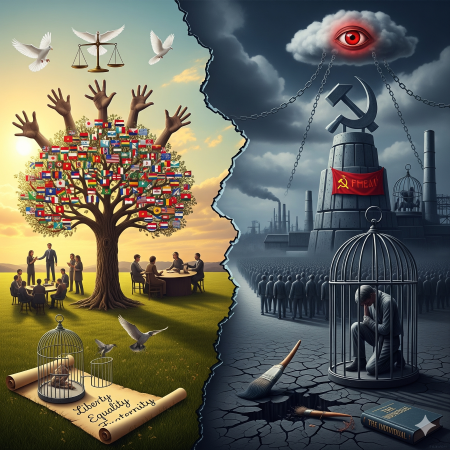
    Religious communities have historically played significant roles in shaping political landscapes, influencing public policy, and contributing to civic life. However, in contemporary democracies, there is growing concern that these communities are increasingly being instrumentalized as electoral blocs, treated not primarily as collections of citizens with individual rights and responsibilities, but as politically valuable constituencies to be courted, mobilized, or even manipulated. This dynamic raises serious questions about the integrity of democratic participation, the equality of citizenship, and the ethical boundaries of political engagement with religious groups.

    At the core of this issue is the tension between two conceptualizations of religious communities. On one hand, they are social and spiritual networks whose members are autonomous citizens, each with rights and duties under the law. On the other, they are politically attractive demographic groups, often identifiable by shared beliefs, practices, and social institutions, which can be leveraged to deliver predictable voting patterns. In highly competitive political systems, where margins of victory are narrow, parties may view organized religious communities less as independent citizens and more as tools for electoral gain. This instrumentalization manifests in multiple ways, including targeted policy promises, preferential treatment, strategic alliances, and the mobilization of religious authority to influence voting behavior.

    One prominent example is the practice of โ€œvote-bankingโ€ in countries with highly organized religious communities. In this context, political actors actively seek endorsements from religious leaders or institutions, framing policy platforms in ways designed to appeal to specific sectarian or denominational interests. The emphasis is often on securing collective compliance from adherents, rather than engaging them as independent voters capable of critical evaluation. For instance, in some Western democracies, parties have courted evangelical Christian groups with promises on social issues such as abortion, religious education, or family law, while simultaneously neglecting other policy areas that affect those communities. Similarly, in countries with religious pluralism, parties may selectively provide resources, protections, or privileges to certain communities to ensure political loyalty, creating asymmetries in citizenship rights and undermining the principle of equal treatment under the law.

    Instrumentalization is not confined to policy promises or campaign strategiesโ€”it also includes the use of religious networks for voter mobilization. Political parties often invest in ground-level outreach through religious institutions, utilizing churches, mosques, temples, or synagogues as venues for political messaging. While this can increase civic participation, it blurs the line between voluntary engagement and organized political influence. When religious leaders become conduits for partisan messaging, congregants may face implicit pressure to align their votes with the preferences of the institution, rather than exercising independent judgment. This dynamic risks reducing individual agency, treating members of religious communities primarily as units of political capital rather than as autonomous citizens.

    Another dimension of concern is the selective engagement of religious communities based on perceived electoral value. Governments and political parties may actively engage communities believed to be supportive, while ignoring or marginalizing others deemed less politically advantageous. This selective approach undermines the principle of universal civic equality, creating a stratified system in which the political influence of citizens is mediated by the collective electoral utility of their religious affiliation. Over time, this can contribute to political polarization along religious lines, eroding trust in institutions and increasing social fragmentation. In extreme cases, it may also incentivize the manipulation of religious identity for partisan purposes, fostering interfaith tensions and undermining social cohesion.

    The instrumentalization of religious communities has significant implications for the broader democratic fabric. Democracies are premised on the notion that all citizens are equal participants in political life, entitled to the protection of law and the freedom to express preferences without coercion. When religious communities are treated primarily as electoral blocs, these foundational principles are compromised. The process transforms democratic engagement from a rights-based framework into a transactional one, where political parties distribute favors, promises, or protections in exchange for votes. Such practices erode the legitimacy of both political institutions and religious authorities, as faith-based organizations risk being perceived as instruments of partisan strategy rather than as independent moral or spiritual actors.

    Yet, it is essential to recognize the nuances in this dynamic. Religious communities, like other social groups, have legitimate interests and concerns that may naturally intersect with politics. Engagement by political actors is not inherently illegitimate; advocacy for policy reforms or protection of religious freedoms can be both ethically and democratically sound. The problem arises when engagement becomes instrumentalizedโ€”when political actors prioritize electoral gain over substantive policy dialogue, and when religious communities are treated as means to an end rather than as partners in civic life. Distinguishing between legitimate representation and instrumentalization requires careful analysis of the methods, rhetoric, and incentives employed by political actors.

    Empirical evidence from multiple democracies suggests that instrumentalization is widespread. In the United States, evangelical Christian communities have been courted as a key voting bloc by conservative parties, often through concentrated messaging on moral and social issues, while other policy priorities such as economic equity or environmental policy receive less attention. In India, political parties have been observed to leverage caste and religious identities, using targeted promises and campaign outreach to secure predictable support from Hindu, Muslim, or Christian groups. In the United Kingdom and parts of Europe, political engagement with Muslim communities has sometimes focused on mobilizing support for specific parties or policies, rather than addressing broader civic concerns affecting those communities. Across these contexts, the pattern is consistent: religious communities are treated not primarily as equal citizens with diverse priorities, but as constituencies with quantifiable electoral value.

    The ethical consequences of this approach are profound. Instrumentalizing religious communities risks reinforcing identity politics, undermining social cohesion, and eroding faith in democratic institutions. It also places pressure on religious leaders, who may feel compelled to act as intermediaries for partisan interests, potentially compromising the spiritual mission of their institutions. Long-term, this dynamic can weaken civic culture, as citizens come to view participation as transactional rather than principled, and as political loyalty becomes increasingly tied to identity rather than informed deliberation.

    In conclusion, while religious communities play a vital role in civic life, there is growing evidence that many are being instrumentalized as electoral blocs rather than treated as equal citizens. Political parties often engage these communities strategically, leveraging collective identity to secure predictable voting outcomes, rather than fostering genuine dialogue or addressing the diverse concerns of individuals. This instrumentalization undermines democratic norms, distorts civic equality, and risks deepening social polarization. A healthy democracy requires that religious communities be recognized and engaged as autonomous participants, with rights and responsibilities equal to all citizens, rather than as tools for partisan advantage. Transparent, principled engagement is essential to preserve both the integrity of democratic institutions and the moral authority of religious organizations.
  • How often do governments openly assess the long-term cultural and civic consequences of large-scale irregular migration?

    Assessing the Long-Term Cultural and Civic Consequences of Large-Scale Irregular Migration: How Often Do Governments Engage?

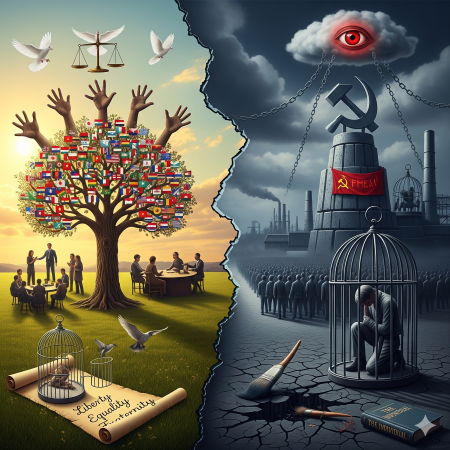
    Large-scale irregular migration presents profound challenges for governments worldwide, encompassing economic, social, security, and humanitarian dimensions. Beyond immediate policy concerns such as border control, labor markets, and refugee protection, there are deeper, long-term implications for national culture, civic cohesion, and social trust. Despite the stakes, governments rarely undertake systematic, transparent assessments of the long-term cultural and civic consequences of irregular migration, and when they do, the scope and depth of these assessments are often limited. This raises critical questions about policy efficacy, societal integration, and the sustainability of civic institutions in the face of ongoing demographic shifts.

    Irregular migration, by definition, involves the movement of people outside formal legal channels. It can occur through unauthorized border crossings, overstaying visas, or other methods that evade official oversight. Such migration differs from regular migration in both scale and unpredictability, complicating the task of anticipating societal impacts. Governments are typically reactive, focusing on enforcement, border security, and short-term humanitarian responses. While these are critical operational priorities, they rarely provide a framework for evaluating how mass irregular migration may transform civic norms, political participation, cultural identity, and social cohesion over decades.

    The primary reason governments rarely assess long-term cultural and civic consequences is political expediency. Migration is a contentious and highly politicized topic; decisions about border management and integration policies often prioritize immediate public sentiment and electoral considerations over long-term analysis. Conducting deep studies of cultural and civic impact can be politically sensitive, particularly if findings suggest that certain policies may exacerbate tensions or require unpopular interventions. For instance, acknowledging that large, concentrated populations of irregular migrants may struggle to integrate culturally, or may challenge existing civic institutions, could provoke public backlash, fuel xenophobia, or complicate diplomatic relationships. In such a politically charged environment, governments often prefer short-term, reactive strategies rather than long-term, analytical planning.

    When assessments of cultural and civic consequences do occur, they are often fragmented and indirect. Most governments rely on social science research conducted by independent academic institutions, think tanks, or international organizations such as the United Nations or the International Organization for Migration (IOM). These studies may evaluate integration outcomes, language acquisition, educational attainment, or civic participation, but they are rarely embedded into official policy-making in a comprehensive way. Moreover, many of these studies focus on regular migration or refugee populations under formal programs, leaving a significant gap in understanding the irregular sector. Consequently, policy decisions often proceed with incomplete knowledge, increasing the risk of unintended consequences for cultural cohesion and civic stability.

    Cultural impacts of irregular migration are particularly complex to measure. Culture encompasses language, values, traditions, norms, and collective identity, all of which evolve gradually. Large-scale irregular migration can introduce new cultural dynamics that challenge established norms, both enriching and straining existing societal frameworks. Governments seldom quantify these dynamics systematically, partly because cultural integration is difficult to operationalize in metrics. For instance, assessing whether migrant populations adopt local civic norms, respect social rules, or contribute to cultural institutions requires longitudinal studies spanning decadesโ€”an undertaking few governments are willing to commit to. Instead, cultural assessment often occurs post facto, through reactive policy adjustments after social tensions, political friction, or public backlash become visible.

    Civic consequences, including participation in democratic processes, adherence to the rule of law, and engagement in community institutions, are similarly under-assessed. Irregular migrants are often excluded from formal political participation due to legal restrictions, which limits the data available on their civic behavior. Governments rarely study how the presence of large irregular migrant populations influences overall social trust, volunteerism, neighborhood cohesion, or political polarization. Yet these factors are critical for the long-term sustainability of civic institutions. For example, areas with concentrated irregular migration may experience strain on local governance, public services, and educational systems, which can indirectly affect social cohesion and perceptions of fairness among long-term residents. Without systematic evaluation, policymakers risk underestimating these long-term civic challenges.

    Some governments have experimented with structured assessments, but these are exceptions rather than the rule. For example, European countries facing high inflows of irregular migrantsโ€”such as Germany during the 2015โ€“2016 refugee surgeโ€”commissioned studies on integration outcomes, language acquisition, and labor market participation. However, even in these cases, assessments were often limited to economic or educational metrics, with less emphasis on broader cultural or civic implications. Similarly, Canada and Australia, which have relatively managed immigration systems, conduct extensive long-term studies on the impact of legal immigration, but irregular migration remains a marginal focus due to its unpredictability and smaller scale in comparison. Overall, comprehensive, government-led evaluations that fully integrate cultural and civic dimensions remain rare globally.

    Another key challenge is methodological. Long-term effects are difficult to isolate, as cultural and civic outcomes are influenced by a multitude of variables including socioeconomic status, pre-existing social networks, urbanization patterns, and local governance quality. Separating the impact of irregular migration from broader social change is inherently complex, which discourages many governments from attempting formal analysis. Additionally, irregular migration is often politically sensitive, creating pressure to underreport or minimize its perceived effects. Governments may avoid producing studies that could be interpreted as criticism of immigration policies or as confirmation of politically inconvenient narratives.

    Despite these challenges, the stakes for neglecting long-term assessment are high. Failure to anticipate cultural and civic consequences can lead to fragmented communities, social tensions, political polarization, and erosion of trust in institutions. It may also create cycles of reactionary policy, where governments respond to crises after they emerge rather than proactively managing integration and cohesion. Moreover, long-term neglect undermines public confidence in the governmentโ€™s capacity to balance humanitarian obligations with social stability, fueling skepticism and social friction.

    In conclusion, governments rarely conduct systematic, comprehensive assessments of the long-term cultural and civic consequences of large-scale irregular migration. When evaluations do occur, they are often limited in scope, politically constrained, or focused on economic and logistical rather than cultural or civic dimensions. Political expediency, methodological complexity, and the sensitivity of migration as an issue contribute to this gap. While independent research can provide insights, the lack of formal, government-led analysis means that policy decisions are frequently reactive rather than proactive, leaving societies vulnerable to unanticipated social tensions and challenges to civic cohesion. The need for long-term, evidence-based assessment is clear: sustainable governance in an era of global migration requires foresight, transparency, and a willingness to address both the immediate and generational implications of population movement.

  • Political Power, Votes, and Demographic Strategy- To what extent are political parties using immigration policy primarily as a demographic voting strategy rather than a humanitarian or economic one?

    Political Power, Votes, and Demographic Strategy: Immigration as a Tool for Electoral Advantage

    Immigration policy is often framed publicly in terms of national security, humanitarian responsibility, or economic necessity. Governments and political parties typically present these policies as rational, ethical responses to societal needs. Yet, beneath the surface of public discourse, there is growing evidence that immigration policy is frequently deployed as a calculated demographic strategy to influence electoral outcomes. In essence, political actors in many democratic societies are not only shaping bordersโ€”they are also shaping the electorate itself, aligning demographic shifts with long-term political advantage.

    Political parties operate within the logic of vote maximization. In competitive democracies, particularly those where elections are closely contested, even small demographic shifts can significantly affect electoral results. The strategic deployment of immigration policy is one mechanism by which parties can attempt to engineer favorable electoral outcomes. This approach is rarely explicit, but it becomes visible in patterns of policy emphasis, rhetoric, and selective enforcement. For instance, some parties adopt pro-immigration stances when immigrant populations are politically aligned with their platform, while others frame immigration as a threat to mobilize voters resistant to demographic change. These strategies reveal a tension between the public reasoning for policyโ€”humanitarian aid, refugee resettlement, labor market needsโ€”and the political calculus that underpins it.

    One clear illustration of this phenomenon can be found in the United States, where both major parties have historically shifted positions on immigration in response to demographic trends. The Democratic Party, particularly in urban centers, has embraced more permissive immigration policies, recognizing that immigrant communities and their descendants increasingly constitute a growing segment of the electorate. This trend has been supported by community organizing, voter registration drives, and efforts to ensure naturalized citizens participate in elections. By contrast, the Republican Party has leveraged restrictive immigration rhetoric as a means of consolidating support among predominantly white voters in suburban and rural districts. Here, immigration is framed less as an economic or humanitarian issue and more as a wedge issue to reinforce cultural identity and voter loyalty. The implication is clear: the electoral utility of immigration policy is often a primary driver, rather than the policyโ€™s ostensible humanitarian or economic rationale.

    Europe provides additional examples, particularly in countries facing significant inflows of refugees and migrants from Africa, the Middle East, and Asia. In nations such as Germany, France, and the United Kingdom, political parties have increasingly tailored their rhetoric and policy proposals to address the political salience of immigration. The rise of far-right and nationalist parties demonstrates how immigration can be politicized to generate electoral advantage, appealing to segments of the electorate concerned about cultural preservation, economic competition, or security threats. Conversely, progressive parties may support liberal immigration policies to strengthen their urban voter bases, cultivating long-term demographic advantages. These patterns suggest that immigration policies are rarely neutral instruments of governance; instead, they are often tactical mechanisms designed to reshape electoral constituencies.

    Demographic strategy through immigration is not confined to party rhetoricโ€”it also manifests in legislative and administrative decisions. Policies that favor certain skill sets, countries of origin, or family reunification categories can disproportionately benefit populations more likely to support one party over another. In some cases, preferential treatment in visa allocation, refugee resettlement, or citizenship pathways can be aligned, intentionally or inadvertently, with political objectives. For example, a country may prioritize highly skilled migrants who settle in metropolitan areas traditionally dominated by one political party, subtly influencing future voting patterns. The use of geographic and economic targeting in immigration policy underscores the intersection of electoral strategy and demographic engineering.

    Critically, the political instrumentalization of immigration raises profound ethical and democratic questions. When parties prioritize voter calculus over humanitarian or economic considerations, they risk undermining the moral legitimacy of immigration policy and eroding public trust in government institutions. Treating immigration primarily as a political tool can marginalize vulnerable populations, reduce policy transparency, and compromise the broader social cohesion that successful immigration integration requires. In addition, policies driven by electoral strategy are often reactive, producing short-term political gains while creating long-term societal tensions. For instance, restricting migration from certain regions to appeal to domestic voters may address immediate political objectives but exacerbate labor shortages, demographic imbalances, and international diplomatic frictions over time.

    Another dimension of this phenomenon is the use of immigration policy as a signaling mechanism to different voter constituencies. Political leaders often employ symbolic gestures, such as high-profile deportations or the facilitation of refugee admissions, not primarily to address practical challenges, but to demonstrate ideological alignment with target voter blocs. These actions serve as a form of political branding, reinforcing perceptions that a party is โ€œtoughโ€ on immigration or โ€œcompassionateโ€ toward migrants, depending on the desired electoral message. The strategic nature of these symbolic acts further emphasizes that the political utility of immigration policy can outweigh its practical or humanitarian rationales.

    It is important to note that the use of immigration policy as a demographic strategy is not universally negative or inherently cynical. Parties may genuinely believe that expanding or restricting immigration aligns with their broader vision of national prosperity or societal well-being. Yet, the evidence suggests that political calculations often dominate decision-making, particularly in highly competitive electoral environments. Even policies framed as morally or economically justified can carry latent political incentives, illustrating the complex interplay between principle and pragmatism in modern governance.

    In conclusion, immigration policy in contemporary democracies is increasingly shaped by political partiesโ€™ desire to influence electoral outcomes through demographic strategy. While humanitarian and economic rationales remain publicly emphasized, the patterns of policy-making, rhetoric, and selective enforcement reveal a clear political logic: parties seek to cultivate constituencies, consolidate support, and strategically manage demographic shifts. This instrumentalization of immigration highlights the profound influence of electoral politics on national policy, raising ethical questions about the treatment of migrants and the integrity of democratic governance. Understanding immigration policy as both a tool of governance and a mechanism of electoral strategy provides critical insight into the modern intersection of politics, demography, and power, underscoring the necessity of careful scrutiny of party motivations and the broader societal consequences of policy choices.

  • Does Nigeria Gain Strategic Leverageโ€”or Lose Autonomyโ€”by Hosting Foreign Military Coordination?

    Power Through Access or Power Through Control?

    Hosting foreign military coordination places Nigeria at a strategic crossroads. On one hand, access to external military resources, intelligence, training, and diplomatic backing can enhance Nigeriaโ€™s influence and deterrence capacity. On the other, hosting external coordination risks constraining Nigeriaโ€™s freedom of action, reshaping its security priorities, and embedding external interests into domestic decision-making.

    The dilemma is not binary. Nigeria can gain leverage and lose autonomy simultaneously. The net outcome depends not on the presence of foreign coordination itself, but on who controls the terms, duration, and scope of that coordination.


    1. The Case for Strategic Leverage

    1.1 Enhanced Deterrence and Capability

    Foreign military coordination can strengthen Nigeriaโ€™s:

    • Intelligence, surveillance, and reconnaissance capabilities
    • Counterterrorism effectiveness
    • Maritime domain awareness
    • Rapid response capacity

    This enhancement can translate into deterrent credibilityโ€”both against non-state threats and against destabilizing regional spillovers.

    In a region marked by insurgency, piracy, and transnational crime, such capacity boosts Nigeriaโ€™s strategic standing.


    1.2 Diplomatic Weight and Bargaining Power

    Hosting coordination often increases:

    • Diplomatic engagement
    • Access to high-level decision-makers
    • Leverage in bilateral and multilateral negotiations

    Nigeria can use this position to:

    • Shape regional security agendas
    • Extract concessions (training, equipment, intelligence access)
    • Influence external policy toward West Africa

    Strategic centrality can become diplomatic currency.


    1.3 Agenda-Setting in Regional Security

    If Nigeria defines the framework:

    • It can steer ECOWAS security architecture
    • Anchor multinational operations on its priorities
    • Serve as gatekeeper for regional engagement

    This allows Nigeria to act as a security broker, not merely a host.


    2. The Autonomy Costs

    2.1 Path Dependency and Strategic Drift

    Once coordination becomes routine:

    • Nigeria may rely on external assets
    • Alternatives atrophy
    • Withdrawal becomes costly

    Strategic choices narrowโ€”not by coercion, but by structural dependence.


    2.2 Externalization of Threat Perception

    Foreign partners often bring:

    • Their own threat models
    • Global strategic priorities
    • Intelligence-driven agendas

    Over time, Nigeria risks:

    • Adopting external threat hierarchies
    • Neglecting local root causes
    • Framing domestic issues through foreign lenses

    Autonomy erodes when problem definition is outsourced.


    2.3 Implicit Conditionalities

    Even without formal conditions:

    • Access can become leverage
    • Cooperation can imply alignment
    • Refusal can incur diplomatic or security costs

    This creates a soft constraint on policy independence.


    3. The Balance Sheet: Leverage vs. Autonomy

    DimensionLeverage GainAutonomy Risk
    IntelligenceBetter coverageDependence
    Military capacitySkill transferDoctrine capture
    DiplomacyHigher profileAlignment pressure
    Regional leadershipAgenda-settingPerceived proxy role
    Security outcomesShort-term gainsLong-term drift

    4. Historical Lessons

    History shows that:

    • States that set terms gain leverage
    • States that accept frameworks lose autonomy

    Autonomy loss is gradual, cumulative, and often invisible until it is entrenched.


    5. Conditions for Net Strategic Gain

    Nigeria gains leverage if it:

    • Retains command authority
    • Limits permanence
    • Diversifies partners
    • Maintains civilian oversight
    • Defines exit conditions

    Absent these, coordination becomes positioning.


    Conclusion: The Deciding Variable Is Control

    Hosting foreign military coordination is not inherently empowering or disempowering. It is instrumental. Whether Nigeria gains leverage or loses autonomy depends on one decisive factor: control.

    • Control over mission definition
    • Control over infrastructure
    • Control over intelligence priorities
    • Control over duration

    If Nigeria controls these, coordination enhances leverage.
    If others do, autonomy erodes.

    In geopolitics, access is powerโ€”but control determines who wields it.

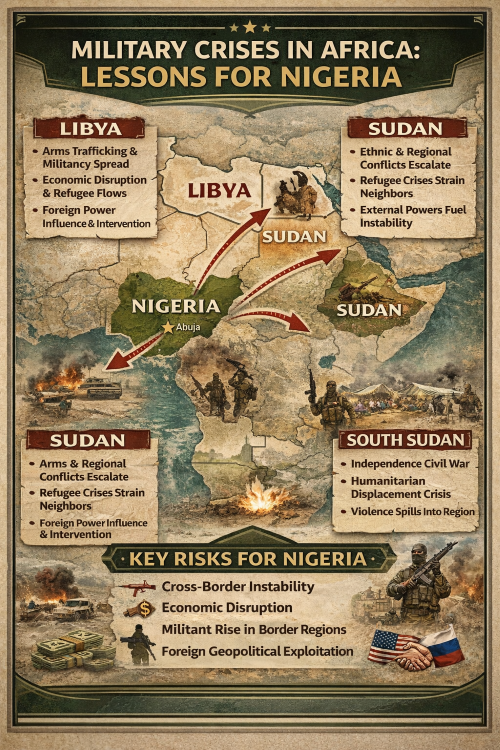
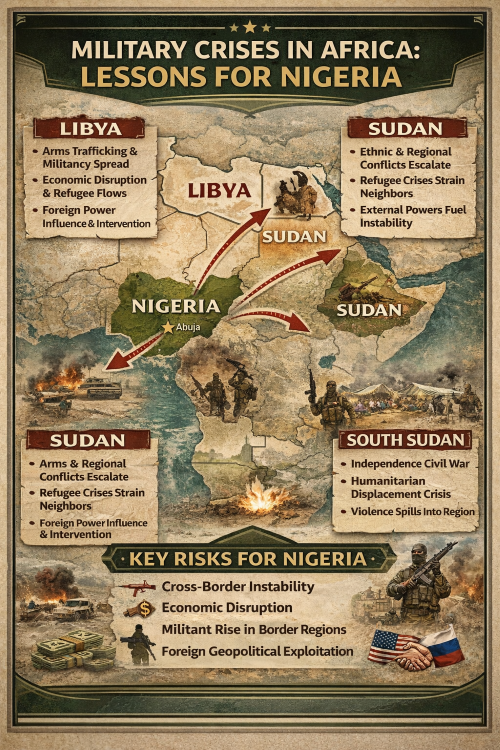
  • What Risks Does Nigeria Face If It Becomes a Staging Ground for External Power Contests?

    From Partner to Platform

    Nigeriaโ€™s scale, geography, and regional leadership make it an attractive security partner. But there is a critical difference between being a partner in security cooperation and becoming a platform for external power competition. When major powersโ€”whether Western, Eastern, or emergingโ€”begin to view a country not primarily as a sovereign actor but as a staging ground, the nature of engagement changes fundamentally.

    In such situations, local security challenges become entangled with global rivalries. Decisions are no longer evaluated solely by their benefit to Nigeriaโ€™s internal stability, but by how they serve broader strategic contests. History shows that states occupying this role often experience security paradoxes: more foreign attention, yet less autonomous control; more military presence, yet greater insecurity.

    For Nigeria, the risks are not theoretical. They are structural, cumulative, and potentially long-lasting.


    1. Loss of Strategic Autonomy

    The most profound risk is the erosion of decision-making independence.

    When external powers rely on Nigeria as a staging ground:

    • Nigerian security priorities may be subtly reframed to align with partner interests
    • Threat definitions can be externalized
    • Policy options narrow due to implicit expectations

    Even without formal alliances, path dependency emerges. Nigeria may find it difficult to refuse requests for access, overflight, basing, or intelligence cooperation without risking diplomatic or security repercussions.

    Over time, autonomy is not lost through treaties, but through habitual compliance.


    2. Becoming a Proxy Arena Without Consent

    External power contests rarely remain abstract. When rival powers compete for influence:

    • Intelligence operations expand
    • Information warfare intensifies
    • Diplomatic pressure increases
    • Covert activities multiply

    Nigeria risks becoming a proxy environmentโ€”not because it chooses conflict, but because it offers strategic value.

    In such scenarios:

    • Nigerian territory can be used to monitor or counter other powers
    • Domestic institutions may be penetrated by competing external interests
    • Internal political debates become internationalized

    The danger is not open warfare, but persistent low-level contestation that destabilizes governance.


    3. Heightened Security Threats and Retaliation Risks

    A staging ground attracts attention from adversaries.

    If Nigeria is perceived as hosting or enabling external military operations:

    • It may become a target for asymmetric retaliation
    • Extremist groups may reframe Nigeria as an extension of foreign powers
    • Cyber, economic, or information attacks may increase

    This risk is particularly acute in:

    • Urban centers
    • Critical infrastructure
    • Energy and transport hubs
    • Diplomatic and military facilities

    Ironically, the presence intended to enhance security can expand the threat envelope.


    4. Internal Legitimacy and Public Trust Erosion

    Nigeriaโ€™s internal cohesion is already under strain from:

    • Economic inequality
    • Regional grievances
    • Ethno-religious tensions
    • Distrust in institutions

    Foreign military entanglement can:

    • Fuel narratives of neo-imperialism
    • Undermine public confidence in national leadership
    • Polarize civil-military relations

    If citizens perceive that:

    • Security decisions are externally driven
    • Sovereignty is compromised
    • National interests are subordinated

    then domestic legitimacy erodesโ€”even if tangible benefits exist.


    5. Militarization of Domestic Politics

    When Nigeria becomes strategically valuable to external powers:

    • Security institutions gain disproportionate influence
    • Military cooperation can overshadow civilian oversight
    • Defense priorities may crowd out social investment

    This creates a military-first policy bias, where:

    • Political problems are framed as security threats
    • Dialogue and reform are deprioritized
    • Long-term development is deferred

    Over time, this undermines democratic consolidation and governance balance.


    6. Distortion of Nigeriaโ€™s Regional Leadership Role

    Nigeriaโ€™s influence in West Africa depends on perceived impartiality and legitimacy.

    As a staging ground:

    • Nigeria may be seen as advancing external agendas
    • Smaller states may distrust Nigerian initiatives
    • ECOWAS cohesion could weaken

    Rather than being a consensus-builder, Nigeria risks being viewed as:

    • An enforcer
    • A proxy leader
    • A conduit for external pressure

    This would erode decades of diplomatic capital built through peacekeeping and mediation.


    7. Strategic Overextension of Nigeriaโ€™s Military

    Hosting external power contests often entails:

    • Increased operational tempo
    • Expanded intelligence responsibilities
    • Higher expectations of support

    Nigeriaโ€™s armed forces already face:

    • Multiple internal security challenges
    • Resource constraints
    • Personnel fatigue

    Overextension risks:

    • Reduced effectiveness domestically
    • Dependency on external logistics
    • Long-term institutional strain

    A military stretched thin becomes less capable, not more.


    8. Economic and Developmental Opportunity Costs

    Security partnerships often promise:

    • Aid
    • Training
    • Investment

    But staging-ground status can also:

    • Redirect public funds toward security
    • Deter non-aligned investors
    • Increase insurance and risk premiums
    • Tie infrastructure to military rather than civilian needs

    The opportunity cost is subtle but real: development postponed in favor of security maintenance.


    9. Legal and Sovereignty Ambiguities

    External power presence often operates in:

    • Grey legal zones
    • Classified agreements
    • Executive-level understandings

    This creates risks such as:

    • Lack of parliamentary oversight
    • Jurisdictional ambiguity
    • Immunity disputes
    • Accountability gaps

    Once normalized, such arrangements are difficult to reverse without diplomatic friction.


    10. Difficulty Exiting the Role Once Entrenched

    Perhaps the most underestimated risk is irreversibility.

    Once Nigeria becomes embedded as a staging ground:

    • Withdrawal requests provoke pressure
    • Infrastructure remains
    • Intelligence systems persist
    • Expectations harden

    Exiting later may require:

    • Political confrontation
    • Economic trade-offs
    • Security recalibration

    History shows that it is far easier to enter strategic centrality than to leave it.


    11. Strategic Reputation Lock-In

    Nigeria risks being labeled internationally as:

    • A security state
    • A military hub
    • A frontline country in global contests

    This reputation can:

    • Shape future diplomatic options
    • Influence foreign investment
    • Constrain strategic neutrality

    Reputations in geopolitics are sticky.


    12. The Core Strategic Paradox

    The paradox Nigeria faces is this:

    The more strategically useful Nigeria becomes to external powers,
    the greater the risk that its own strategic freedom diminishes.

    Power attracts attention. Attention attracts contestation. Contestation invites entanglement.


    Conclusion: Agency Is the Only Protection

    Becoming a staging ground is not inherently disastrousโ€”but it is inherently dangerous without firm national control.

    The risks Nigeria faces are not simply military. They are:

    • Political
    • Institutional
    • Economic
    • Psychological
    • Reputational

    The decisive factor is agency:

    • Who defines the mission?
    • Who controls the infrastructure?
    • Who sets the exit conditions?
    • Who bears the long-term costs?

    Nigeriaโ€™s strength lies not just in its size, but in its ability to say no, set terms, and diversify relationships.

    In an era of intensifying global competition, the difference between leadership and leverage will determine whether Nigeria emerges as a sovereign regional powerโ€”or becomes a contested platform in other nationsโ€™ strategies.

    History is clear:
    Countries that fail to manage this boundary do not lose sovereignty all at once.
    They lose it incrementally, invisibly, and structurally.

  • Nigeria as a Strategic Launchpad- Why is Nigeria uniquely positioned as a military and logistical hub in West Africa?

    Nigeria as a Strategic Launchpad

    Why Nigeria Is Uniquely Positioned as a Military and Logistical Hub in West Africa

    Beyond Sizeโ€”Toward Strategic Centrality

    Nigeriaโ€™s importance in West Africa is often reduced to numbers: population size, GDP, oil production, or troop contributions to peacekeeping missions. While these factors matter, they do not fully explain why Nigeria repeatedly emergesโ€”implicitly or explicitlyโ€”as a preferred military and logistical anchor for external powers operating in West Africa.

    Nigeriaโ€™s true value lies not just in its scale, but in its geostrategic geometry. It sits at the intersection of coastal access, Sahelian depth, demographic mass, infrastructure density, and regional legitimacy. These attributes combine to make Nigeria not merely another partner state, but a strategic launchpadโ€”a platform from which influence, logistics, and security operations can radiate across West Africa and into the Sahel.


    1. Geographic Centrality: Nigeria as the Pivot State

    Nigeria occupies a central hinge position in West Africa:

    • It borders four countries directly (Benin, Niger, Chad, Cameroon)
    • It lies between the Atlantic coast and the Sahel
    • It straddles multiple ecological and security zones: coastal, forest, savannah, and semi-arid

    This geography allows Nigeria to function as:

    • A coastal gateway for maritime access
    • A land bridge into the Sahel
    • A buffer zone between fragile inland states and the Gulf of Guinea

    From a military planning perspective, Nigeria enables multi-directional reach. Forces, supplies, intelligence assets, and communications based in Nigeria can support operations westward (Benin, Togo, Ghana), northward (Niger, Chad), eastward (Cameroon, Lake Chad Basin), and offshore (Gulf of Guinea).

    No other West African country offers this combination of depth, access, and centrality.


    2. Demographic and Human Capital Depth

    With over 200 million people, Nigeria provides:

    • A vast recruitment base
    • A large pool of technical, engineering, and logistics personnel
    • Indigenous language, cultural, and regional knowledge critical for operations

    For external military actors, Nigeria offers something rare: scale without total dependency. Unlike smaller states, Nigeria can host or cooperate without appearing as a client state. This creates political cover for sustained engagement.

    Additionally:

    • Nigerian officers have extensive experience in multinational operations
    • The country has produced generations of military leadership integrated into regional and global security networks

    This human capital reduces the transaction cost of coordination and integration.


    3. Infrastructure Density: Ports, Roads, Airfields, and Networks

    Nigeriaโ€™s infrastructureโ€”though uneven and often strainedโ€”is denser and more diversified than that of its neighbors.

    Key assets include:

    • Major seaports (Lagos, Port Harcourt, Onne)
    • Multiple international airports with heavy-lift capability
    • Extensive road networks linking coast to interior
    • Telecommunications and energy infrastructure supporting command and control

    From a logistical standpoint, Nigeria allows:

    • Rapid importation of equipment
    • Storage and redistribution of supplies
    • Rotation of personnel
    • Medical evacuation and sustainment operations

    In contrast, Sahelian states often lack:

    • Reliable ports
    • Redundant airfields
    • Secure supply corridors

    This makes Nigeria the rear logistics base even when operations occur elsewhere.


    4. Existing Military Capacity and Regional Legitimacy

    Nigeria possesses the largest and most experienced military force in West Africa. While not without challenges, its armed forces have:

    • Combat experience across multiple theaters
    • Institutional familiarity with counterinsurgency and peacekeeping
    • Command structures capable of coordinating multinational forces

    Crucially, Nigeriaโ€™s leadership role in:

    • ECOWAS
    • ECOMOG
    • African Union missions

    provides regional legitimacy that external powers cannot generate independently.

    Operating with Nigeria often appears more acceptable than operating over Nigeria.


    5. Nigeria as the Anchor of ECOWAS Security Architecture

    Nigeria is the de facto security backbone of ECOWAS.

    • It contributes the majority of troops and funding
    • It shapes regional security doctrine
    • It provides political leadership during crises

    This means that any external military coordination with ECOWAS implicitly passes through Nigeriaโ€”either formally or informally.

    For external powers, Nigeria functions as:

    • A gatekeeper state
    • A legitimizing intermediary
    • A bridge between national and regional frameworks

    This role magnifies Nigeriaโ€™s strategic value far beyond its borders.


    6. Maritime Significance: The Gulf of Guinea Factor

    Nigeria anchors the Gulf of Guinea, one of the worldโ€™s most strategic maritime zones:

    • Major energy shipping lanes
    • Critical undersea communication cables
    • High-volume commercial traffic
    • Persistent piracy and maritime insecurity risks

    Control, monitoring, or cooperation in Nigerian waters enables:

    • Maritime domain awareness across the Gulf
    • Protection of global trade routes
    • Surveillance of offshore energy infrastructure

    Any power concerned with maritime security in West Africa must engage Nigeriaโ€”not as an option, but as a necessity.


    7. Security Spillover Dynamics: Nigeria as Containment Hub

    Nigeria sits adjacent to multiple security fault lines:

    • Lake Chad Basin insurgency
    • Sahelian instability
    • Cross-border banditry
    • Maritime crime

    Because threats spill into Nigeria rather than solely from it, external military cooperation can be framed as defensive and stabilizing, even when it enables regional reach.

    This makes Nigeria an ideal containment hub:

    • Threats are addressed before reaching coastal or global trade nodes
    • Operations can be justified under mutual defense

    8. Political Weight and Strategic Ambiguity

    Nigeria maintains a tradition of strategic non-alignment rhetoric, even while cooperating with multiple global powers.

    This ambiguity is valuable:

    • It allows external powers to engage without forcing Nigeria into overt alliance blocs
    • It enables Nigeria to host cooperation without formal basing agreements
    • It reduces domestic backlash compared to smaller, more visibly dependent states

    From a strategic perspective, Nigeria offers access without overt alignmentโ€”a highly prized condition in competitive geopolitical environments.


    9. Why Nigeria, Not the Sahel, Becomes the Launchpad

    Recent history shows that Sahelian states are:

    • Politically volatile
    • Resistant to prolonged foreign military presence
    • Increasingly nationalist in response to perceived external control

    Nigeria, by contrast:

    • Retains institutional continuity
    • Has stronger civilian-military structures
    • Possesses diplomatic resilience

    Thus, while operations may target the Sahel, Nigeria becomes the staging ground.


    10. The Strategic Risk for Nigeria

    This positioning is not cost-free.

    Risks include:

    • Becoming entangled in external power competition
    • Internal backlash against perceived loss of sovereignty
    • Being targeted by groups reacting to external presence
    • Strategic overextension of Nigeriaโ€™s own security forces

    The difference between leadership and leverage depends on Nigeriaโ€™s ability to set terms, not merely host cooperation.


    Conclusion: Nigeria as Platform, Not Periphery

    Nigeriaโ€™s role as a military and logistical hub is not accidental. It is the product of:

    • Geographic centrality
    • Demographic depth
    • Infrastructure scale
    • Military capacity
    • Regional legitimacy
    • Political weight

    Together, these factors make Nigeria less a frontline battlefield and more a strategic platformโ€”a launchpad from which security, influence, and power can be projected across West Africa.

    The decisive question going forward is not whether Nigeria will be used as such a hub, but whether Nigeria will shape that role deliberatelyโ€”or have it shaped for it.

    In geopolitics, launchpads are never neutral. They are either instruments of agency or objects of positioning.

  • At What Point Does โ€œSecurity Cooperationโ€ Become Strategic Positioning?

    The Thin Line Between Assistance and Advantage

    โ€œSecurity cooperationโ€ is among the most frequently used phrases in contemporary international relations. It conveys reassurance: partnership, capacity-building, mutual benefit, and respect for sovereignty. Yet history and practice reveal that security cooperation is often not an endpoint, but a means. The same activitiesโ€”training, joint exercises, intelligence sharing, basing accessโ€”can either strengthen a partnerโ€™s security or gradually embed an external powerโ€™s strategic interests into the host stateโ€™s security architecture.

    The critical question is not whether security cooperation can be benign, but when it ceases to be primarily cooperative and becomes strategic positioning. The transition is usually subtle, incremental, and officially denied while it is happening.


    1. Defining the Two Concepts

    Security Cooperation

    Security cooperation, in its narrow sense, refers to:

    • Training and professionalization of local forces
    • Intelligence and information sharing
    • Limited joint exercises
    • Equipment transfers for defensive purposes
    • Advisory roles without operational command

    Its defining features are:

    • Host-nation primacy
    • Time-bound or task-specific engagement
    • No permanent foreign force posture
    • Clear alignment with domestic security needs

    Strategic Positioning

    Strategic positioning involves:

    • Establishing long-term military access
    • Forward basing or pre-positioned assets
    • Persistent intelligence, surveillance, and reconnaissance (ISR)
    • Shaping local doctrine, procurement, and threat perception
    • Leveraging security ties for geopolitical influence

    The difference is not the activity but the intent, duration, and structural consequences.


    2. The Inflection Point: When the Mission Stops Being Symmetric

    Security cooperation becomes strategic positioning when the relationship shifts from mutual support to asymmetric dependence.

    This occurs when:

    • One partner becomes indispensable to the otherโ€™s security
    • Withdrawal would cause institutional collapse or major instability
    • Decision-making authority migrates informally to the external actor

    At this point, the host state is no longer simply receiving assistanceโ€”it is hosting influence.


    3. The Five Structural Markers of Transition

    1. Permanence Replaces Temporariness

    The most reliable indicator is time.

    • Short-term training missions can be cooperative.
    • Indefinite deployments signal positioning.

    When no clear exit conditions exist, security cooperation has crossed into strategic posture. Temporary arrangements become normalized, and โ€œrenewalsโ€ replace conclusions.


    2. Infrastructure Outlives the Threat

    Security cooperation becomes strategic positioning when:

    • Bases, logistics hubs, or airstrips remain after the original threat changes
    • Facilities are upgraded beyond immediate needs
    • Assets serve regional rather than local security purposes

    Infrastructure is never neutral. It anchors presence and enables power projection.


    3. Intelligence Integration Without Reciprocity

    Information-sharing is cooperative when it is balanced. It becomes positioning when:

    • One party controls collection platforms (drones, satellites, signals intelligence)
    • The host relies on external intelligence for core security decisions
    • Data flows primarily outward

    Control of intelligence equals control of threat narrativesโ€”and therefore policy.


    4. Doctrine and Procurement Capture

    A decisive shift occurs when:

    • Local forces are trained to operate only with foreign systems
    • Weapons, maintenance, and upgrades depend on external suppliers
    • Strategic doctrines mirror those of the partner rather than local realities

    At this stage, security cooperation reshapes sovereignty at the structural level.


    5. Security Ties Begin to Shape Foreign Policy

    The final marker appears when:

    • Host states align diplomatically with their security partner
    • Military cooperation affects voting behavior, alliance choices, or neutrality
    • Refusal to cooperate carries implicit security penalties

    Security cooperation has now become leverage.


    4. Why the Transition Is Rarely Acknowledged

    No actor publicly declares a shift to strategic positioning because:

    • It provokes domestic backlash in the host country
    • It raises legal and sovereignty concerns
    • It triggers counter-moves by rival powers

    Thus, the language remains frozenโ€”โ€œpartnership,โ€ โ€œsupport,โ€ โ€œcapacity buildingโ€โ€”even as the substance changes.


    5. Counterterrorism as the Primary Vehicle

    Counterterrorism is the most common pathway because:

    • Threats are diffuse and unending
    • Success is hard to measure
    • Moral framing discourages scrutiny

    Once counterterrorism cooperation includes:

    • Joint targeting
    • Persistent ISR
    • Special forces integration

    โ€ฆit has already moved beyond cooperation into operational positioning.


    6. The African Context: Why the Line Is Especially Thin

    In many African states:

    • Security institutions are under-resourced
    • Political legitimacy is contested
    • Borders are expansive and porous

    This makes external support attractiveโ€”but also risky.

    Security cooperation becomes strategic positioning faster when:

    • External forces substitute rather than supplement local capacity
    • Regional security architecture is shaped externally
    • Multiple powers compete through security partnerships

    The result is not neutral security enhancement, but strategic contestation on African soil.


    7. Can Security Cooperation Remain Non-Strategic?

    Yesโ€”but only under strict conditions:

    • Clear legal frameworks with parliamentary oversight
    • Sunset clauses and withdrawal benchmarks
    • Host control over intelligence priorities
    • Diversified partnerships to prevent dependency
    • Civilian-led security governance

    Without these safeguards, cooperation drifts.


    8. The Core Test: Who Loses If the Partner Leaves?

    The most honest diagnostic question is this:

    If the external partner withdraws tomorrow, who loses the most?

    • If both lose marginally โ†’ cooperation
    • If the host state collapses โ†’ strategic positioning
    • If the external power loses regional access โ†’ strategic positioning

    Security cooperation becomes strategic positioning when presence itself becomes the objective.


    Conclusion: The Moment Is Structural, Not Declarative

    Security cooperation does not become strategic positioning because someone announces it. It becomes so when:

    • Time stretches
    • Infrastructure embeds
    • Intelligence centralizes
    • Doctrine aligns
    • Policy bends

    At that point, the relationship has crossed from helping manage insecurity to shaping the strategic environment.

    In international politics, the line is crossed quietlyโ€”but its consequences are enduring.

  • How Often Have Counterterrorism Missions Historically Evolved into Broader Geopolitical Interventions?

    From โ€œLimited Missionsโ€ to Strategic Entrenchment

    Counterterrorism missions are almost always framed as narrow, technical, and time-bound. Governments present them as defensive responses to non-state threats, designed to restore stability, protect civilians, or assist allies. Yet history shows a persistent pattern: counterterrorism operations frequently expand beyond their original mandate, evolving into long-term geopolitical interventions with consequences far exceeding the initial justification.

    This evolution is not accidental. It is structural. Once military forces, intelligence assets, logistics networks, and diplomatic commitments are established, counterterrorism becomes a gateway to power projection, regional influence, and strategic competition. The question is not whether such missions expand, but how oftenโ€”and under what conditionsโ€”they do so.

    Historically, the answer is: very often.


    1. Afghanistan: The Archetypal Case of Mission Expansion

    No case better illustrates this pattern than Afghanistan (2001โ€“2021).

    Initial Mandate

    The U.S.-led intervention began as a counterterrorism mission to:

    • Destroy al-Qaeda
    • Remove the Taliban for harboring it
    • Prevent future attacks like 9/11

    This objective was achieved relatively quickly. By late 2001, al-Qaedaโ€™s centralized presence was shattered.

    Evolution

    Within years, the mission expanded into:

    • Nation-building
    • Democratic institution construction
    • Counterinsurgency
    • Regional power balancing involving Pakistan, Iran, Russia, and China

    Outcome

    A 20-year geopolitical intervention involving NATO, trillions of dollars, and deep entanglement in Afghan politicsโ€”far beyond counterterrorism.

    Lesson: Counterterrorism provided the entry point, but geopolitics sustained the intervention.


    2. Iraq: From Terror Suppression to Regional Reordering

    Although the 2003 Iraq invasion was not initially justified purely on counterterrorism grounds, counterterrorism quickly became its primary operational narrative.

    Initial Shift

    After the collapse of the Iraqi state:

    • Insurgent and extremist violence surged
    • The mission reframed itself as fighting terrorism (al-Qaeda in Iraq, later ISIS)

    Expansion

    Counterterrorism evolved into:

    • Occupation and governance
    • Regional competition with Iran
    • Permanent basing and influence in the Gulf
    • Reshaping Middle Eastern power balances

    Recurrence

    Even after the formal withdrawal in 2011, the U.S. returned under a counterterrorism justification to fight ISISโ€”demonstrating how such missions can recur cyclically.

    Lesson: Once counterterrorism embeds military infrastructure, exit becomes politically and strategically difficult.


    3. The Sahel: Franceโ€™s Operation Barkhane

    Initial Mandate

    France intervened in Mali (2013) to:

    • Stop jihadist groups from capturing Bamako
    • Support the Malian government

    Expansion

    The mission grew into:

    • A regional counterterrorism operation across Mali, Niger, Burkina Faso, and Chad
    • Permanent French bases
    • Intelligence dominance across the Sahel
    • Deep political involvement in local governance

    Outcome

    Rather than stabilizing the region:

    • Violence spread
    • Local resentment grew
    • Coups occurred
    • France was ultimately expelled from several countries

    Lesson: Counterterrorism can morph into neo-security governance, triggering nationalist backlash.


    4. The Global War on Terror: A Systemic Pattern

    The U.S. โ€œGlobal War on Terrorโ€ institutionalized expansion:

    Examples

    • Yemen: Drone strikes evolved into deep involvement in civil war dynamics
    • Somalia: Counterterrorism against al-Shabaab led to long-term basing and political shaping
    • Pakistan: Counterterrorism operations strained sovereignty and regional stability

    Structural Drivers

    Once counterterrorism becomes:

    • Budgeted annually
    • Embedded in alliances
    • Integrated into intelligence doctrine

    โ€ฆit ceases to be temporary.

    Lesson: Counterterrorism becomes a permanent condition, not an emergency response.


    5. Why Counterterrorism Missions Expand

    This historical frequency is driven by five recurring mechanisms:

    1. Threat Elasticity

    โ€œTerrorismโ€ is an open-ended threat category. Groups fragment, rebrand, or migrate. This allows missions to continue indefinitely without clear victory conditions.

    2. Infrastructure Lock-In

    Bases, logistics hubs, intelligence partnerships, and local militias create sunk costs that incentivize staying.

    3. Alliance Obligations

    Once allies depend on foreign support, withdrawal risks:

    • Regime collapse
    • Loss of credibility
    • Regional instability blamed on the departing power

    4. Strategic Opportunism

    Counterterrorism deployments offer:

    • Forward basing
    • Surveillance access
    • Influence over resource corridors
    • Leverage in great-power competition

    5. Domestic Political Cover

    Counterterrorism provides moral legitimacy. It is easier to justify than openly geopolitical interventions.


    6. Cases Where Expansion Did Not Fully Occur (The Exceptions)

    To be precise, not every counterterrorism mission becomes geopoliticalโ€”but these are exceptions.

    Examples

    • Short-term hostage rescue operations
    • Limited advisory missions with strict legal constraints
    • Operations with clear exit conditions and minimal basing

    These cases share three features:

    • Defined objectives
    • Local ownership
    • Institutional restraint

    Where any of these are absent, expansion is likely.


    7. The African Context: A High-Risk Environment for Mission Creep

    Africa presents particularly fertile ground for this evolution because:

    • States face legitimacy challenges
    • Borders are porous
    • Security threats overlap with economic interests
    • External powers compete for influence

    As a result, counterterrorism missions often become:

    • Tools of alignment (choosing โ€œpartnersโ€)
    • Gateways to security dependency
    • Instruments of geopolitical signaling

    This explains why many African populations increasingly question the sincerity of counterterrorism narratives.


    8. Frequency Assessment: How Common Is the Pattern?

    Based on post-Cold War history:

    • Major counterterrorism interventions:
      โ†’ Expanded into geopolitical engagements in most cases
    • Long-term deployments (>5 years):
      โ†’ Almost always evolved beyond counterterrorism
    • Operations involving basing and training:
      โ†’ Frequently reshaped local power structures

    In practical terms:

    Counterterrorism missions evolve into broader geopolitical interventions more often than they remain limited.


    Conclusion: Counterterrorism as a Strategic Doorway

    Historically, counterterrorism is rarely just about terrorism. It is a strategic doorwayโ€”one that opens into diplomacy, influence, competition, and sometimes domination.

    This does not mean all counterterrorism is insincere. It means that once violence, alliances, and infrastructure intersect, purely technical missions become politically impossible to contain.

    Understanding this pattern is essentialโ€”especially for regions like West Africaโ€”because the question is not whether a mission claims to be limited, but whether its structure allows it to remain so.

    In history, the answer has usually been no.

  • Framing the Military Gathering: Purpose or Pretext? What is the officially stated purpose of recent Europeanโ€“US military coordination in West Africa, and how transparent are these objectives?

    Officially Stated Purpose of Europeanโ€“U.S. Military Coordination in West Africa

    1. Counter-terrorism and Security Support
    The principal public rationale given by U.S. and European actors for increased military engagement in West Africa centres on combating violent extremist groups and terrorism, especially across the Sahel, Nigeria, and neighbouring coastal states. Washington, through U.S. Africa Command (AFRICOM), has explicitly framed recent deployments (such as special forces in Nigeria) as supporting partner nationsโ€™ efforts to โ€œflush outโ€ and degrade Islamist militants like Boko Haram, ISWAP, and related factions as part of broader security cooperation. Nigerian officials and AFRICOM leaders have reiterated that the operations are intended to assist intelligence sharing, training, and coordinated action against these threats.

    European statements and documents likewise frame their engagements (including coordination under the EUโ€™s Common Security and Defence Policy) as aimed at capacity building, security sector reform, maritime security, and preventing destabilisation arising from terrorism and transnational crime. The European Parliament has called for integrated strategies in the Sahel to strengthen cooperation and reinforce both civilian and military efforts against these threats.

    2. Supporting Regional Partnersโ€™ Sovereignty and Stability
    Public messaging by the U.S. and EU emphasises working with sovereign West African governments (e.g., Nigeria, coastal states, Sahelian governments willing to coordinate) to enhance their security capabilities and help prevent the emergence of ungoverned spaces that extremist groups could exploit. Visits by AFRICOM leadership and joint planning sessions have been described as efforts to deepen partnership, enhance maritime domain awareness, and support combined responses to security threats.

    3. Broader Strategic Interests (less commonly articulated but implied)
    While official purpose statements focus on counter-terrorism and security cooperation, Western policy analysts and regional diplomacy efforts suggest that maintaining influence and โ€œstabilityโ€ in West Africa is connected to broader geopolitical competition โ€” notably with Russia and other external powers expanding their footprint in the Sahel. Some Western engagements and strategic recalibrations are thus presented as part of a transatlantic approach to global security challenges, even if this is more implicit in public documentation than overtly stated.


    Transparency of Objectives

    1. Policy Communication to the Public and Partners
    The U.S. and European governments have articulated their broad goals โ€” counter-terrorism support, regional stability, and partnership with sovereign governments โ€” in press releases and high-level statements. For example, AFRICOM has publicly outlined its concerns about an expanding terrorist threat and the justification for operational deployments.

    However, operational details โ€” such as specific mandates, rules of engagement, force composition, timelines, and legal frameworks governing foreign troops in partner states โ€” are often not fully disclosed or are referenced only in broad terms. Statements typically emphasise cooperation and support without full transparency on the scale of forces, command relationships, or intelligence relationships involved.

    2. Limits of Transparency on Strategic Trade-Offs
    There is limited clear public articulation on how Western military objectives align with broader diplomatic, political, and economic goals in West Africa. For instance, critics argue that stated security objectives sometimes overlap with geopolitical competition (e.g., countering rival influences) without explicit acknowledgment of such strategic priorities in official statements. Such divergences between official justification and larger strategic calculus reduce transparency.

    3. Regional Perceptions and Pushback
    Some West African actors and civil society groups have expressed concerns about external military involvement being insufficiently transparent or consultative. This reflects perceptions that Western military coordination can be driven as much by external strategic interests as by partner-defined security needs โ€” a critique that underscores a gap between stated purposes and local interpretations.


    Summary

    AspectOfficially Stated PurposeLevel of Transparency
    Primary rationaleCounter-terrorism support and regional stabilityModerately transparent at high level
    Operational detailsLimited public disclosure of specificsLow transparency
    Strategic geopolitical contextImplicit rather than overtOften opaque or unstated
    Regional buy-in/clarityMixed; varies by countryMixed transparency

    Bottom Line

    Western military coordination in West Africa โ€” led by the U.S. with European involvement โ€” is officially framed around counter-terrorism, support for partner statesโ€™ security, and stability enhancement. Those broad aims are communicated publicly by officials, but the full scope of objectives, operational details, and strategic trade-offs are not comprehensively transparent, leading to gaps between public messaging and external interpretation of deeper geopolitical motives.